
Smart Palletizing Series
Cobot Palletizers in short
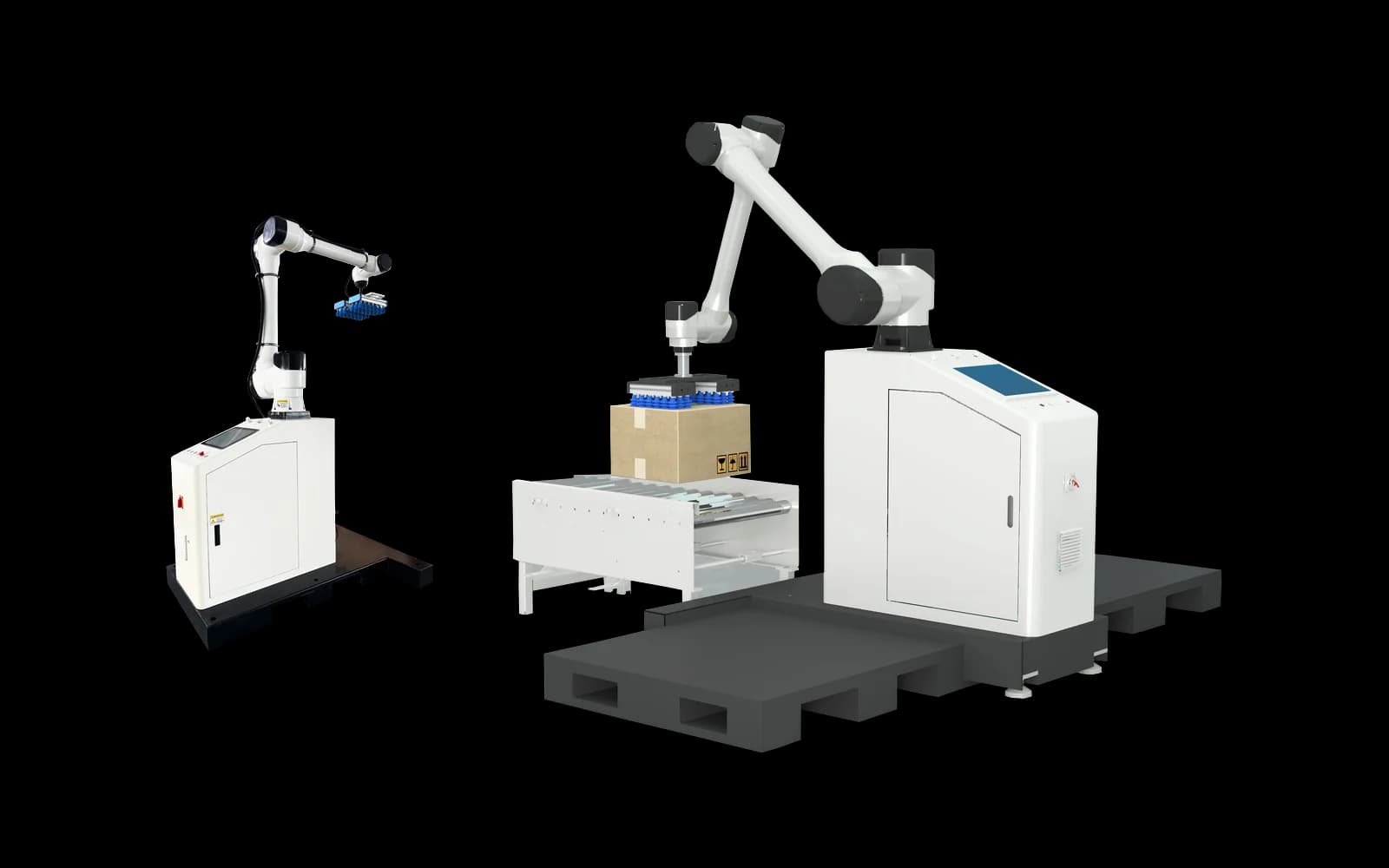
iPack Robotic builds four collaborative palletizing machines from 30 kg to 50 kg payload. Carton and pallet dimensions entered on a 15-inch touchscreen generate the stacking pattern in about five minutes, then a servo arm runs 8–10 cycles per minute at ±0.1 mm. Stacks reach 2,000 mm, or 2,600 mm with a 500° lift axis.
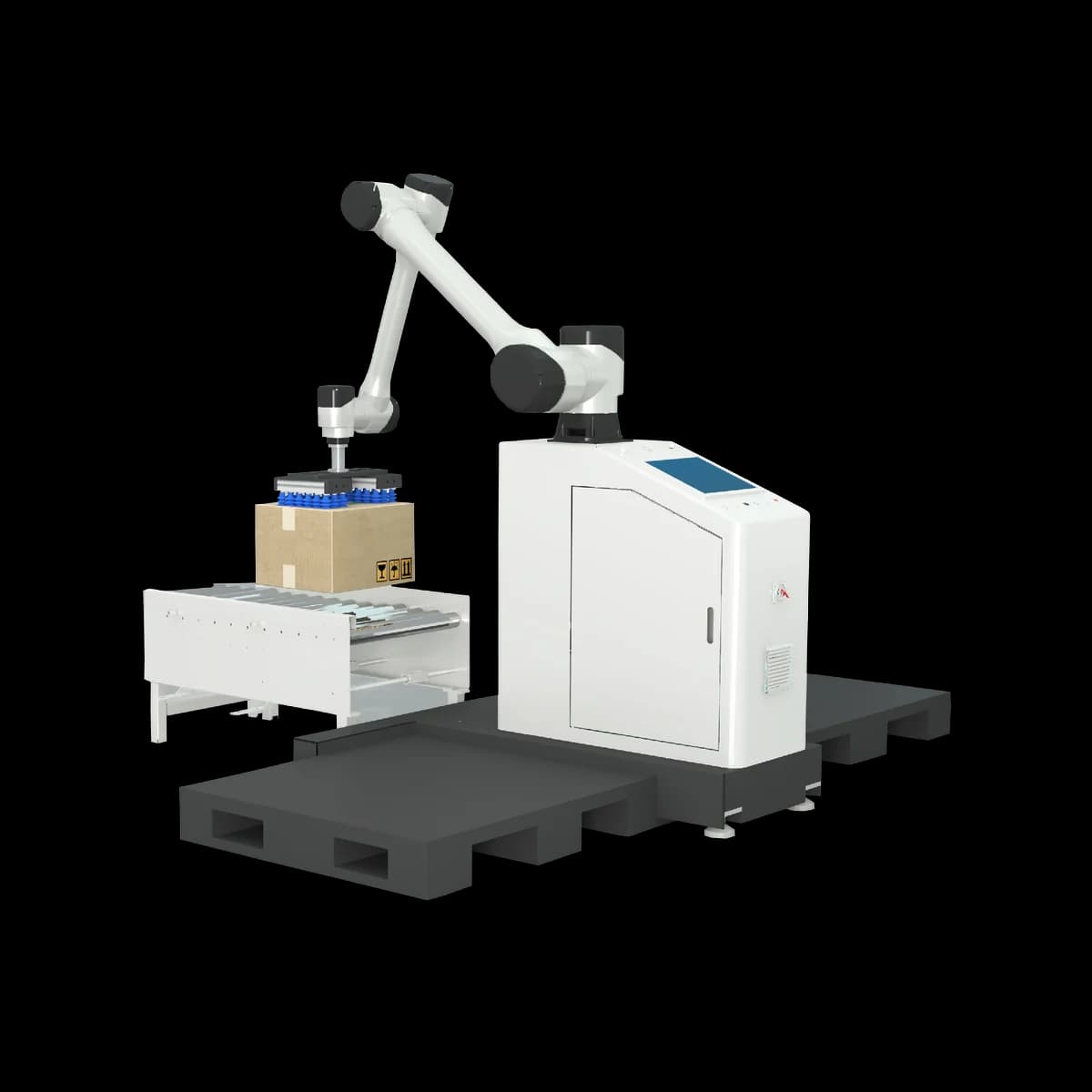
Collaborative palletizing cells that build carton pallets to 2,000–2,600 mm without a robot programmer. Carton and pallet dimensions on the 15-inch touchscreen generate the stacking pattern in about five minutes; two pallet stations, a silicone vacuum gripper and one mobile frame that moves between lines. Light curtain, radar or fencing quoted to your layout.
4 models
SCP-530D · SCP-550D · SCP-630D · SCP-650D
Why this family exists
Built around the load, not the catalogue
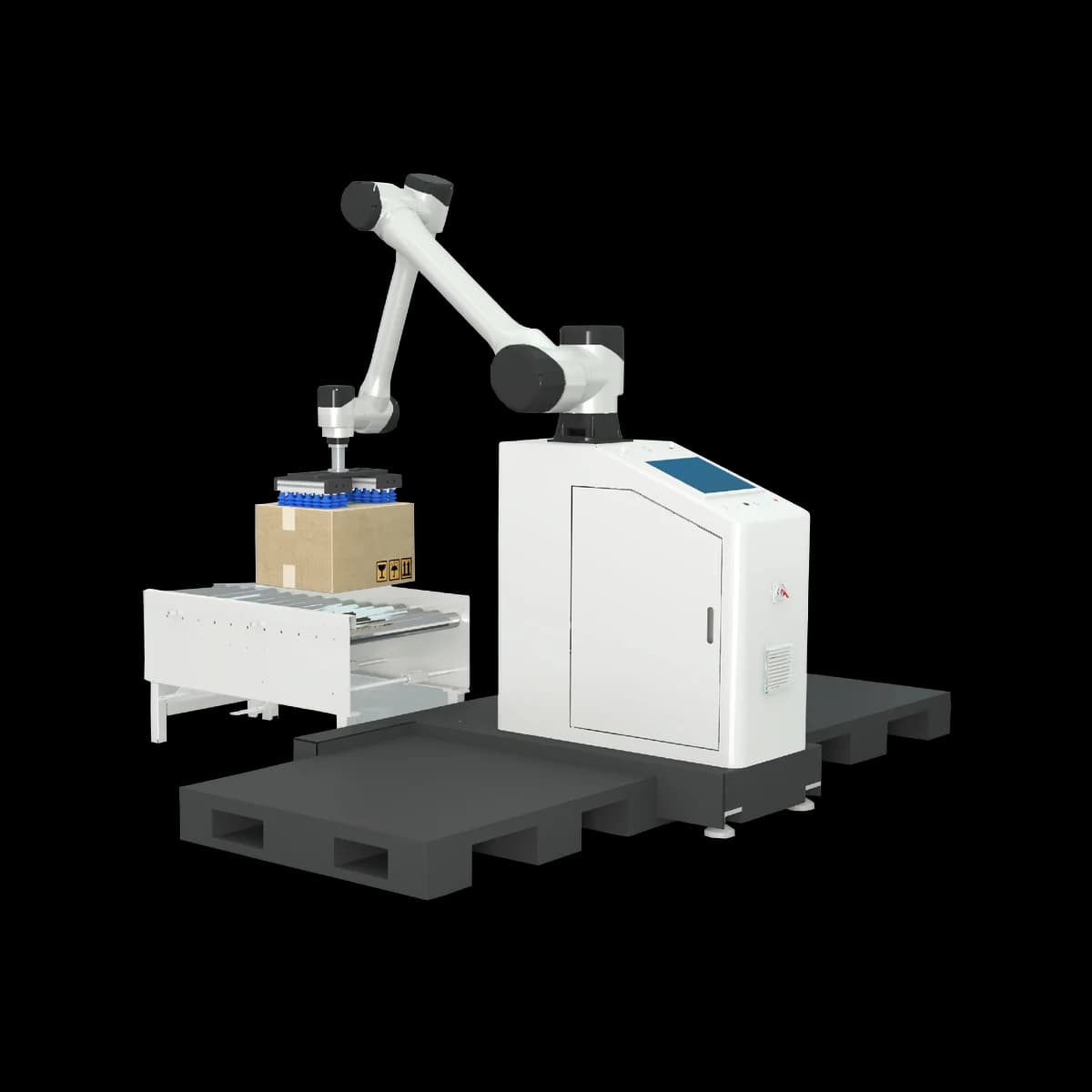
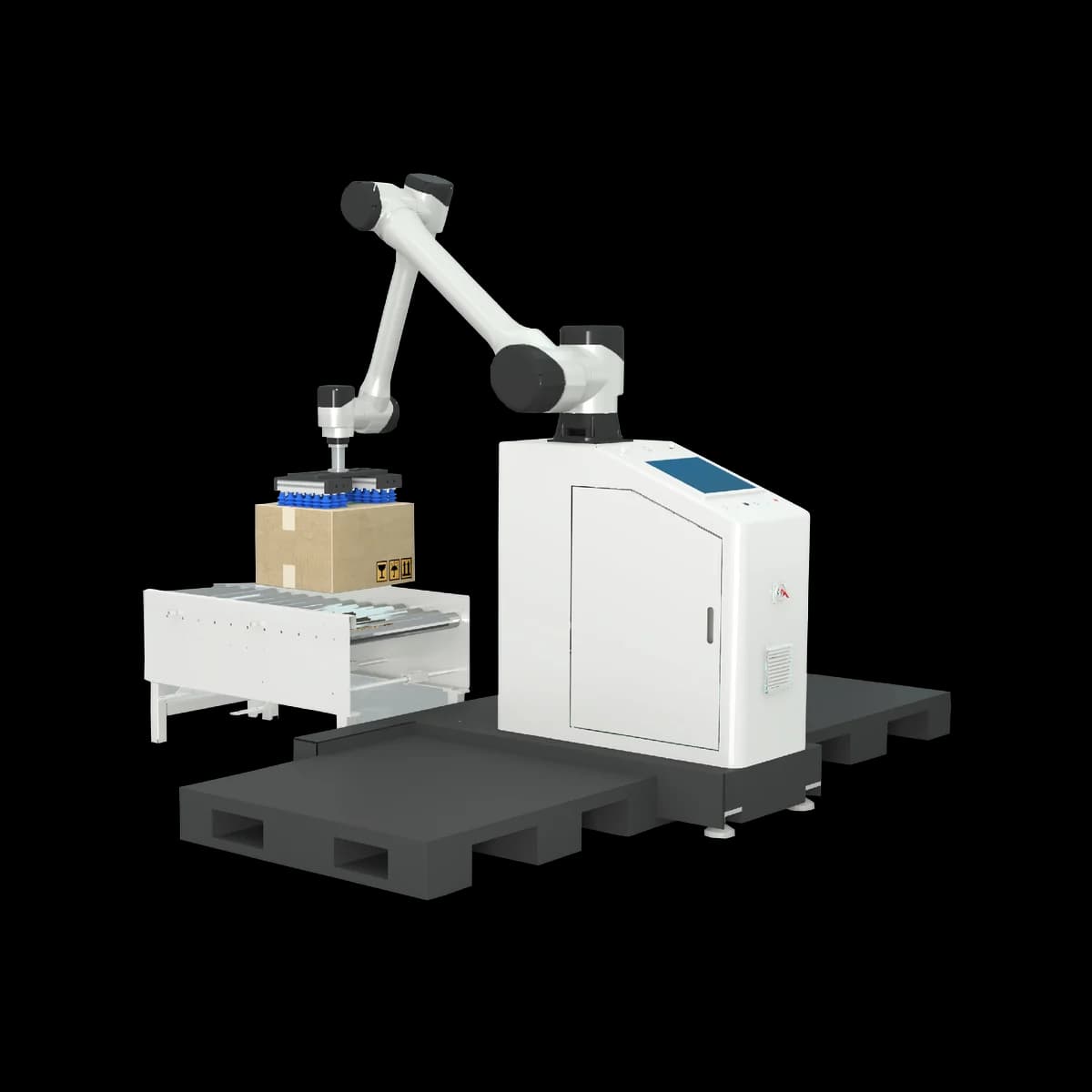
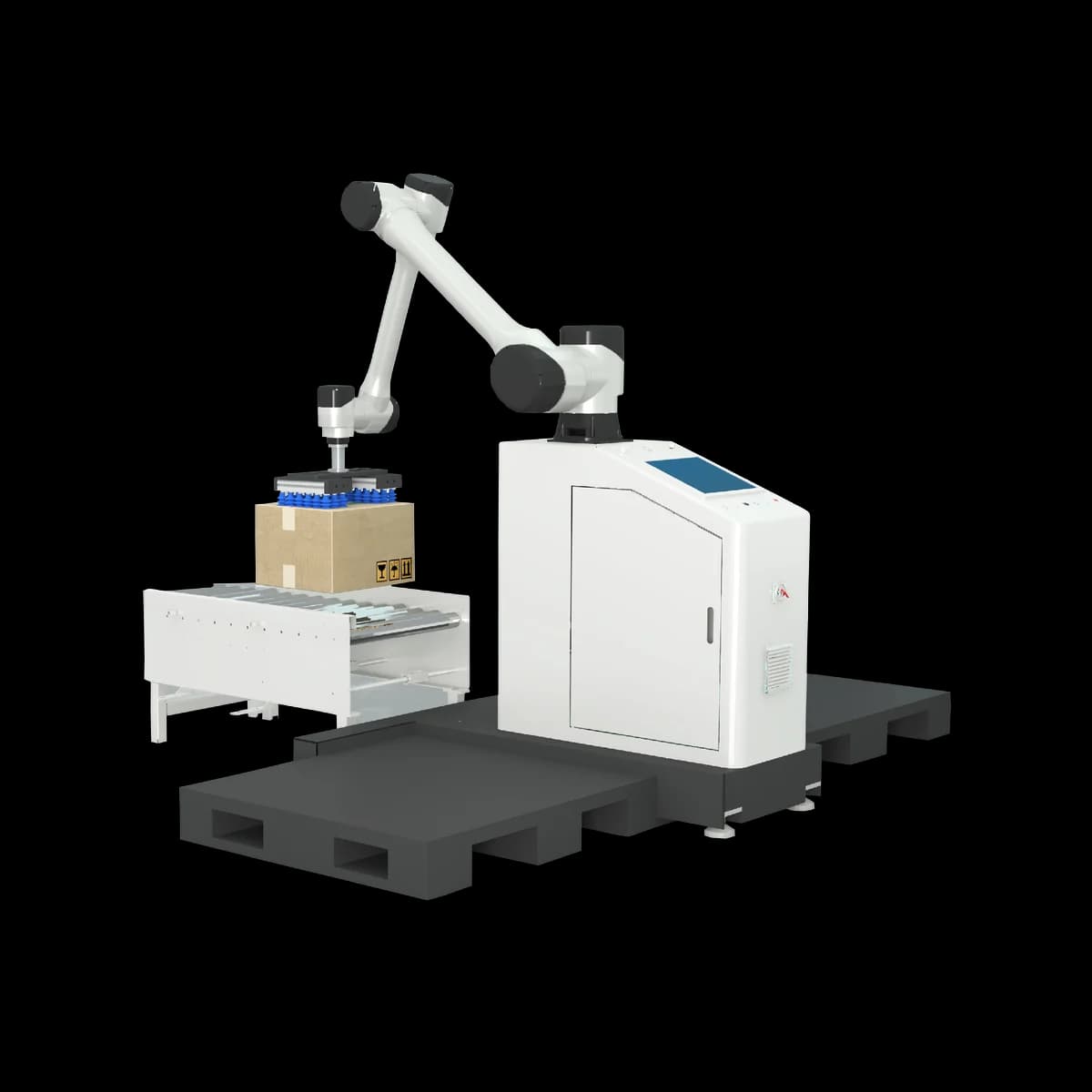
A collaborative palletizer replaces the person at the end of the line without replacing the line: it takes cartons off the infeed, builds the pallet to a pattern stored on the touchscreen, and discharges the finished load to the wrapper. Because the arm, controller and pallet base share one mobile frame, the cell moves between lines with a manual pallet truck instead of being reinstalled.
What every unit includes
- 30 kg or 50 kg payload, 8–10 cycles per minute
- Stack height 2,000 mm, or 2,600 mm with the 500° lift axis
- Two pallet stations in about 6 m² — pallets change without stopping the line
- CE certified, with TCP/IP, I/O and Modbus for line integration
Pattern in five minutes
Carton and pallet dimensions on the 15-inch touchscreen generate the stacking pattern — no programming, another SKU is another recipe.
±0.1 mm repeat
A servo arm places every layer in the same position, so the pallet is square before it reaches the wrapper.
Moves between lines
Arm, controller cabinet and pallet base on one frame: shift it with a pallet truck, no foundation and no re-commissioning.
Two pallet stations
About 6 m² takes both stations, so a full pallet is removed while the line keeps running.
4 models in this family
Every specification below is taken from the official datasheet. Open a model for the full table, options and application notes.
Typical applications
End-of-line carton palletizing
Cases and cartons off the packing line, stacked to 2,000–2,600 mm.
Bagged and drummed goods
Silicone vacuum cups and quick-change tools for bags, pails and metal cases.
Beverage and food cases
50 kg payload for multi-pack cases, discharged to a wrapper further down.
Line retrofits
A single mobile frame that is wheeled in beside existing conveyors.
Cobot Palletizers — questions buyers ask
Do we need a robot programmer to run a cobot palletizer?
+
No. The stacking pattern is generated from the carton and pallet dimensions you enter on the 15-inch touchscreen — about five minutes per SKU. Operators are trained on that screen, which is why these cells get installed at end-of-line stations without an integrator on site.
Which model do we need: 5-axis or 6-axis with the lift axis?
+
The axis count follows the stack height you need. The 5-axis SCP-530D and SCP-550D build pallets to 2,000 mm including the pallet; the 6-axis SCP-630D and SCP-650D add a 500° vertical lift axis and reach 2,400–2,600 mm on the same 6 m² footprint. Payload is chosen separately: 30 kg or 50 kg.
How fast is a collaborative palletizer?
+
8–10 cycles per minute for all four models, at ±0.1 mm repeat positioning. A cycle is one pick-and-place, so the pallets-per-hour figure depends on your pattern — roughly 480–600 picks per hour, and the layer count then sets the pallet rate.
Does the palletizer need a fence?
+
That is a risk assessment on your layout, not a specification of the machine. Light curtain, radar and fixed fencing are all offered and quoted with the cell, and the survey usually happens together with the wrapper or conveyor the palletizer feeds.
More answers on lead time, voltage, documentation and support are on the FAQ page, and the guides section covers how to choose between models.
Need help choosing within this family?
Load, height and throughput usually make the decision for you. Send us those three numbers and we will narrow it to one model.