
How do you raise pallet throughput without adding floor or labour?
In short
Two changes move the needle: take the forklift out of the wrapping step, and raise storage density. iPack combines in-line wrappers running 20–40 pallets per hour with VNA stackers that serve both rack faces from a 1.5 m guided aisle — more pallets out per hour and more pallets in per square metre.
In a 3PL the mix changes every week: different customers, different pallet heights, different load stability. A wrapper that needs a setup change per SKU becomes the bottleneck.
At the same time the building is fixed. Growth has to come from density and throughput, not from extending the lease.
Reviewed and updated by the iPack engineering team.
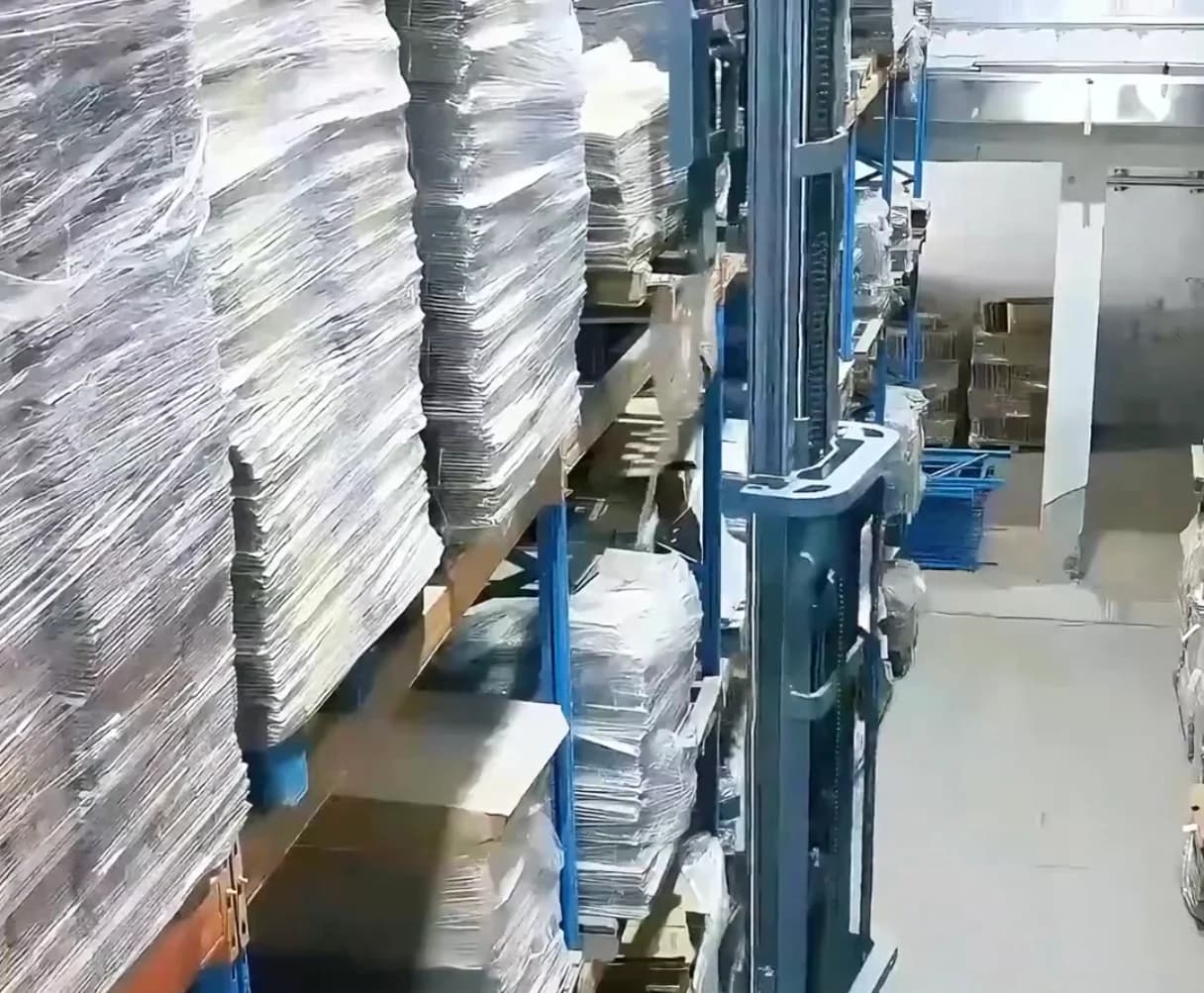
Dense high-bay storage from a 1.9 m aisle
Multi-directional trucks travel sideways down the aisle, so the main aisle only has to be as wide as the load — not as wide as the truck plus its turning circle.
The numbers that matter in this application
- Pallets/hour per wrapper
- 20–40
- VNA aisle width
- 1.5 m
- More pallet positions
- 30–40 %
- Standard turntable capacity
- 2 000 kg
How iPack solves it
Recipe per product, changed with a button
Layers, top and bottom wraps, over-top time and film tension are stored on the HMI. Changeover between customers is a selection, not a setup.
Wrapping without a forklift
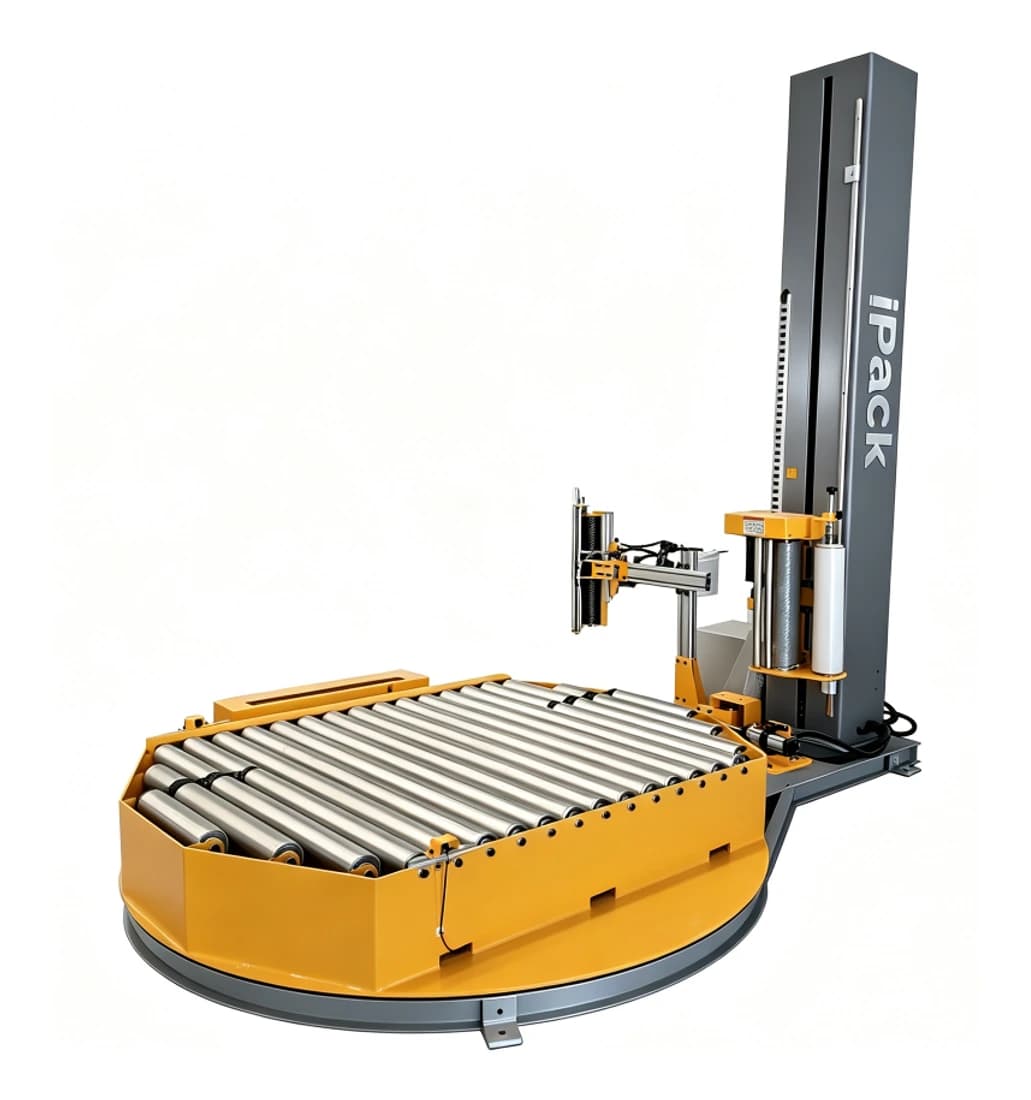
The SW-7000D's roller turntable takes the pallet from the conveyor and returns it wrapped, removing the truck and the queue from the end of the line.
Density from the truck, not the building
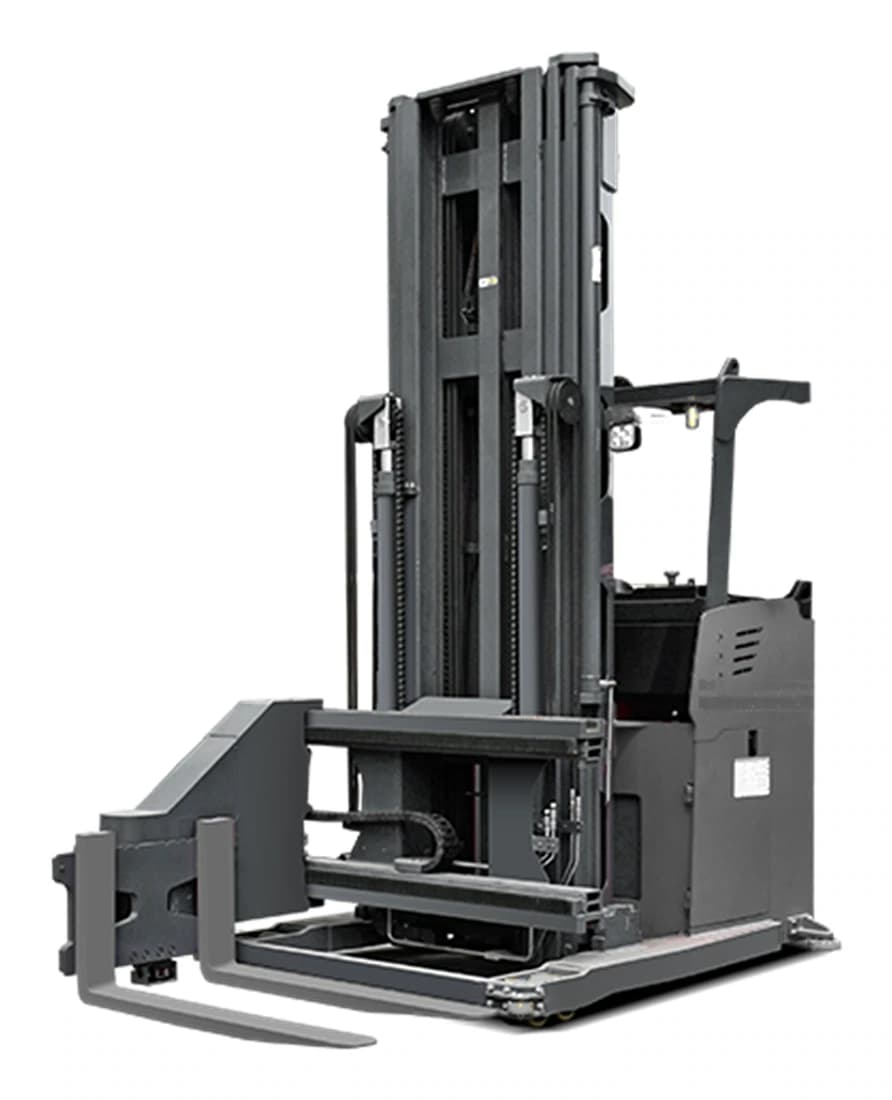
VNA stackers with 180° fork rotation serve two rack faces from a 1.5 m aisle — typically 30–40 % more pallet positions in the same footprint.
Mixed-fleet flexibility
Where the yard and the aisle are both involved, an articulated truck unloads outside and stacks indoors on one set of solid tyres, removing a whole double-handling step.
Machines specified for this application
Each model below is quoted with the configuration that suits this application — mast height, fork spread, film width or conveyor arrangement set at order.
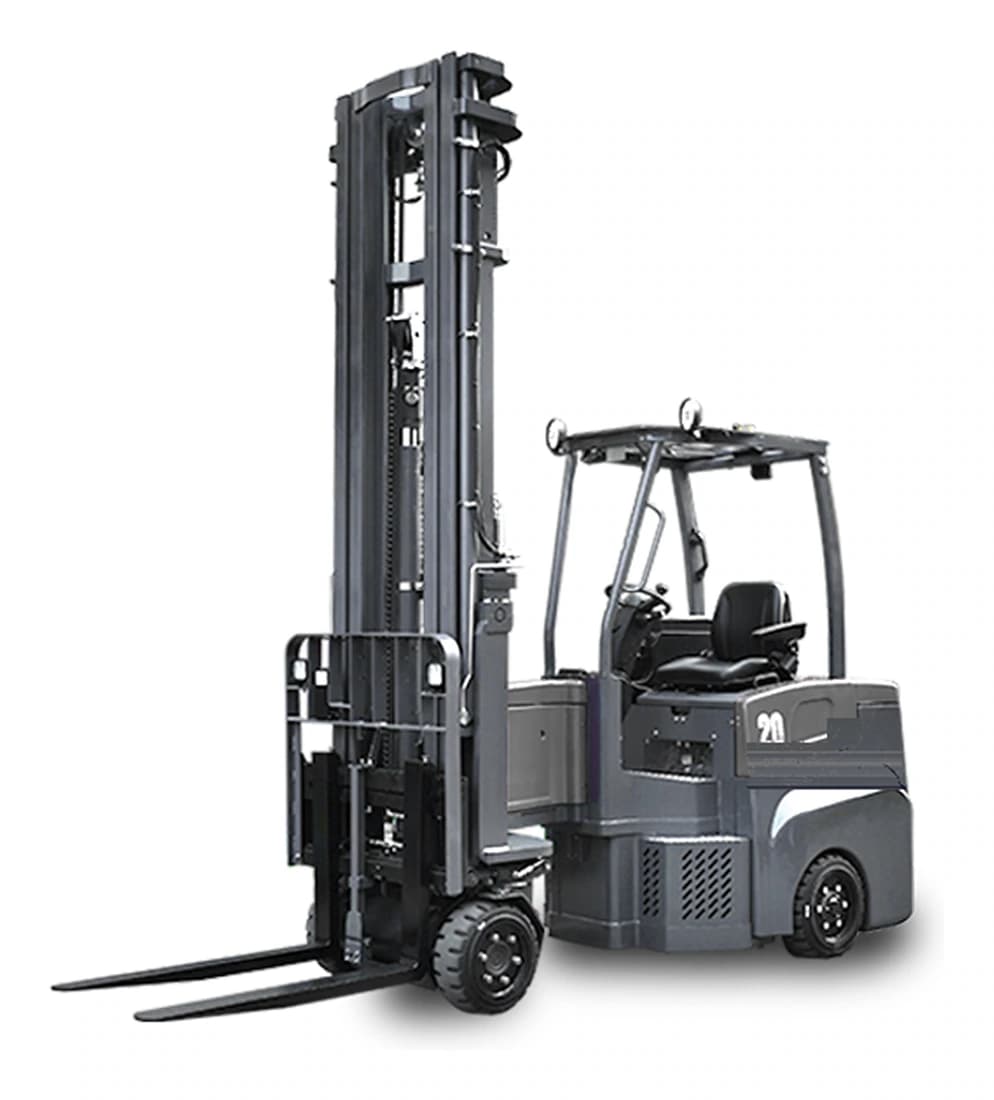
From installations in this application
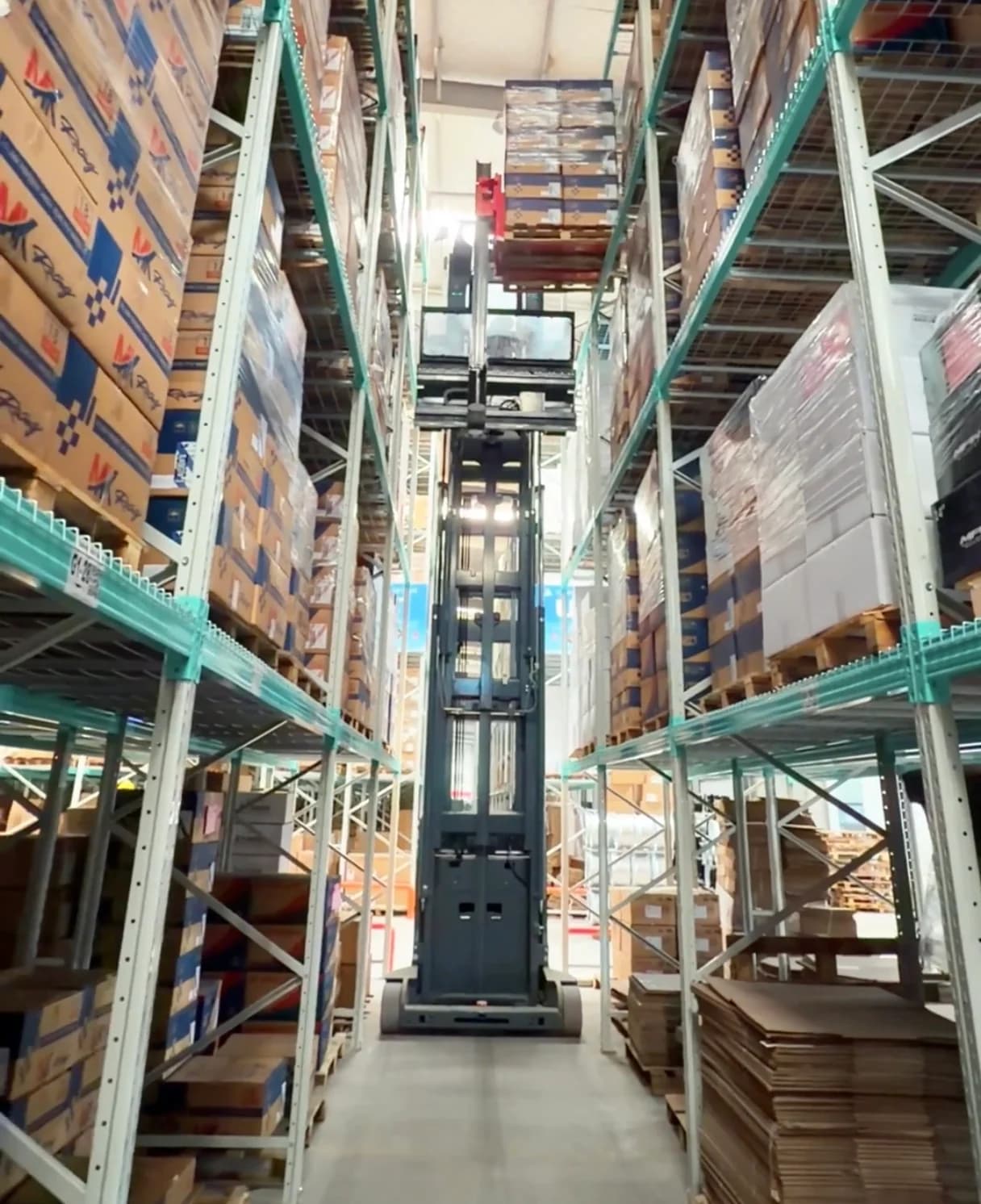
1.5 m guided aisle, both rack faces
A three-way stacker rotates its forks 180° instead of the truck, so a single 1.5 m guided aisle serves two rows of racking. Customers typically recover 30–40 % more pallet positions from the same building.
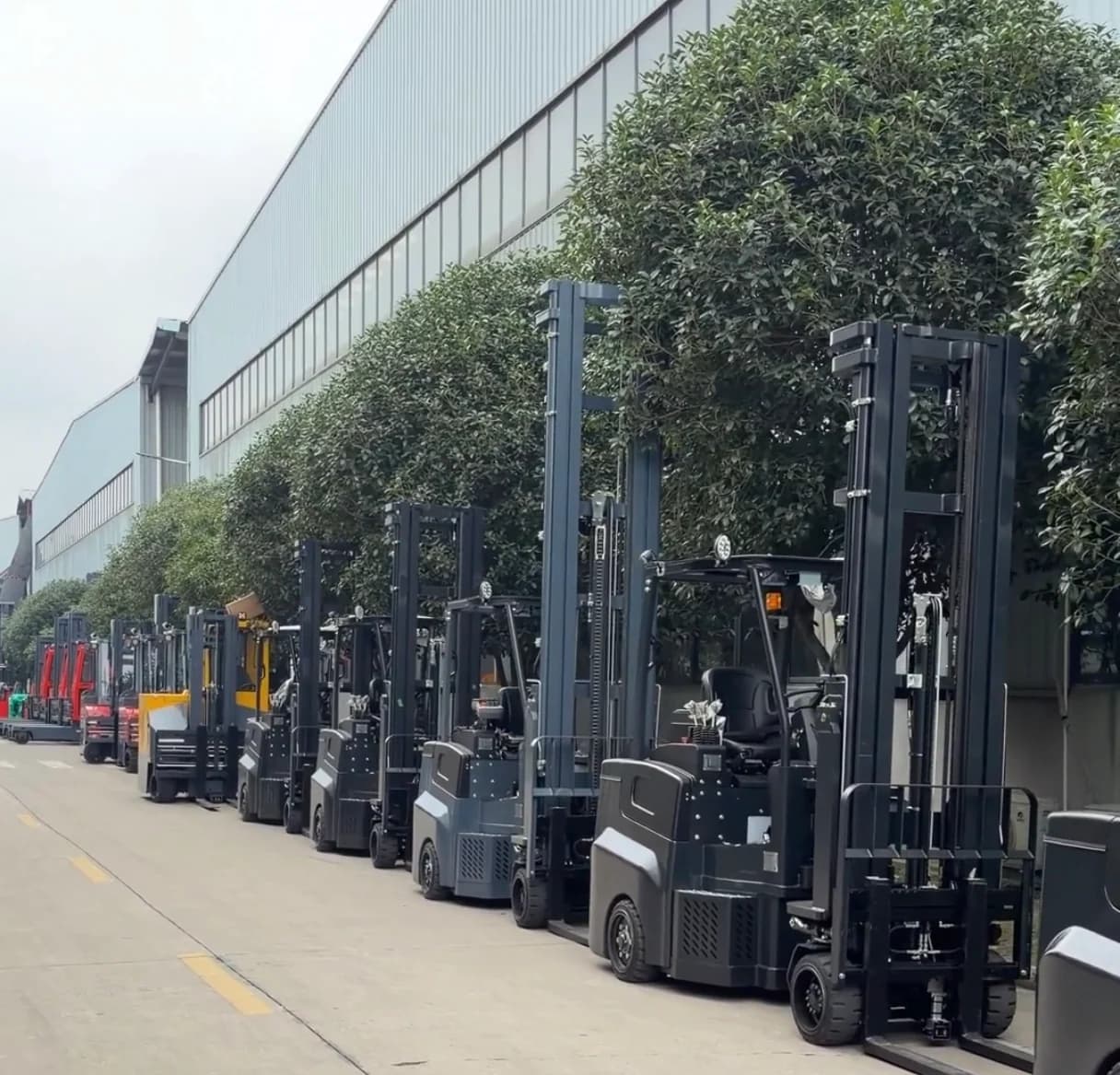
Fleet staged for container loading
Units are run in, filmed and staged together so a mixed fleet ships in one container with a single set of manuals and spares.
Distribution & 3PL — common questions
Which wrapper suits a conveyor-fed dispatch lane?
+
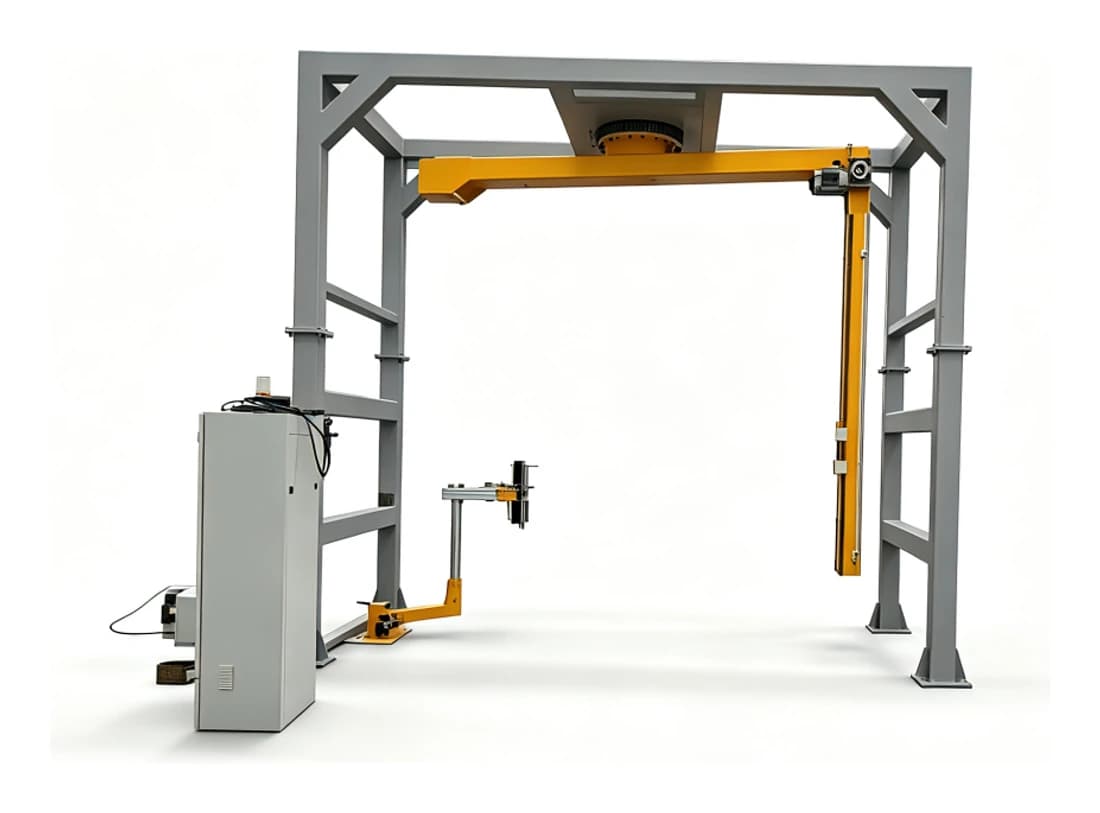
The SW-7000D, because its turntable is a powered roller conveyor and it interlocks with the line. Where loads are tall, heavy or unstable and must not rotate, the SW-6000D rotary arm keeps the pallet still and rotates the arm instead.
Can one wrapper handle different pallet heights?
+
Yes. A photoelectric sensor measures the load on entry and the PLC applies the recipe stored for that height band, so mixed pallets run down the same lane without operator input.
How many trucks does a 1.5 m aisle layout need?
+
It depends on throughput rather than aisle count. Most sites run one truck per two to three aisles on a shift basis; the aisle is only occupied while a pallet is being placed, so the truck is the shared resource, not the aisle.
Is a 3PL better off with one wrapper or two?
+
Two smaller machines usually beat one large one when the mix varies, because a fault or a changeover on a single machine stops the whole dispatch lane. The exception is a single high-volume contract lane, where one in-line machine at 40 pallets/hour is the better fit.
Related applications
Send us the load, the aisle and the throughput
We reply with the model that fits, a budget price, the lead time and a layout drawing — usually within one working day.