
VNA vs counterbalance vs reach truck: choosing by aisle width
8 min read
Reviewed and updated by the iPack engineering team.
In short
Counterbalance trucks need 3.5–4.5 m aisles and lift to about 6 m. Reach trucks work in 2.7–3.0 m and reach 8–10 m. Very-narrow-aisle three-way stackers serve both rack faces from a 1.5 m guided aisle and lift to 14 m — roughly 30–40 % more pallet positions in the same building.
01The comparison that matters: aisle width
Every warehouse truck decision ultimately trades aisle width against flexibility. Wider aisles mean a truck that can do more things in more places; narrower aisles mean more racking in the same building.
| Truck type | Aisle width | Max lift | Capacity | Guidance needed |
|---|---|---|---|---|
| Counterbalance | 3.5–4.5 m | ≈ 6 m | 1.5–3.5 t | None |
| Reach truck | 2.7–3.0 m | 8–10 m | 1.4–2.5 t | None |
| Articulated | 1.7–1.9 m | 12.5 m | 2.0–2.5 t | None |
| VNA three-way stacker | 1.5–1.65 m | 9.8–14 m | 0.8–1.6 t | Rail, wire or magnet |
| Multi-directional | Load width + 0.6 m | 4.5–10.5 m | 1.5–8 t | None |
02Counterbalance: flexibility first
A counterbalance truck is the most versatile machine on site — yard, dock, container, racking, attachments — and the least efficient at storing pallets. Its turning circle sets the aisle, and that aisle is dead space for the life of the building.
Specify it where the truck has to do many jobs and the building is not the constraint. Do not specify it as the put-away truck for a high-bay warehouse, which is where most density is lost.
03Reach truck: the middle ground
A reach truck's forks extend forward, so the truck does not need to enter the racking. That cuts the aisle to around 2.7–3.0 m and lifts 8–10 m, at capacities of 1.4–2.5 t.
It is the right answer when aisles already exist at that width and the guide-rail cost of a VNA conversion cannot be justified. Outrigger legs, however, stop it picking a standard pallet directly off the floor — which matters if the same truck also does dock work.
04VNA three-way stacker: density first
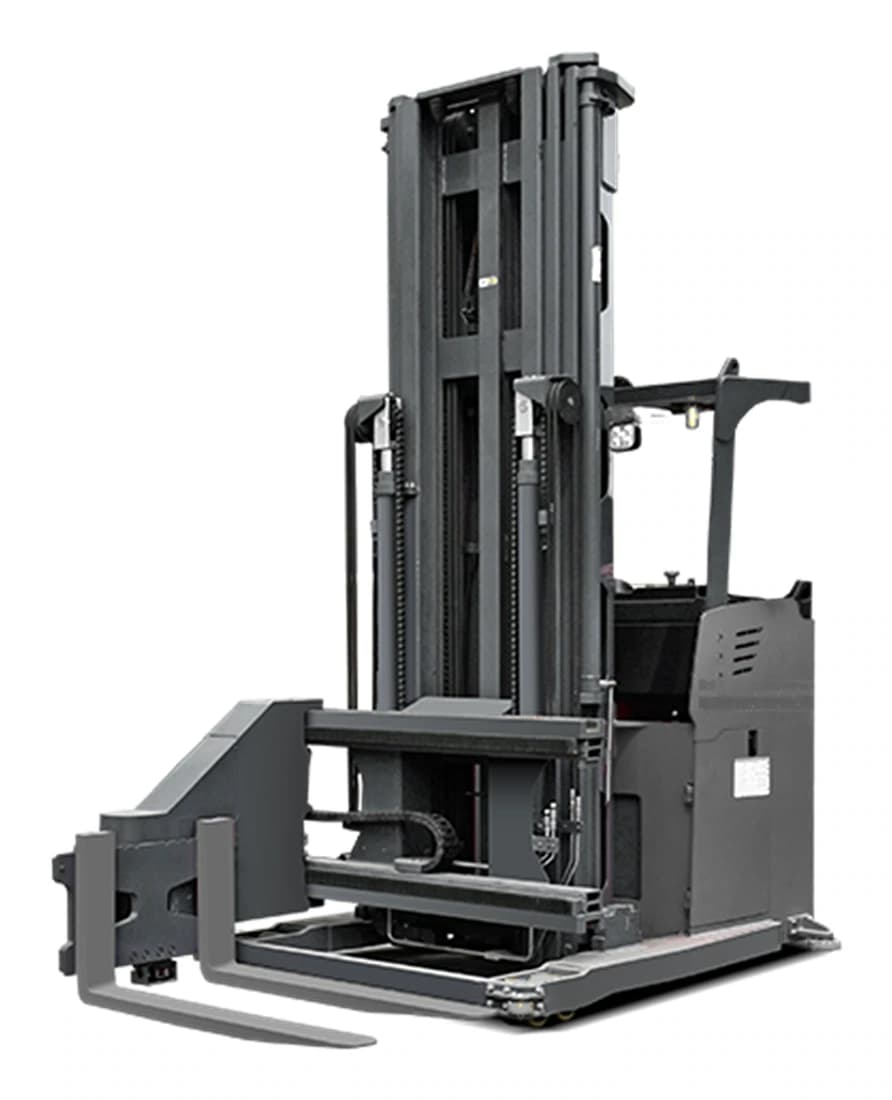
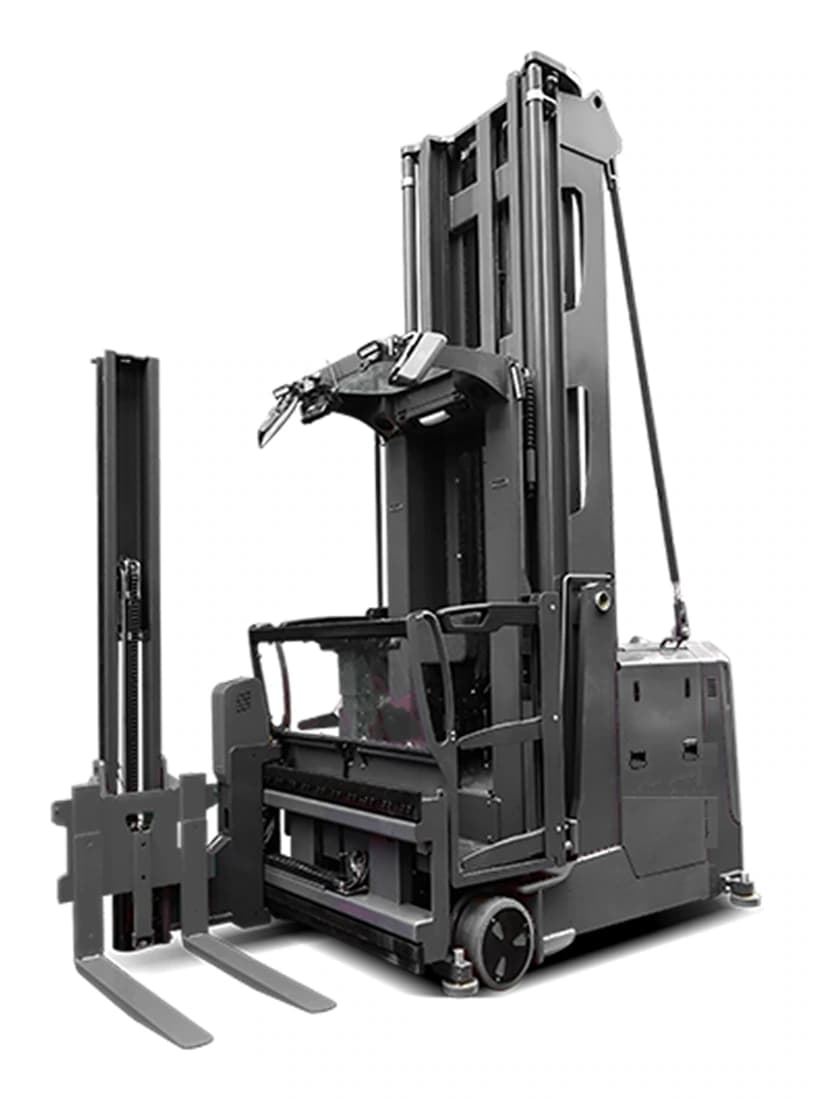
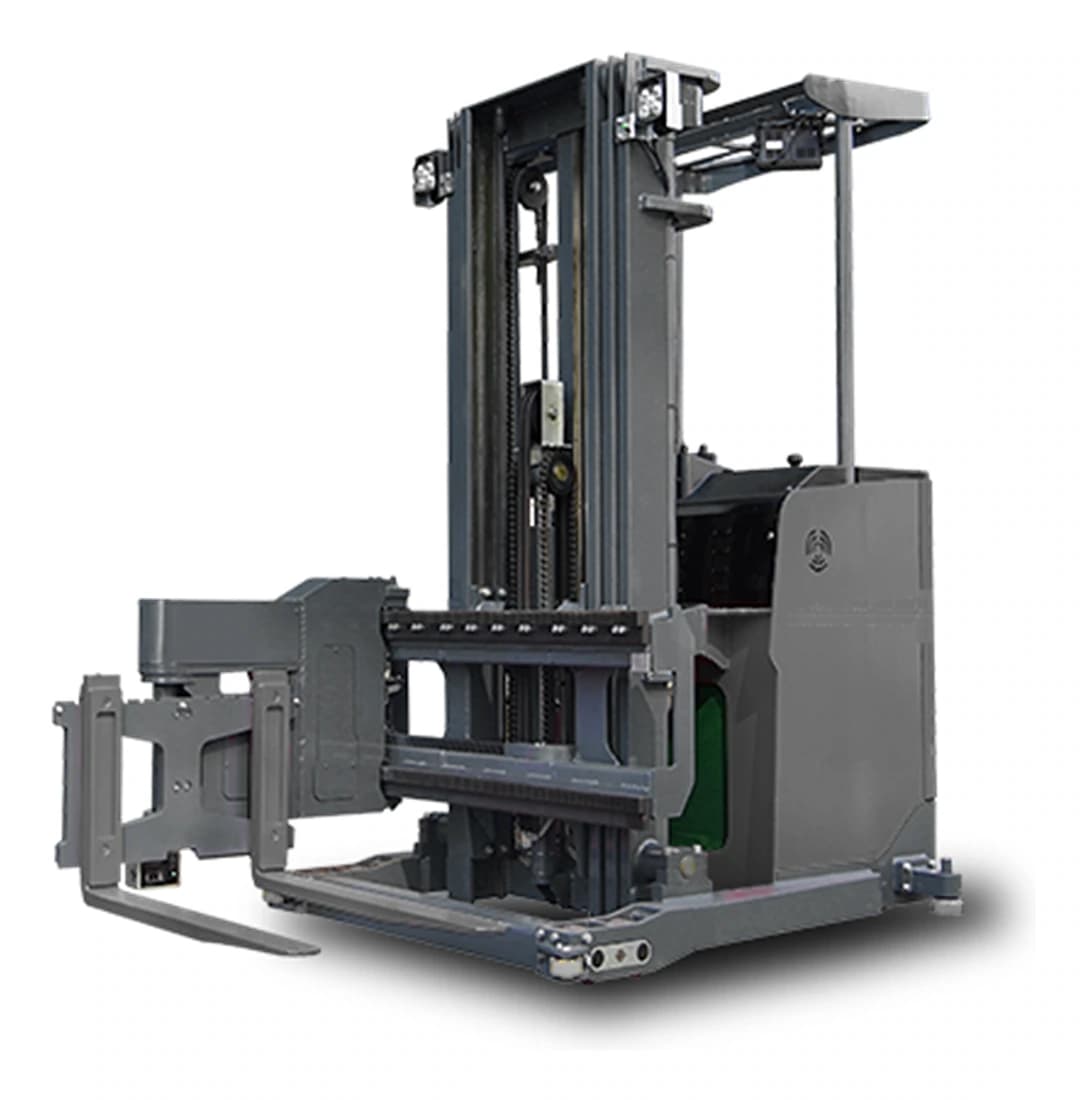
A three-way stacker rotates its forks 180° and side-shifts rather than turning the truck, so a 1.5 m guided aisle serves both rack faces. That is where the 30–40 % density gain comes from — not from a taller mast, but from the aisle.
The trade-off is guidance: rail, wire or magnet. That is a one-off civil cost, and it is usually repaid by the racking it frees up within the first year on a large site.
05Articulated: when there is no guide rail and no conveyor
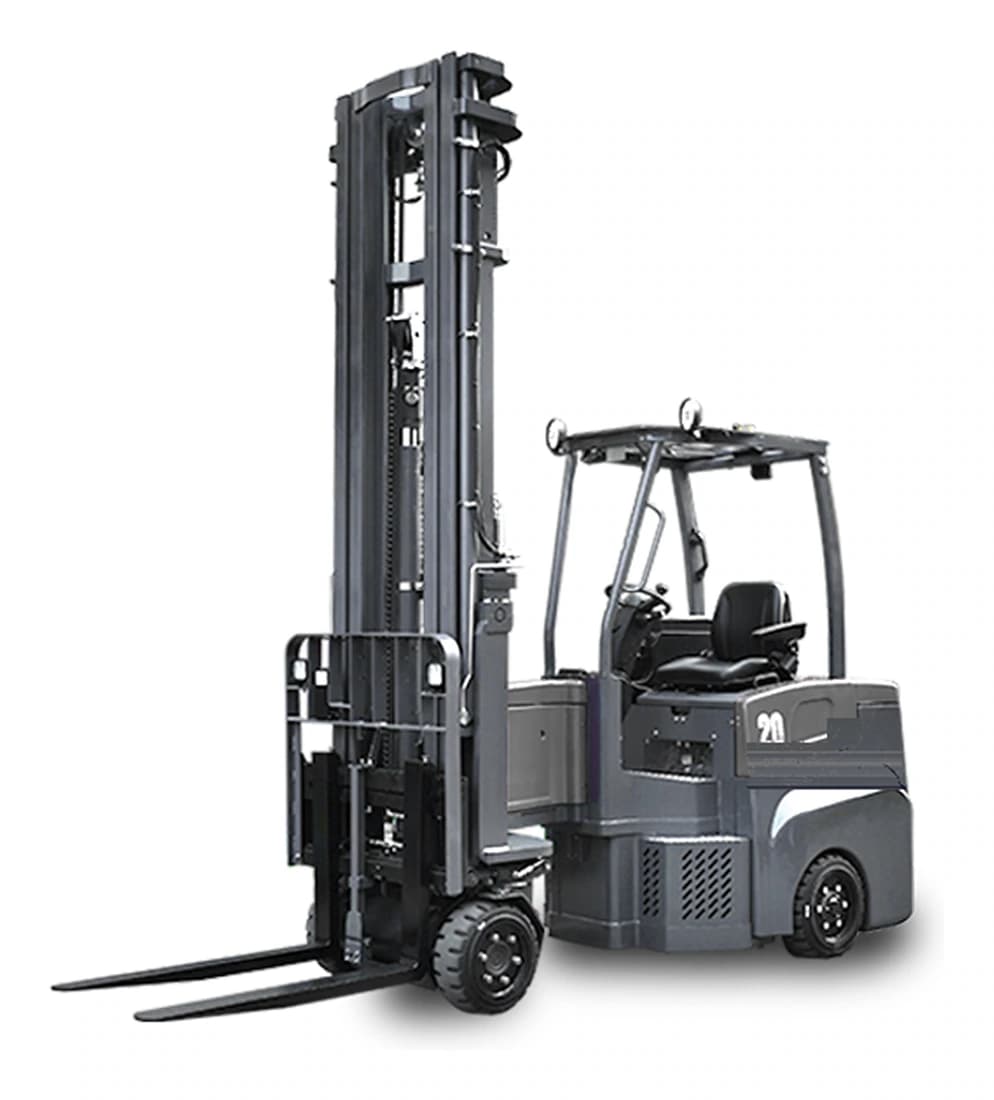
An articulated truck sits between a reach truck and a VNA stacker. The mast swings through 210°, giving 1.7–1.9 m aisle operation and 12.5 m lift with no guide rail at all, on solid tyres that work outdoors.
It is the machine for sites that unload outside and store inside, where a VNA system's civil works and separate yard truck would otherwise be needed.
06How to decide
- If the building is the constraint and the racking is fixed → VNA three-way stacker
- If the yard and the aisle are both involved → articulated
- If the truck must do everything including attachments → counterbalance, accept the aisle
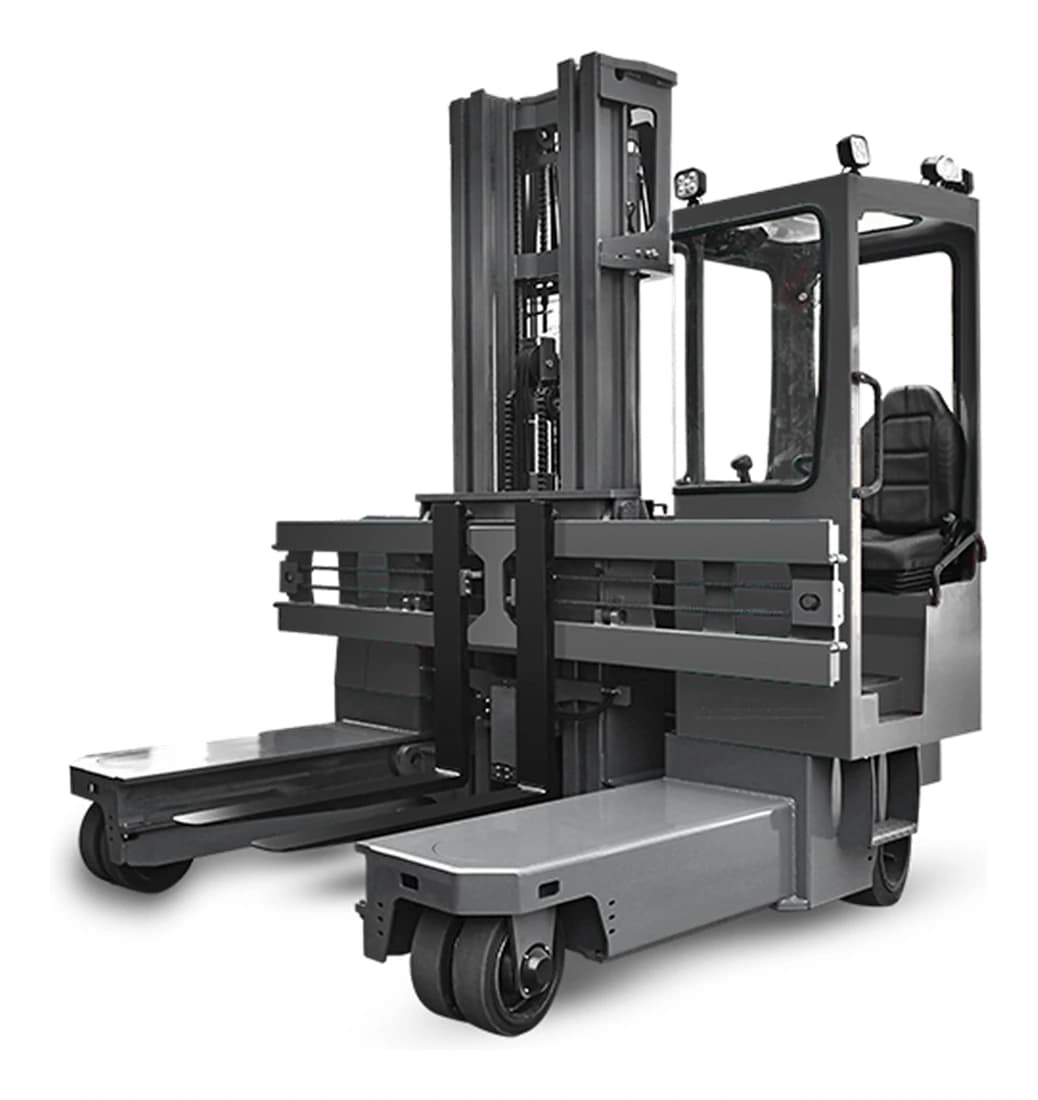
- If long product rather than pallets is the load → multi-directional, travel sideways
- If the aisles already exist at 2.7–3.0 m and cannot be narrowed → reach truck
Frequently asked questions
How much does a VNA conversion cost compared to a new building?
+
The guidance system itself is a modest one-off cost per aisle; the real difference is that it requires no planning permission, no construction period and no loss of operating time. Against an extension, the payback is usually measured in months rather than years.
Can a VNA truck work outdoors?
+
No — VNA stackers are indoor machines and rely on guidance that is laid into the floor. For yard-to-aisle work, an articulated truck is the correct machine.
What capacity can a VNA truck lift at 14 m?
+
The SF-1200M-DD lifts 1 200 kg at a 600 mm load centre to 14 000 mm with telescopic double-deep forks. Capacity falls with load centre, so always specify the real load centre rather than assuming 500 mm.
Do we still need a counterbalance truck if we have a VNA fleet?
+
Usually yes, for the dock and yard. The cost model is that the counterbalance truck does the low-density work and the VNA trucks do the put-away, which is where the density gain is realised.
Machines referenced in this guide
Get a specification, not a sales pitch
An engineer reads every enquiry. You will get the model that fits, the options you actually need, and a delivery date.