
How to choose a pallet wrapping machine: the six numbers that decide it
8 min read
Reviewed and updated by the iPack engineering team.
In short
Six numbers decide the machine: load weight, load footprint and height, pallets per hour, whether the load can be rotated, available power (single or three phase), and whether a forklift or a conveyor delivers the pallet. Answer those and the model picks itself — everything else is an option.
011. Load weight and footprint
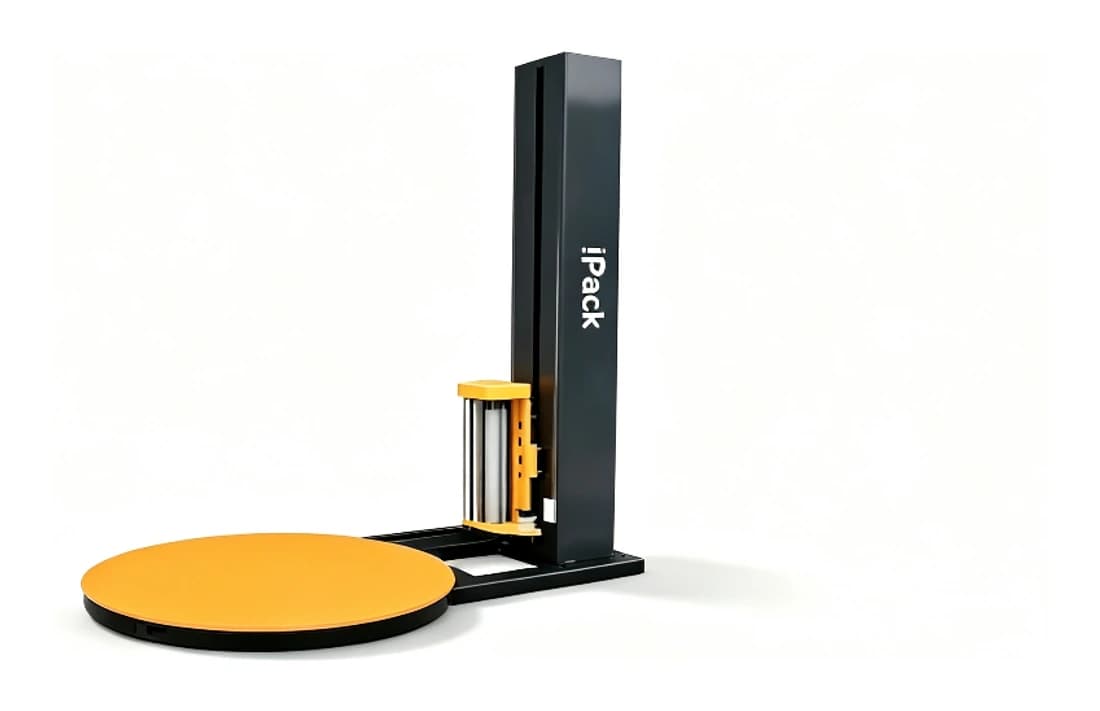
Start with the heaviest pallet you will ever wrap, not the average. Turntable capacity in this range runs from 1 500 kg to 2 000 kg, and turntable diameters from φ1 650 mm to φ2 400 mm.
If the heaviest load needs a φ2 000 mm deck and the average load is a standard Euro pallet, still specify the large deck — a wrapper that cannot take your worst pallet will be worked around within a month, and it will be the operator who decides how.
022. Load height and stability
Height sets the mast. Standard wrapping heights are 2 000 mm, with 2 400 mm and 2 650 mm available at order. If the load is tall relative to its base — bagged product, empty containers, half-full drums — assume you need a pneumatic top press, and if it is very unstable, assume the load cannot be rotated at all.
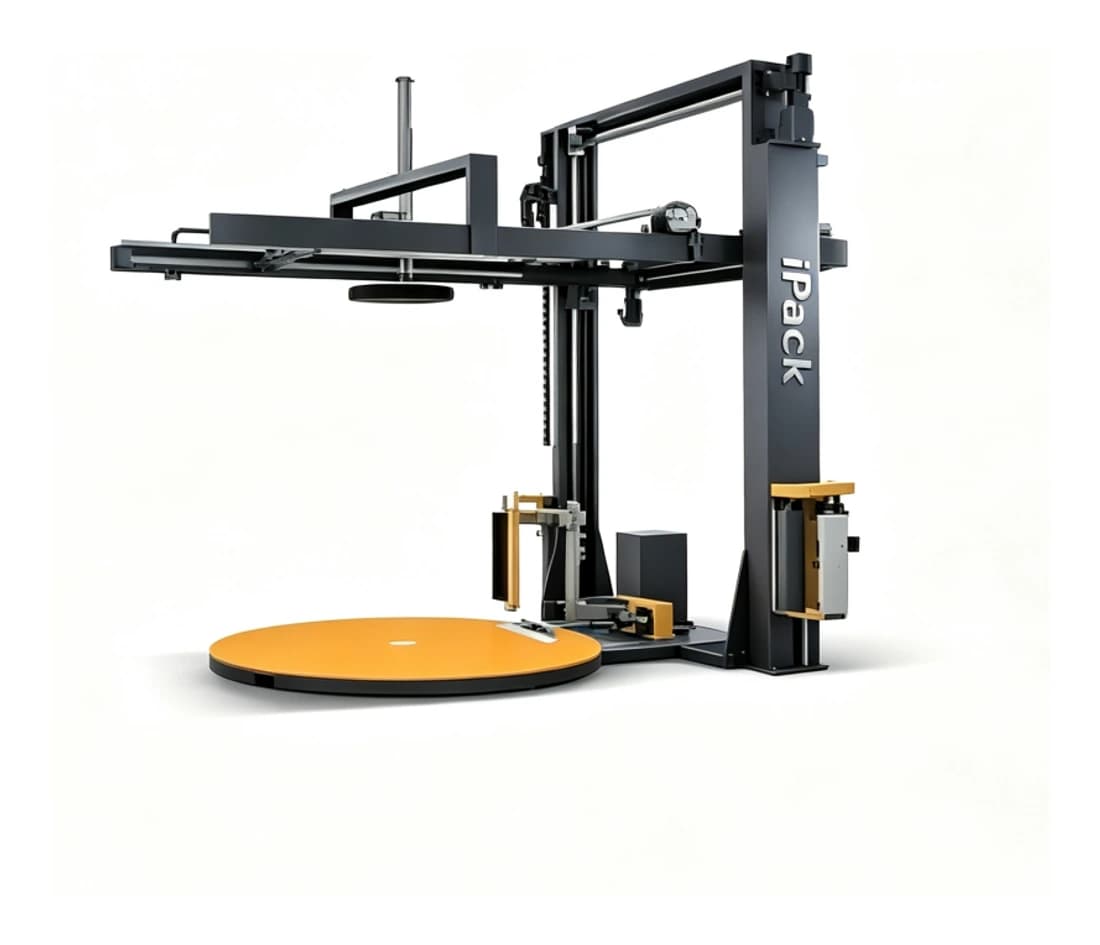
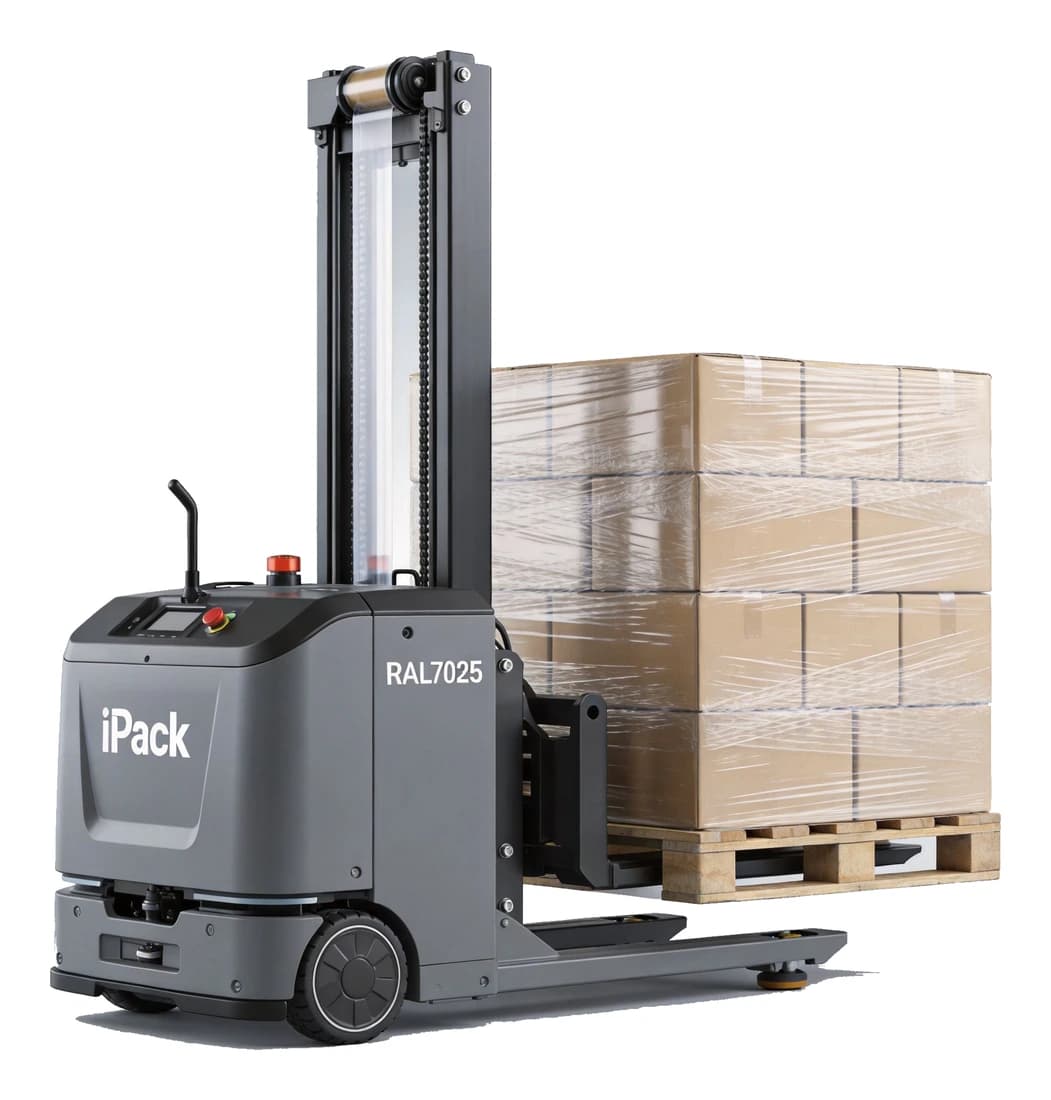
That last point is the one that changes the machine rather than an option: a load that cannot be spun needs a rotary arm or a self-propelled wrapper, not a turntable with more accessories.
033. Pallets per hour
Throughput is a function of wrap count, not of the machine's top speed. A two-layer wrap with a top and bottom sheet takes roughly a third of the time of a six-layer reinforcement wrap on the same machine.
As a working range: a turntable wrapper does 20–30 pallets/hour, a rotary arm up to 35, an in-line machine 20–40. If your requirement is above 40 per hour on one lane, the answer is two machines, not a faster one.
044. Film cost
Film is the only consumable and it is the line item that compounds. The number to ask for is the pre-stretch ratio: 200 % means one metre of film becomes three metres on the pallet; 250 % means it becomes three and a half.
Over a year at 20 000 pallets, the difference between 200 % and 250 % is typically a fifth of the film bill. It is worth paying for the higher-yield carriage.
055. Power supply
This is the constraint that most often decides between two otherwise equivalent machines. A single-phase 220 V wrapper (the SW-5000D) can be installed on a standard warehouse feed without electrical works. Three-phase models need 380–440 V, 3-phase, 5-wire.
If the dispatch bay has no three-phase feed and running one is a significant cost, say so at enquiry stage — it moves the shortlist immediately.
066. How the pallet arrives
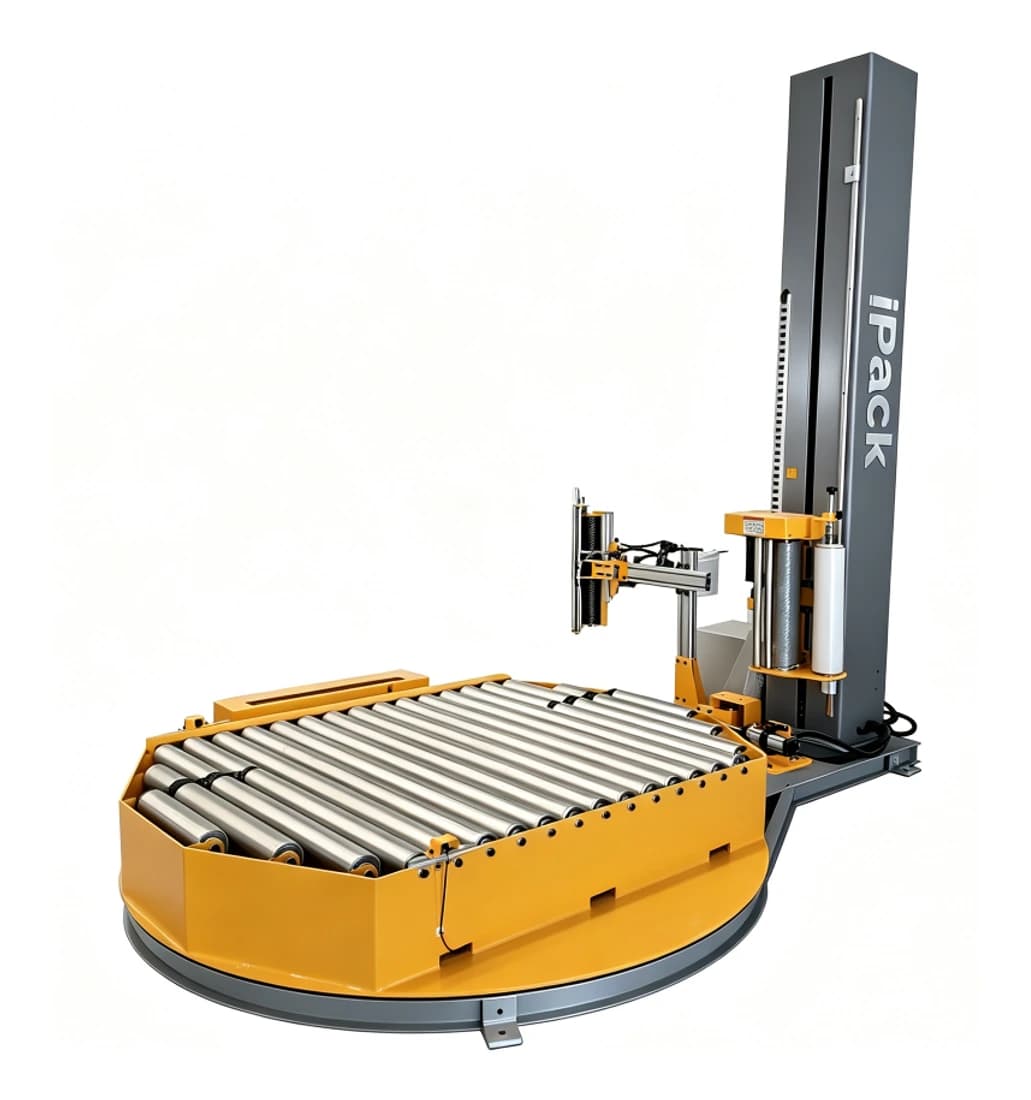
Forklift-fed and conveyor-fed are different machines. A forklift-fed wrapper is standalone and can be moved; a conveyor-fed wrapper is a station on your line and has to match your conveyor height, roller pitch and PLC protocol.
If a conveyor is planned within the life of the machine, specify the in-line model now. Retrofitting a turntable into a line later costs more than the difference at purchase.
Frequently asked questions
What information do I need before requesting a quotation?
+
Load weight, pallet footprint and maximum load height, required pallets per hour, whether the load can be rotated, available power supply, and whether a forklift or a conveyor feeds the machine. With those six answers a quotation can be accurate rather than indicative.
Do I need compressed air?
+
Only if you add a pneumatic top press or the top-sheet covering module. The standard turntable wrapper is fully electric and needs no air supply.
What film should I buy?
+
A 500 mm LLDPE machine film, 15–35 μm, on a 76.2 mm core. 25 μm pre-stretch film gives the lowest cost per pallet; thicker film is only worth it for loads with sharp edges.
How long does delivery take?
+
Standard turntable wrappers ship in 15–25 days. Rotary arm, in-line, cylinder and horizontal machines are typically 25–40 days because the guarding and conveyor sections are built to the order.
Machines referenced in this guide
Get a specification, not a sales pitch
An engineer reads every enquiry. You will get the model that fits, the options you actually need, and a delivery date.