
How to calculate stretch film cost per pallet (and what pre-stretch really saves)
6 min read
Reviewed and updated by the iPack engineering team.
In short
Film cost per pallet = metres of film used × film cost per metre. Metres used = (load height ÷ layer pitch) × wrap layers × pallet perimeter, then divide by the pre-stretch ratio. Moving from 200 % to 250 % pre-stretch cuts film used by about 20 % for the same containment.
01The formula
Film consumption per pallet is driven by four things: how tall the load is, how many layers of film you apply, how far the carriage advances per turntable revolution (the layer pitch), and the perimeter of the load.
- Metres of film per pallet ≈ (load height ÷ layer pitch) × pallet perimeter
- Multiply by wrap layers top and bottom where the wrap count is doubled
- Divide by (1 + pre-stretch ratio) to get metres of film consumed from the roll
- Multiply by your film cost per metre to get cost per pallet
02A worked example
Take a 1 200 × 1 200 mm pallet, 1 500 mm high, wrapped with a 250 mm layer pitch on a 1 200 × 1 200 load — perimeter 4.8 m.
Revolutions to cover the height: 1 500 ÷ 250 = 6. Film laid on the pallet: 6 × 4.8 = 28.8 m. Add two extra top and two extra bottom wraps: +4 × 4.8 = 19.2 m, so about 48 m of film lands on the pallet.
At 200 % pre-stretch that consumes 48 ÷ 3 = 16 m from the roll. At 250 % it consumes 48 ÷ 3.5 = 13.7 m — a 14 % reduction. Where the wrap count is higher the gap widens, because every metre laid down is divided by the same factor.
03What the difference is worth
On 20 000 pallets a year, the 2.3 m per pallet difference above is 46 000 m of film — close to 600 kg at 20 μm — for exactly the same load containment.
The same arithmetic applies to hand wrapping versus machine wrapping, where the multiplier is much larger: hand wrapping typically uses two to three times the film for a less consistent result, because there is no controlled pre-stretch and no repeatable overlap.
| Pre-stretch | Film on pallet | Film from roll | Relative cost |
|---|---|---|---|
| None (hand wrapping) | 48 m | 48 m | 3.5× |
| 150 % | 48 m | 19.2 m | 1.4× |
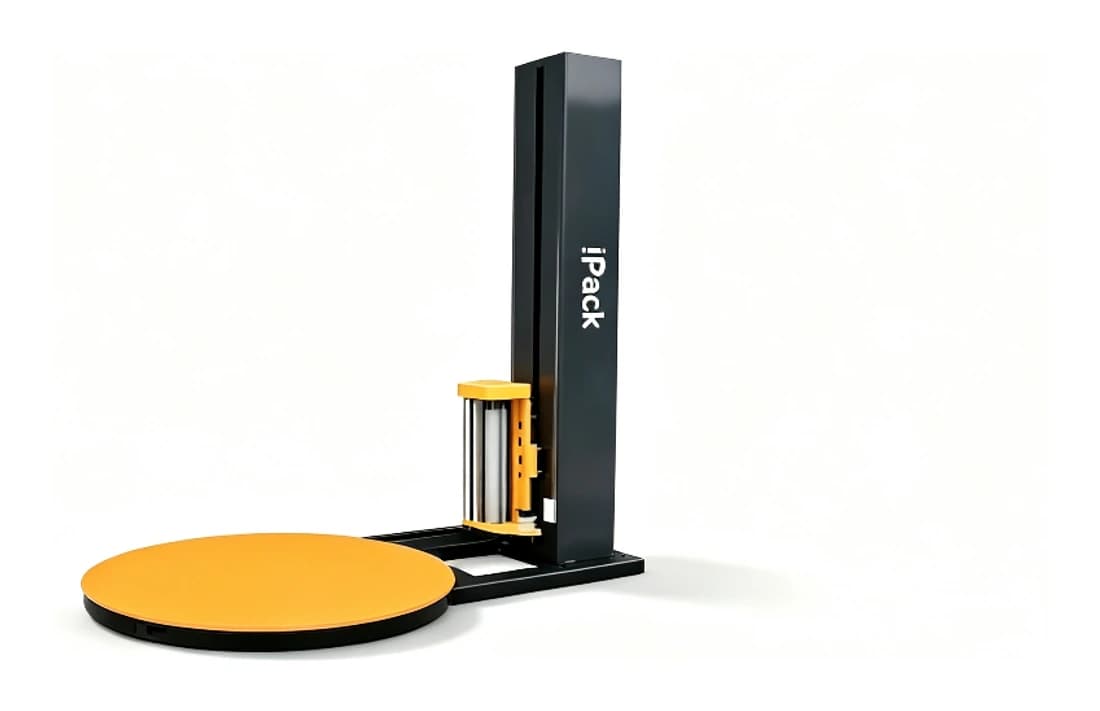
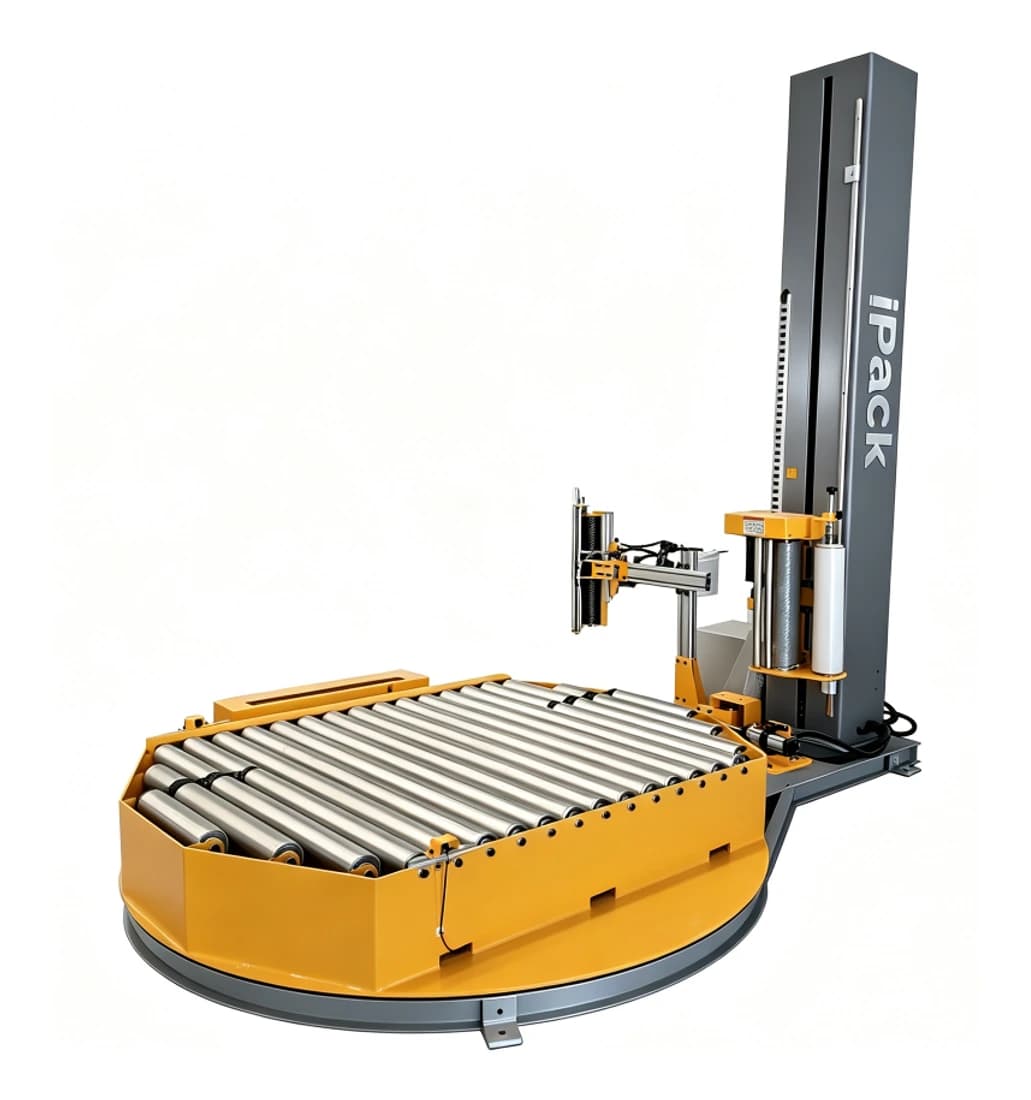
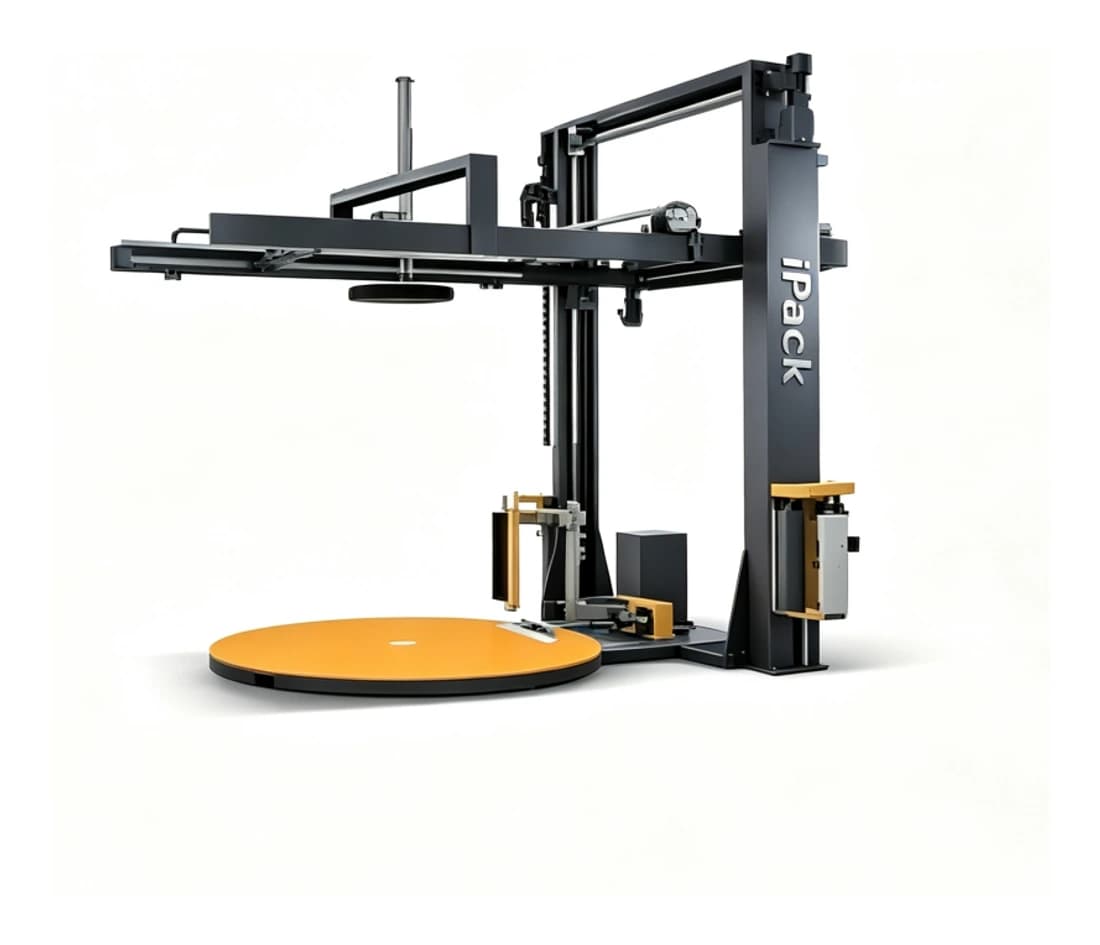
| 200 % (SW-5000D, SW-6000D) | 48 m | 16.0 m | 1.17× |
| 250 % (SW-1000D, SW-7000D, SW-4000D) | 48 m | 13.7 m | 1.0× |
04Where the savings stop
Pre-stretch is not free to increase indefinitely. Beyond roughly 250 % the film is thin enough that dart impact and puncture resistance fall, and loads with sharp edges or exposed corners start to tear in transit.
The practical rule: 250 % is the sensible ceiling for general palletised goods, and loads with sharp corners or high point loads should be wrapped at lower yield with corner protection added, rather than stretched further to save film.
Frequently asked questions
Does a higher pre-stretch ratio weaken the wrap?
+
It reduces puncture resistance, not holding force — stretched film actually holds a load better because it is under tension. The limit is damage: past roughly 250 % the film tears on sharp corners and you lose more to rework than you save in film.
How many layers should a pallet have?
+
For a stable load in dry storage, two layers with extra top and bottom wraps is normal. For transport or outdoor storage, three to four layers with a top sheet. The right number is the one that survives your own transit test.
Is 20 μm or 25 μm film cheaper overall?
+
Almost always the thinner one, because you are paying for film by weight and the machine does the work of stretching it. The exception is loads with sharp edges, where a thicker gauge reduces tearing and rework.
Machines referenced in this guide
Get a specification, not a sales pitch
An engineer reads every enquiry. You will get the model that fits, the options you actually need, and a delivery date.