
What is VNA warehousing? Definition, aisle widths and when it pays
6 min read
Reviewed and updated by the iPack engineering team.
In short
VNA stands for very narrow aisle: a warehouse layout where the storage aisle is only as wide as the load plus a working clearance, typically 1.5 to 2.0 m. It works because the truck rotates its forks rather than turning, and it typically adds 30–40 % more pallet positions in the same building.
01Definition
Very narrow aisle (VNA) warehousing is a storage layout in which the aisle between two rows of racking is reduced to roughly 1.5–2.0 m — close to the width of the pallet itself plus clearance — by using a truck that can place and retrieve pallets without turning around inside the aisle.
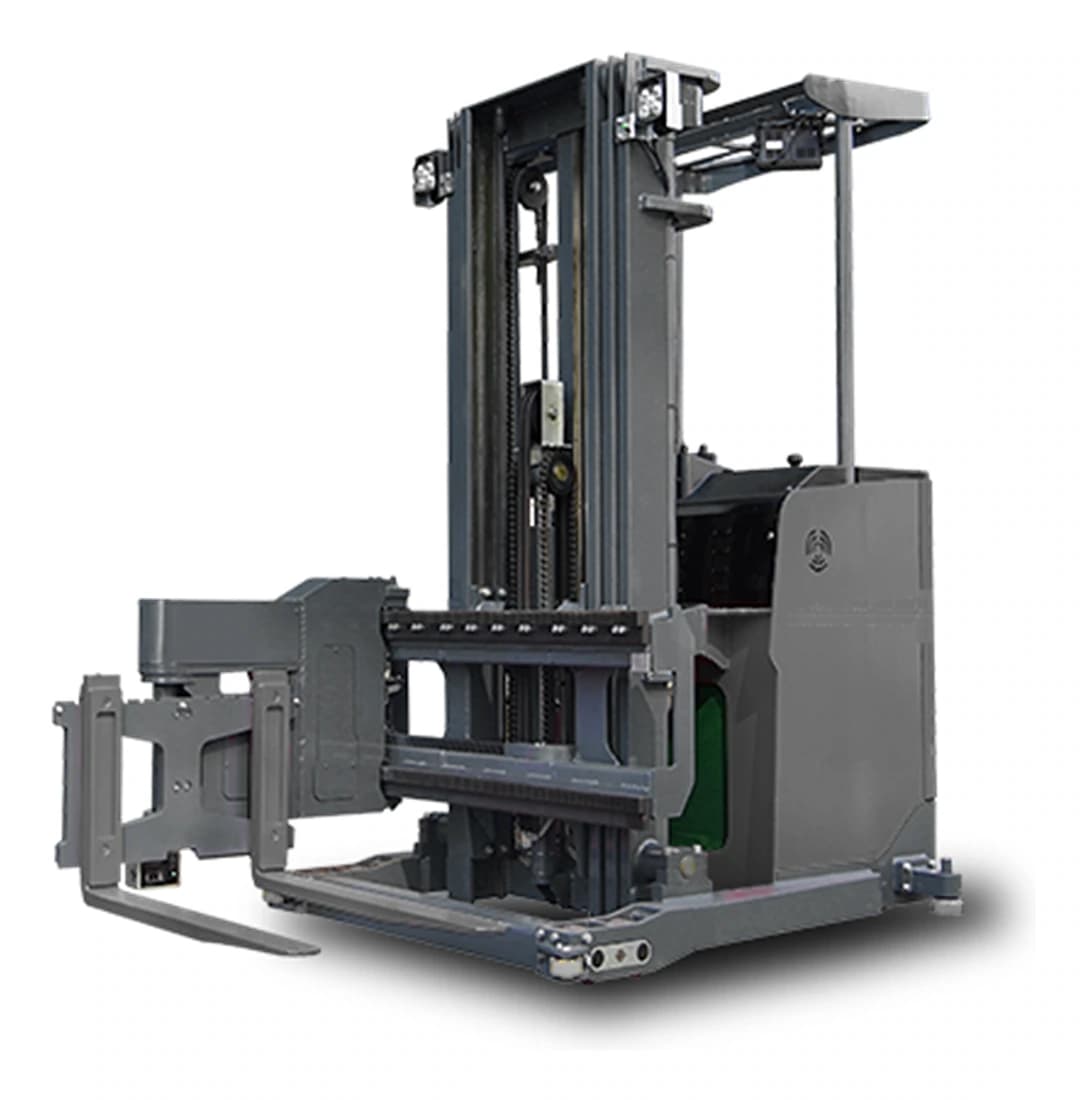
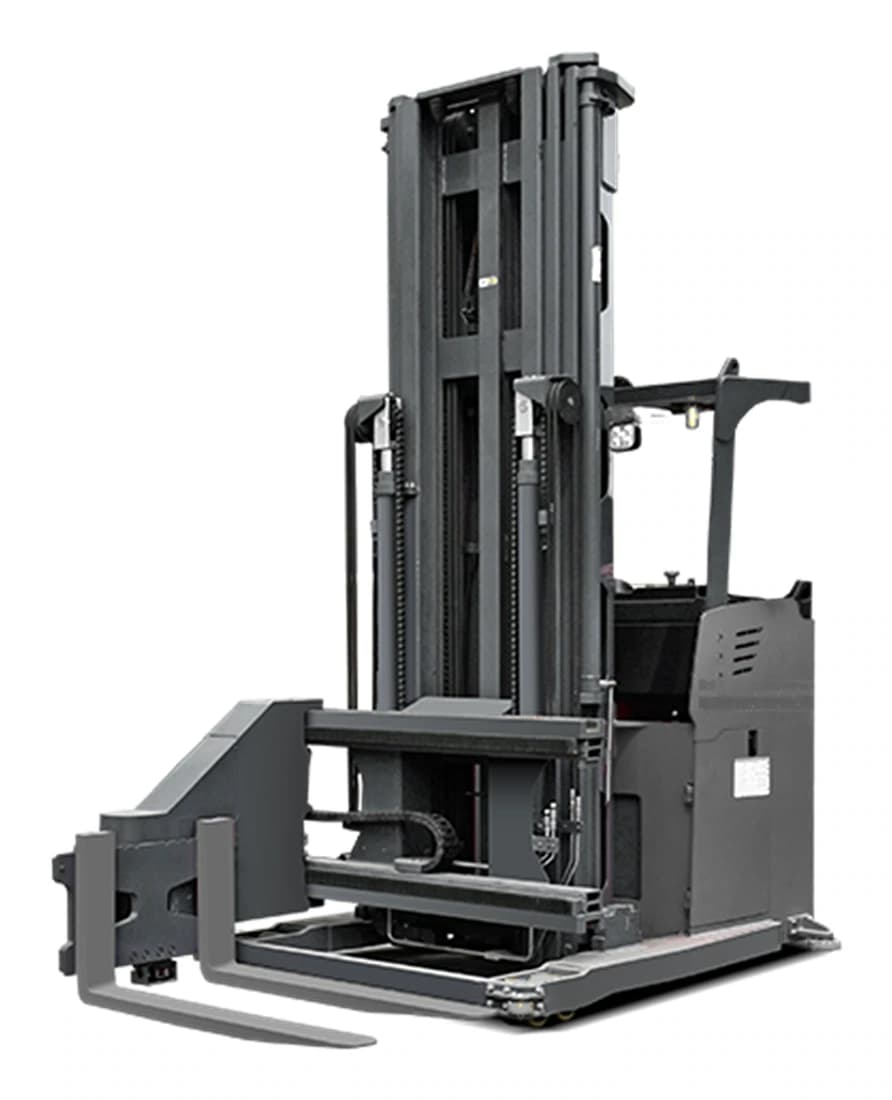
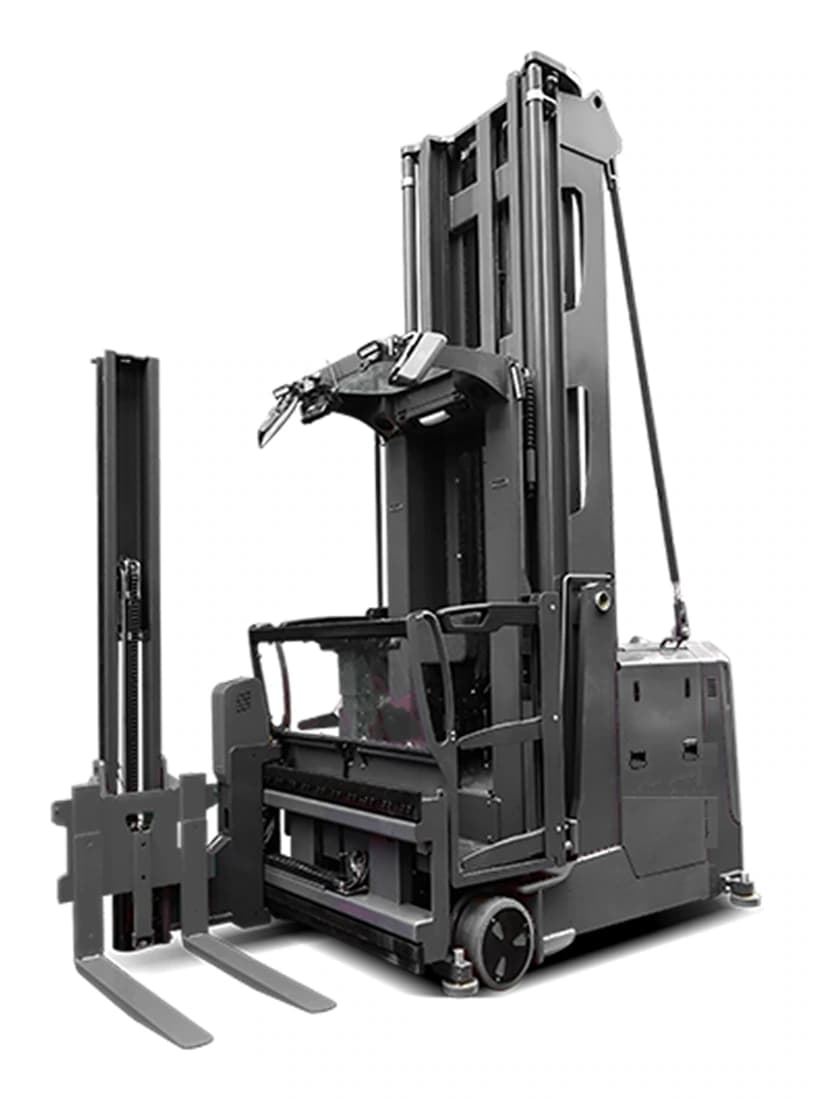
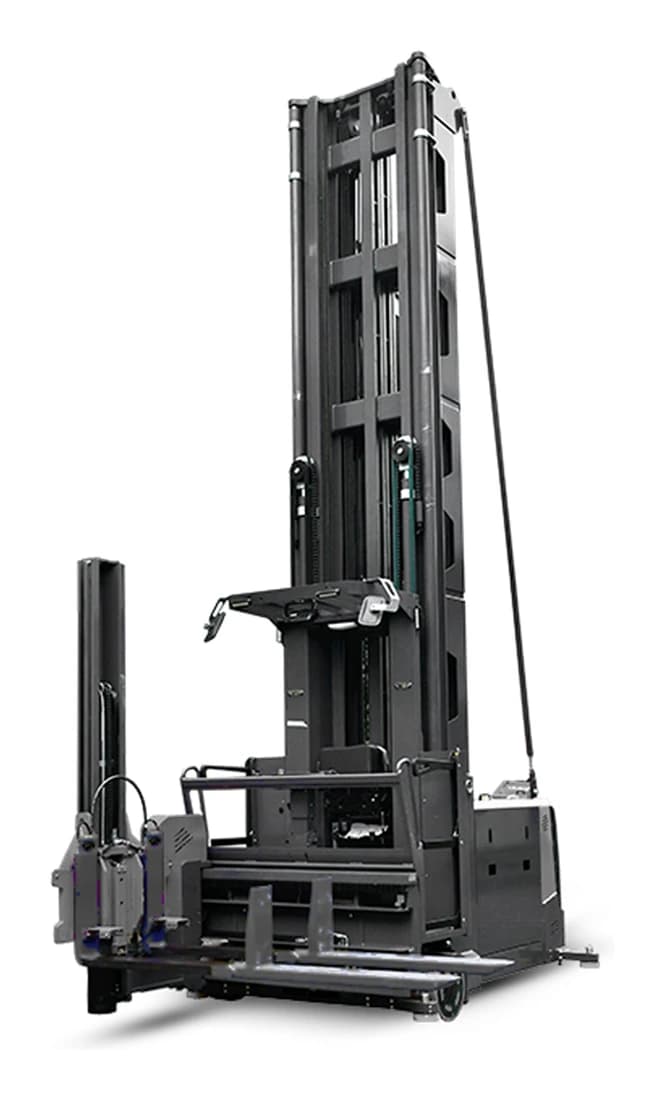
The mechanism is always the same: the forks rotate (usually 180°) and side-shift, so the truck presents the pallet to either rack face from a single centred position. In some designs the mast articulates instead of the forks.
02How narrow is 'very narrow'?
There is no formal standard, but in practice the categories are consistent across the industry:
| Band | Aisle width | Typical truck |
|---|---|---|
| Conventional | 3.5–4.5 m | Counterbalance |
| Narrow aisle | 2.7–3.0 m | Reach truck |
| Very narrow aisle (VNA) | 1.5–2.0 m | Three-way stacker with guidance |
| Ultra-narrow / guided | 1.5 m | Three-way stacker, 1200×1200 pallet |
03Guidance: rail, wire or magnet
- Mechanical rail — a steel rail bolted to the racking uprights or set in the floor. Most positive steering, needs the racking to be installed true.
- Wire guidance — a wire laid in a floor slot, sensed inductively. Uses an existing aisle with minimal civil work.
- Permanent-magnet guidance — magnetic markers on or in the floor. Simplest to install and to relocate, common where floors are already poured.
- Electromagnetic — the same principle with an active reference, used where the floor cannot be cut.
04How much density does it actually add?
The gain comes from two sources: the aisle itself gets narrower, and the number of aisles changes because more racking fits in the same footprint.
Replacing a 3.8 m counterbalance aisle with a 1.5 m guided aisle typically recovers 30–40 % more pallet positions in the same building. On a 12 000 m² site that is often the equivalent of an extension, without the capital project.
05When VNA is the wrong answer
- Very low throughput with a small SKU count — the guidance cost per pallet moved is too high
- Buildings with poor floor flatness where a rail cannot be installed economically
- Mixed-duty sites where one truck must also work the yard and the dock
- Loads above the VNA capacity band (generally 1.6 t and below) — multi-directional trucks handle heavier long product
Frequently asked questions
Is VNA the same as a narrow aisle?
+
No. Narrow aisle usually means a reach truck layout at 2.7–3.0 m; VNA means 1.5–2.0 m with a truck that does not turn in the aisle, which requires guidance and a three-way or articulating mast.
Does VNA need a special floor?
+
The floor has to be flat and level to the tolerance the guidance system requires, and it must carry the truck's wheel loading. Wire and magnet guidance can be installed in a sound existing slab; a mechanical rail needs the racking to be true and is normally fitted with new racking.
Can VNA racking be picked by hand?
+
Only with a man-up truck, which raises the operator with the forks. On a stand-on truck the top levels are pallet-only, and case picking is done at ground level or in a separate area.
Machines referenced in this guide
Get a specification, not a sales pitch
An engineer reads every enquiry. You will get the model that fits, the options you actually need, and a delivery date.