
By architecture · Wrapping & strapping
Horizontal wrapper for long profiles and pipe
In short
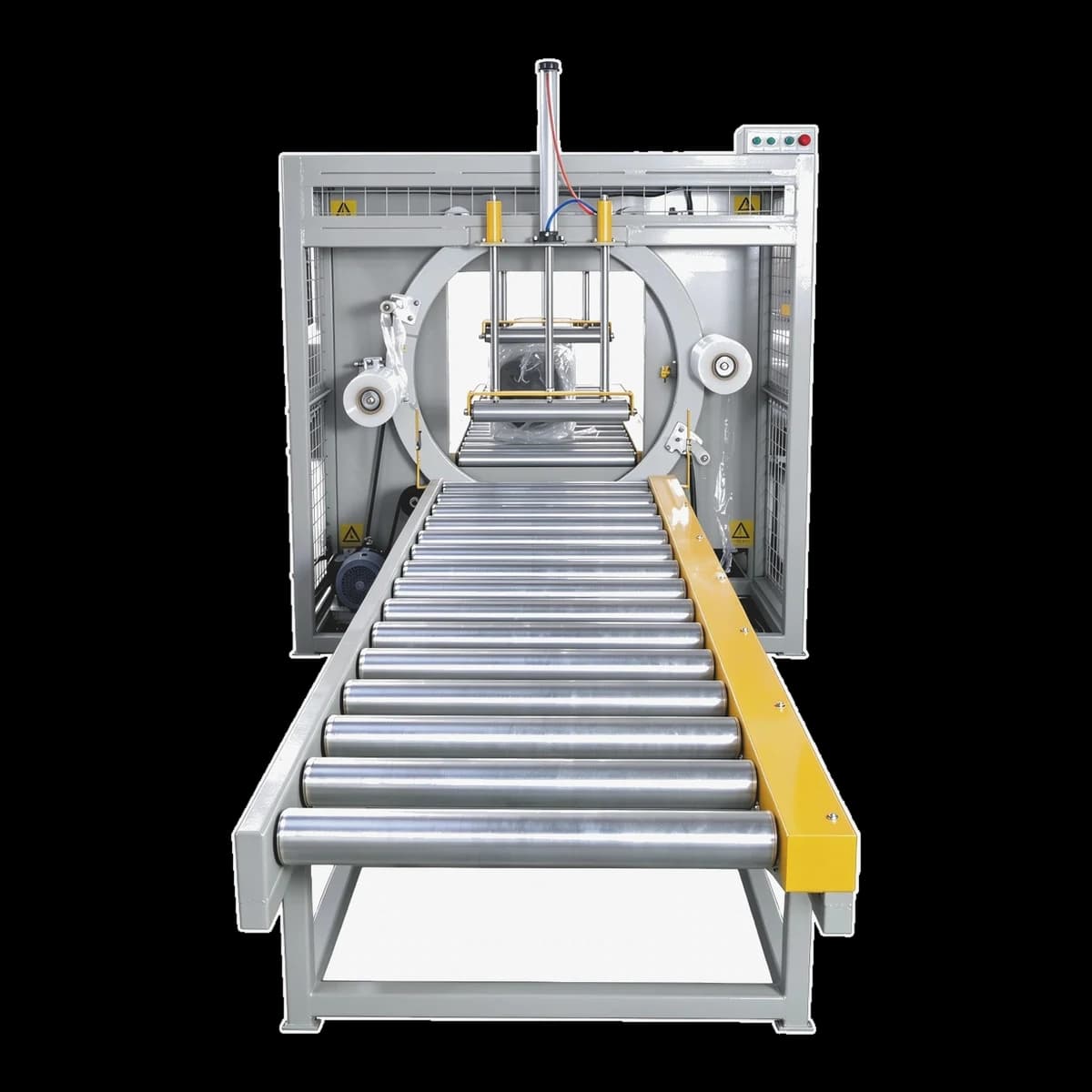
A horizontal wrapper passes the profile through a rotating film ring instead of putting it on a turntable. Length is limited by your handling, not the machine, and cross-sections up to 300 × 250 mm are wrapped without ever turning the product.
- Any product length — the load travels through the ring
- Cross-sections up to 300 × 250 mm
- No rotation of the load: no marks on finished surfaces
- Inline with an existing roller table or saw discharge
Length not limited
Six-metre extrusions and cut-to-length boards use the same ring.
Product never rotates
Finished surfaces are not pressed against a deck.
Film overlap set in software
Overlap per pass is a setpoint, not a mechanical adjustment.
Low film use
Ring wrapping uses only the film the cross-section needs.
Horizontal wrapper — published range
| Item | SW-2000D horizontal |
|---|---|
| Product | Long profiles, boards, pipe |
| Cross-section | up to 300 × 250 mm |
| Length | Limited by handling |
| Load rotation | None |
| Feed | Roller table / line discharge |
Models
Machines that do this job
In the field
Photographed on customer floors
Buyer questions
What buyers ask before ordering
What products go through a horizontal wrapper?
+
Extrusions, window and door profiles, boards, pipe and bundles. Anything long and rigid that cannot be put on a turntable fits this architecture.
Is there a maximum length?
+
No machine limit — the profile passes through the ring, so length is set by your roller table and handling. We size the infeed and outfeed to your line.
Can it run inline with a saw?
+
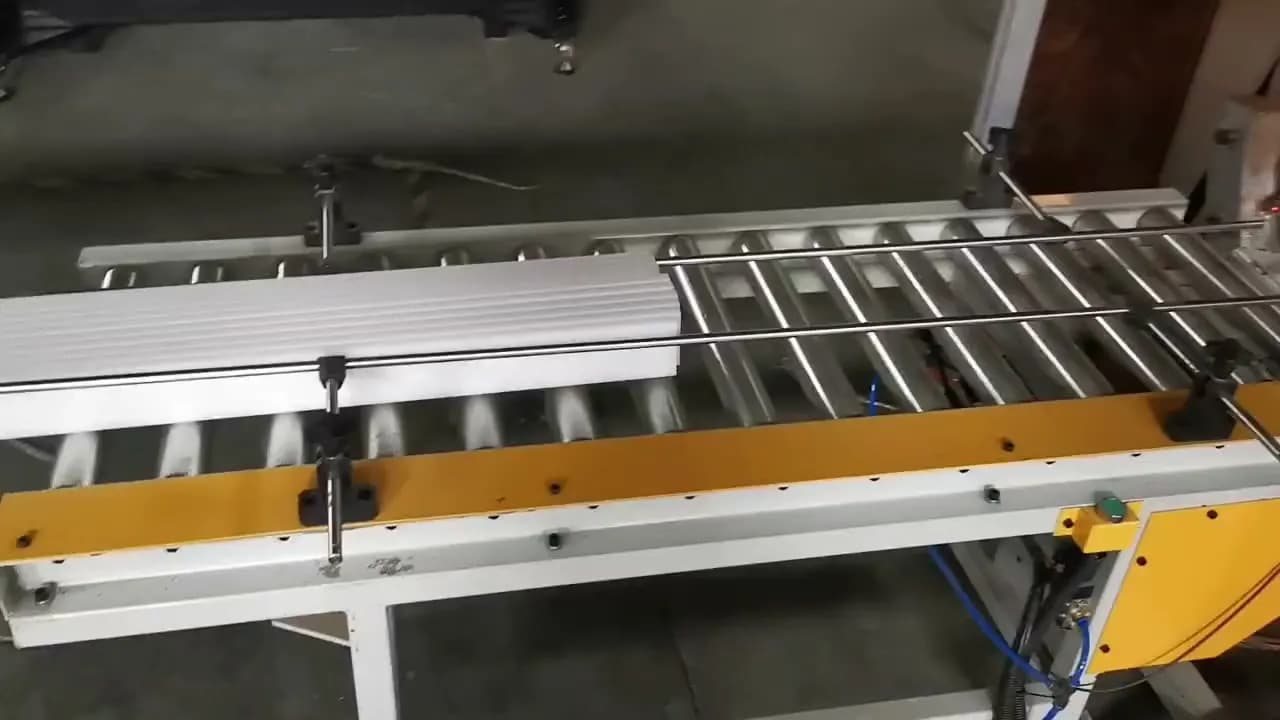
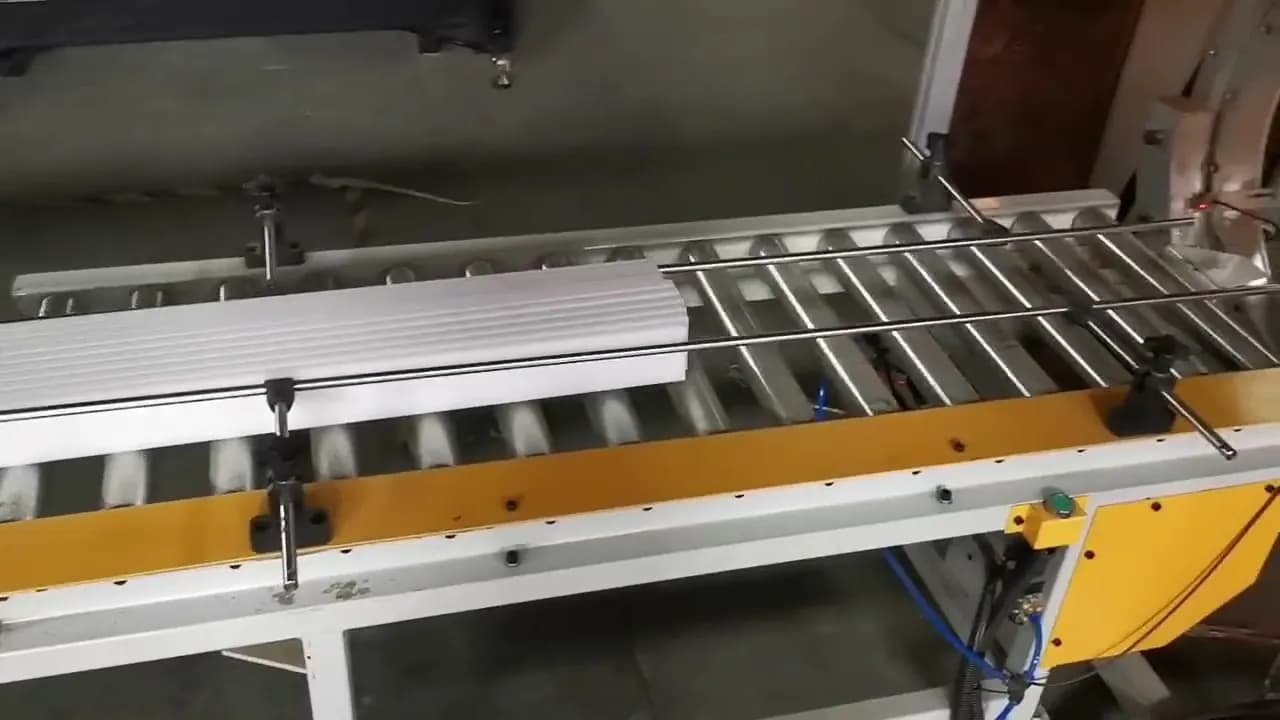
Yes. The usual arrangement is a roller table after the saw or extruder, with the wrapper sitting inline and the wrapped bundle continuing to the bundling station.
Does it protect the surface finish?
+
The product never rotates and never sits on a spinning deck, so anodised, painted and polished surfaces are not marked in the way a turntable can mark them.
Send us the load. We will size the machine.
Load dimensions, weight and the rate the line has to keep up with are enough for a machine recommendation and a firm quotation.