
By architecture · Wrapping & strapping
In-line wrapper for conveyor-fed pallet lines
In short
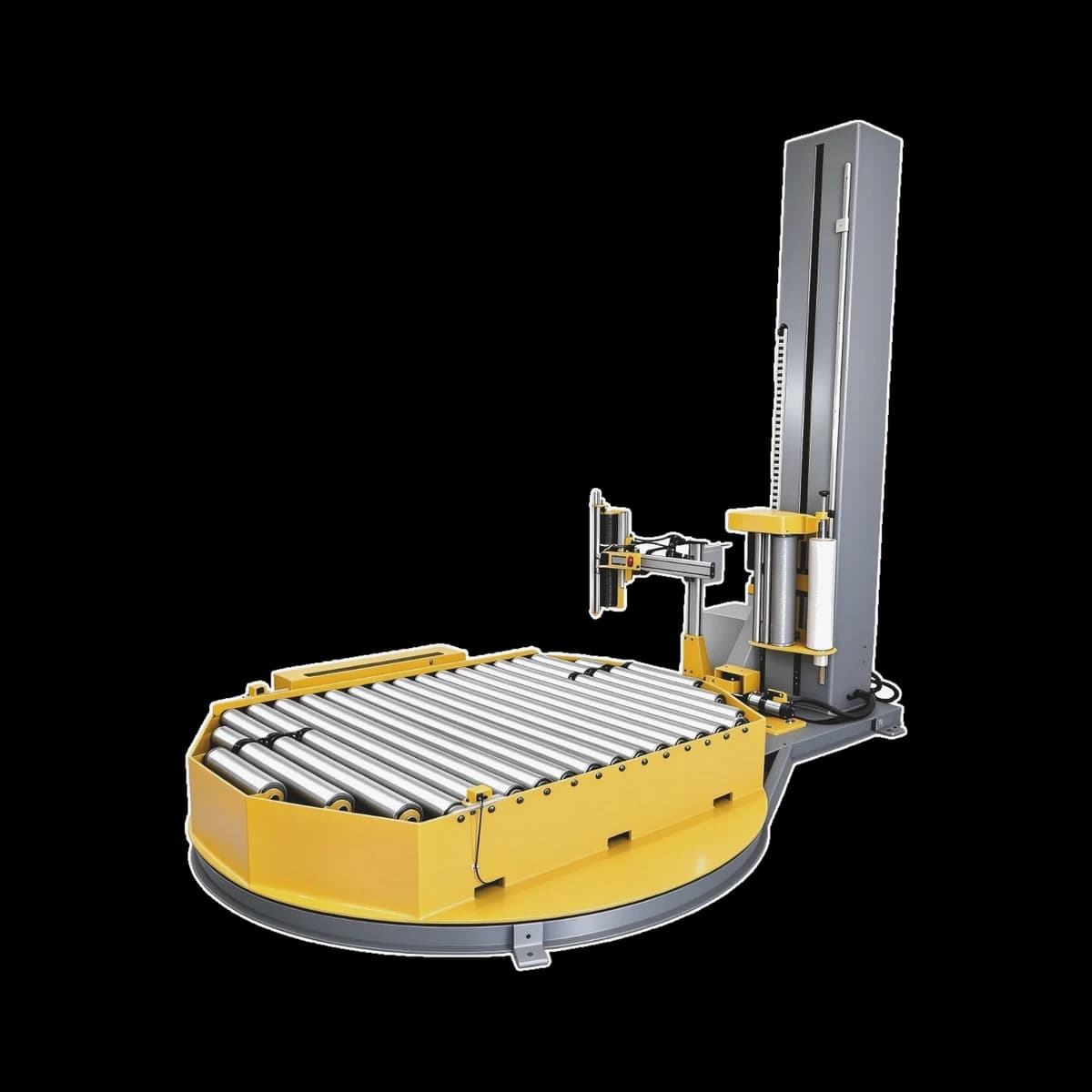
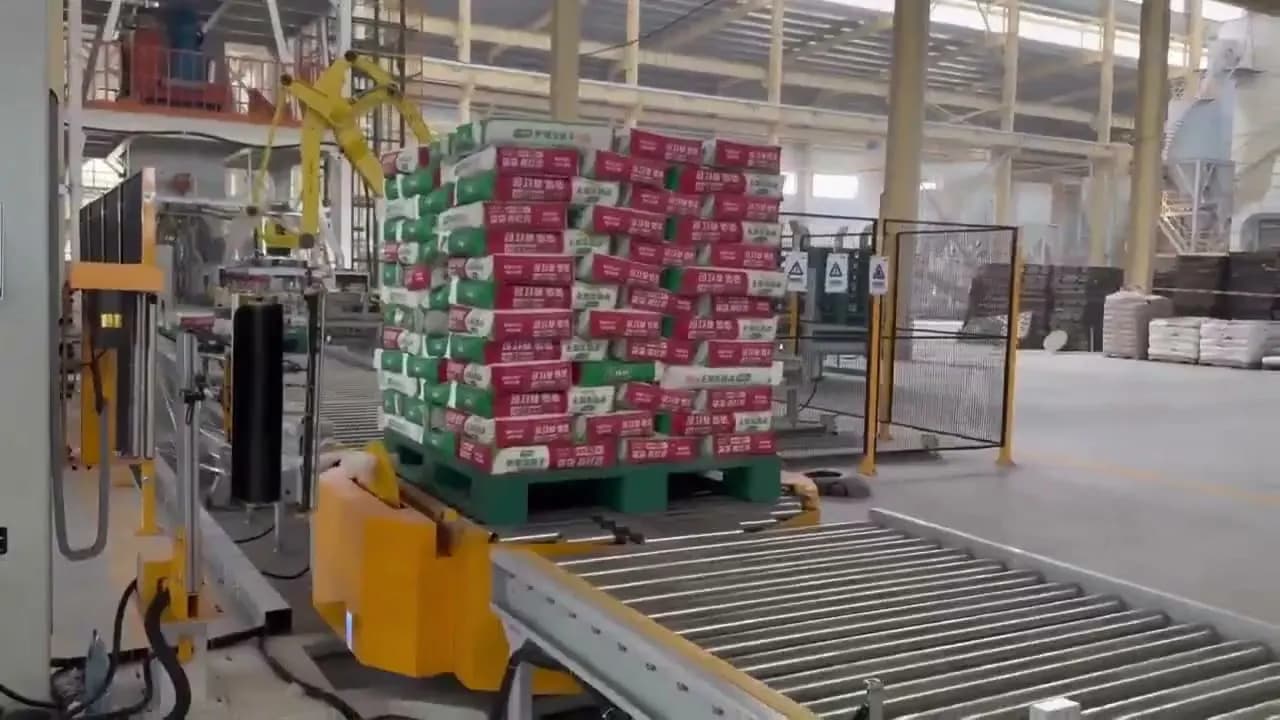
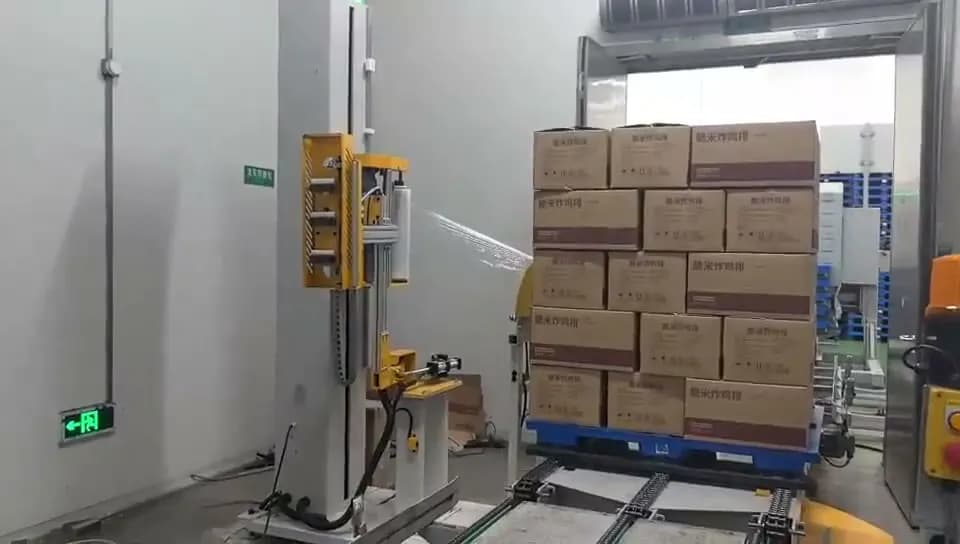
An in-line wrapper makes the conveyor itself the wrapping station: the pallet rolls onto a driven roller deck, wraps without being unloaded, and rolls on. It runs 20–40 pallets an hour with no operator at the machine, synchronised to the line PLC.
- Driven roller deck — the conveyor is the turntable
- 20–40 pallets per hour, matched to your line rate
- Dry-contact interlocks for upstream and downstream conveyors
- Height matched to your existing conveyor at order
Roller deck as turntable
At this rate the pallet, not the operator, does the moving.
Line PLC interlock
Load-in, wrap and load-out are signalled by dry contacts, so the line never wraps into a full conveyor.
20–40 pallets/h
Throughput is set by the wrap recipe, not by a fork truck.
Height matched
Deck height is built to your conveyor, not shimmed on site.
In-line wrapper — published range
| Item | SW-1500D in-line |
|---|---|
| Rated load | 1,500 kg |
| Throughput | 20–40 pallets/h |
| Feed | Roller conveyor |
| Operator at machine | Not required |
| Control | PLC with line interlocks |
Models
Machines that do this job
In the field
Photographed on customer floors
Buyer questions
What buyers ask before ordering
What is the difference between an in-line wrapper and a turntable?
+
A turntable has a deck you place the pallet on with a fork truck. An in-line wrapper has driven rollers that carry the pallet in and out, so no operator or truck touches it.
Can it be retrofitted to an existing conveyor?
+
Yes, that is the usual case. We need the conveyor height, roller pitch and drive arrangement, and the deck is built to match rather than shimmed on site.
How is it controlled?
+
A PLC with dry-contact interlocks to the upstream and downstream conveyor. Siemens, Mitsubishi or Inovance controls are available depending on your plant standard.
How many pallets per hour?
+
20–40 pallets an hour, set by the programmed layers and over-top time as well as the conveyor speed.
Send us the load. We will size the machine.
Load dimensions, weight and the rate the line has to keep up with are enough for a machine recommendation and a firm quotation.