
By end-of-arm tooling · Cobot palletizing
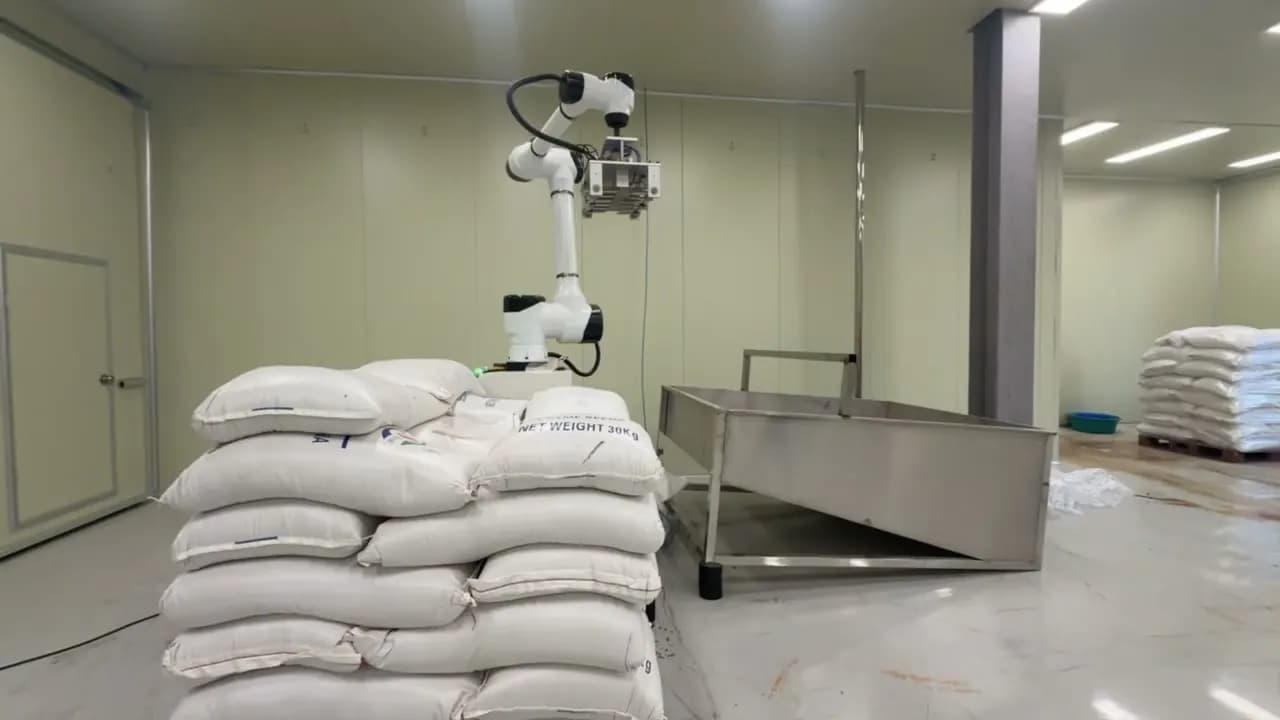
Fork tool for bagged grain and feed
In short
A metal fork slides under or between bags instead of gripping their surface, which is what makes depalletizing — taking bags off a pallet — possible as well as palletizing. The tool mounts on the same cobot cells and runs at the same 8–10 cycles a minute.
- Works in both directions: palletizing and depalletizing
- Metal fork reaches between bags on a stacked pallet
- Same cobot cell, quick-change coupling
- 8–10 cycles a minute on bagged grain, feed and fertilizer
Fork tool
Slides under the bag body instead of gripping its face.
Two-way working
The same cell can build and break down pallets.
Bulk bags and sacks
Grain, feed, fertiliser and other free-flowing fill.
8–10 cycles/min
Payload 30 kg per pick on the standard cells.
Fork tool — working envelope
| Item | Value |
|---|---|
| Direction | Palletize and depalletize |
| Payload | 30 kg per pick |
| Product | Bagged grain, feed, fertiliser |
| Tool change | Quick-release, minutes |
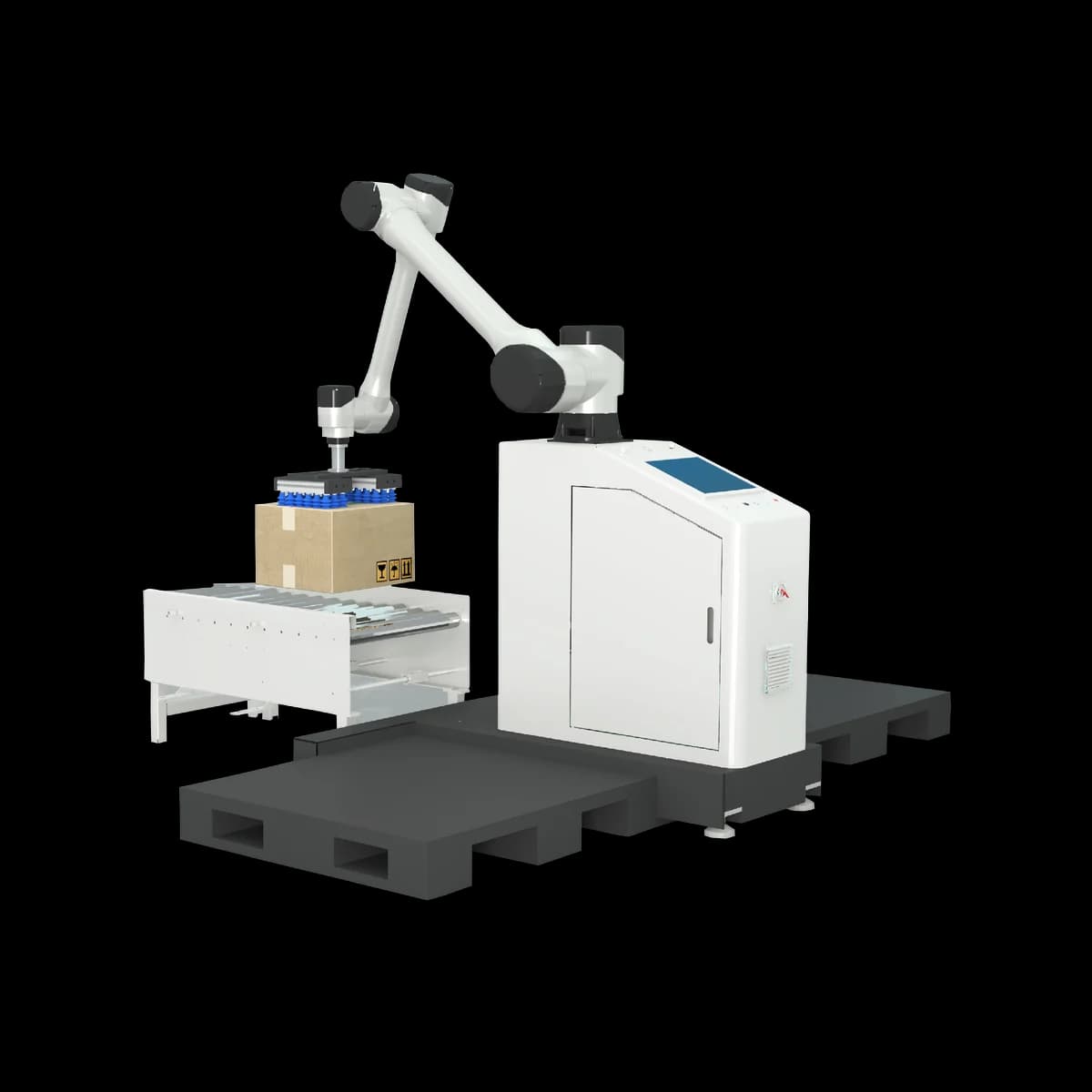
| Cells | SCP-530D / SCP-630D |
In the field
Photographed on customer floors

Buyer questions
What buyers ask before ordering
Can the same robot depalletize and palletize?
+
Yes with a fork tool. The fork slides between bags, so the cell can take a pallet apart for feeding as well as build one at the end of the line.
What materials does the fork suit?
+
Bagged grain, feed, fertiliser and similar free-flowing fill in woven or paper sacks — the applications where a vacuum cup leaks and a clamp cannot reach the bag body on a tight stack.
How is the tool changed?
+
With a quick-release coupling. Swapping between fork and clamp or vacuum takes minutes, so one cell can cover several pack formats.
Does this change the cycle rate?
+
No. The cells run 8–10 cycles a minute whatever the tool, so the pallet rate depends on the pattern rather than the gripper.
Send us the load. We will size the machine.
Load dimensions, weight and the rate the line has to keep up with are enough for a machine recommendation and a firm quotation.