
Stretch film gauge: choosing between 17, 20, 23 and 25 μm
6 min read
Reviewed and updated by the iPack Robotic engineering team.
In short
Thinner film is almost always cheaper per pallet, because you pay by weight and the machine does the stretching. 17–20 μm suits stable loads with square corners; 23–25 μm is for sharp edges, high point loads and loads that puncture. The limit is tearing, not holding force.
01The short answer
Film is sold by weight and applied by length, so the arithmetic favours thinner film — the machine stretches it further, and you buy less plastic for the same containment.
Gauge is therefore not a quality setting. It is a decision about **puncture and tear resistance**, and the right question is not "what is best" but "what is the thinnest film that survives my load and my transit".
| Gauge | Suits | Avoid when |
|---|---|---|
| 17 μm | Stable, square, light loads; short domestic transit | Any sharp edge or protruding corner |
| 20 μm | General palletised goods — the default | Heavy point loads, rough handling |
| 23 μm | Bagged product, drums, mixed loads | Not usually necessary for clean square loads |
| 25 μm | Sharp or abrasive edges, machinery, metal parts | Rarely — it is the safe but expensive choice |
02Why thinner is cheaper, and by how much
Two effects compound. First, you buy less material per metre. Second, thinner film is typically stretched to a higher ratio before it tears, so each metre covers more pallet.
Worked through on a 1 200 × 1 200 mm pallet 1 500 mm high with a 250 mm layer pitch: about 48 m of film lands on the pallet, which consumes roughly 13.7 m from the roll at 250 % pre-stretch. At 20 μm that is around 0.26 kg of film; at 25 μm, around 0.32 kg. Over 20 000 pallets a year the difference is about 1.2 tonnes of film for the same containment.
The saving is real but it is not free — it is bought with a higher risk of tearing, and a pallet that tears in transit costs far more than the film it saved.
03What actually causes tearing
- **Sharp corners and edges** — the single biggest cause. Corner protectors or a heavier gauge, not more wraps.
- **Protruding fixings** — staples, banding clips and pallet nails puncture film under tension.
- **Excessive pre-stretch** — beyond roughly 250 %, puncture resistance falls faster than holding force rises.
- **Cold** — film becomes brittle below about 0 °C, which is why wrapping normally happens in the anteroom rather than the freezer.
- **Load movement** — a load that shifts inside the wrap abrades the film from within.
04Gauge, pre-stretch and wrap count are one decision
These three are usually treated as separate settings and they are not. Containment comes from the combination, and the cheapest combination for a given load is rarely the one with the most film on it.
A practical order of operations: set the gauge from the load's edges and mass, set the pre-stretch to the machine's maximum that does not tear, then set the wrap count from a transit test. Setting wrap count first and gauge last is how sites end up using 25 μm film and four layers where 20 μm and three would have held.
It is worth running an actual transit test rather than estimating. Wrap a pallet, send it on your normal route, and look at it on arrival. The failure mode tells you which of the three to change — a torn film points at gauge and corners, a shifted load with intact film points at wrap count.
05Practical rules
- Start at 20 μm and go thinner only after a successful transit test
- Go heavier for sharp edges, not for heavy loads — mass alone does not tear film
- Corner protectors are usually cheaper than a heavier gauge everywhere
- Add wraps before adding gauge when the problem is load shift rather than tearing
- Check the film's pre-stretch rating against the machine's carriage ratio
Frequently asked questions
Is a thicker film stronger?
+
It resists puncture better, but it does not hold a load better. Stretch film contains a load through tension, and a well-stretched thin film is under more tension than a poorly stretched thick one. Thickness buys puncture resistance, not holding force.
What gauge should a standard pallet use?
+
20 μm is the sensible default for general palletised goods. Move to 17 μm only where the load is square, stable and the transit is short; move up to 23–25 μm where there are sharp edges or high point loads.
Does film gauge affect the pre-stretch ratio I can run?
+
Yes. Thinner film generally tolerates a higher ratio before tearing, which is part of why it is cheaper per pallet. But the ceiling is set by the load, not the film — a sharp edge will tear 17 μm at any ratio.
Why does film tear in winter?
+
LLDPE becomes brittle as it approaches and passes 0 °C, so its puncture and tear resistance fall even though its holding force does not. This is why wrapping is normally done in a chilled anteroom rather than inside a freezer.
What film width do the machines take?
+
500 mm LLDPE machine film on a 76.2 mm core is standard across the range, at 15–35 μm. Film width is confirmed at order because it interacts with the carriage and the load height.
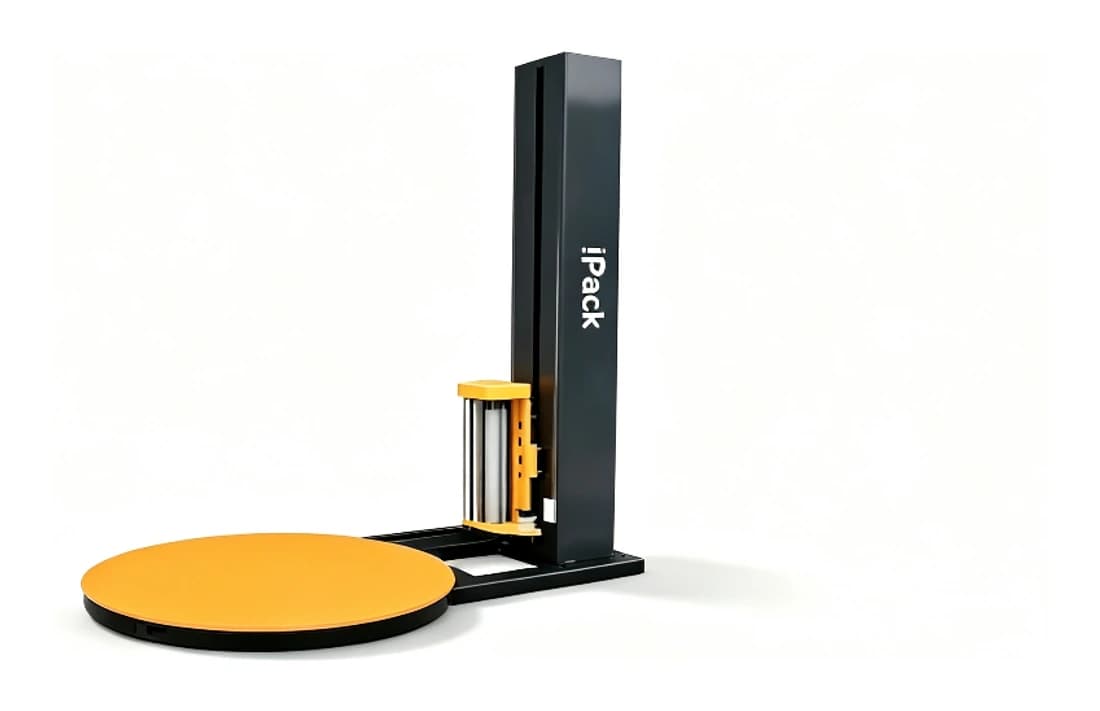
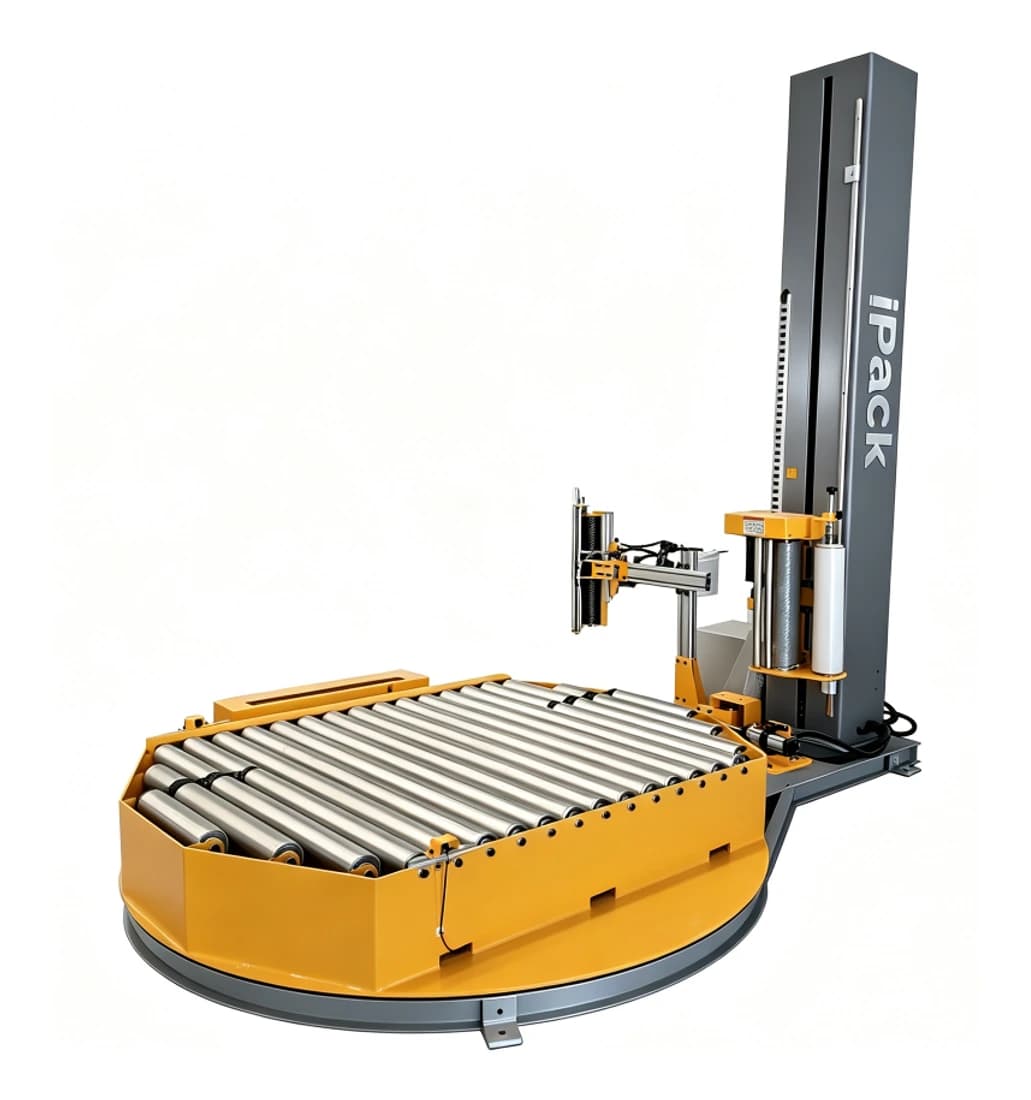
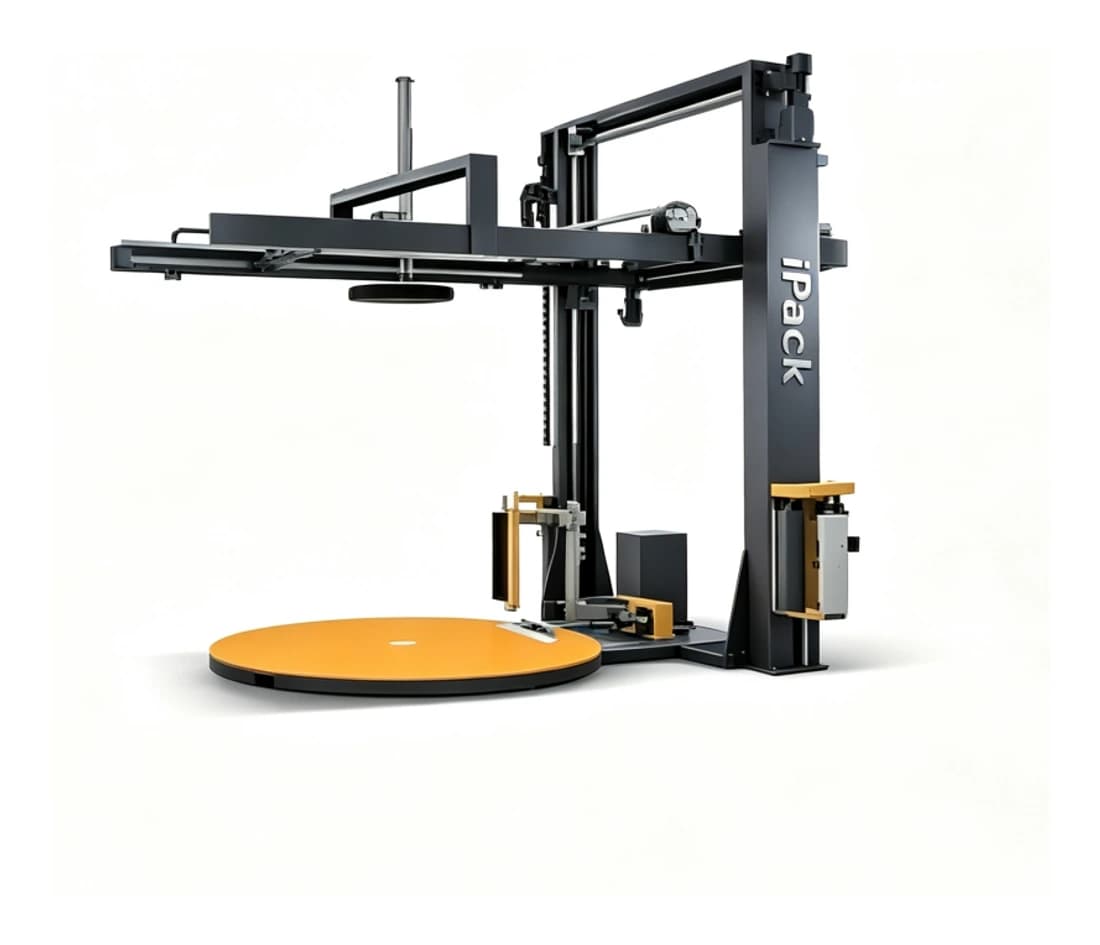
Machines referenced in this guide
Get a specification, not a sales pitch
An engineer reads every enquiry. You will get the model that fits, the options you actually need, and a delivery date.