
Multi-Directional Forklifts
Multi-Directional in short
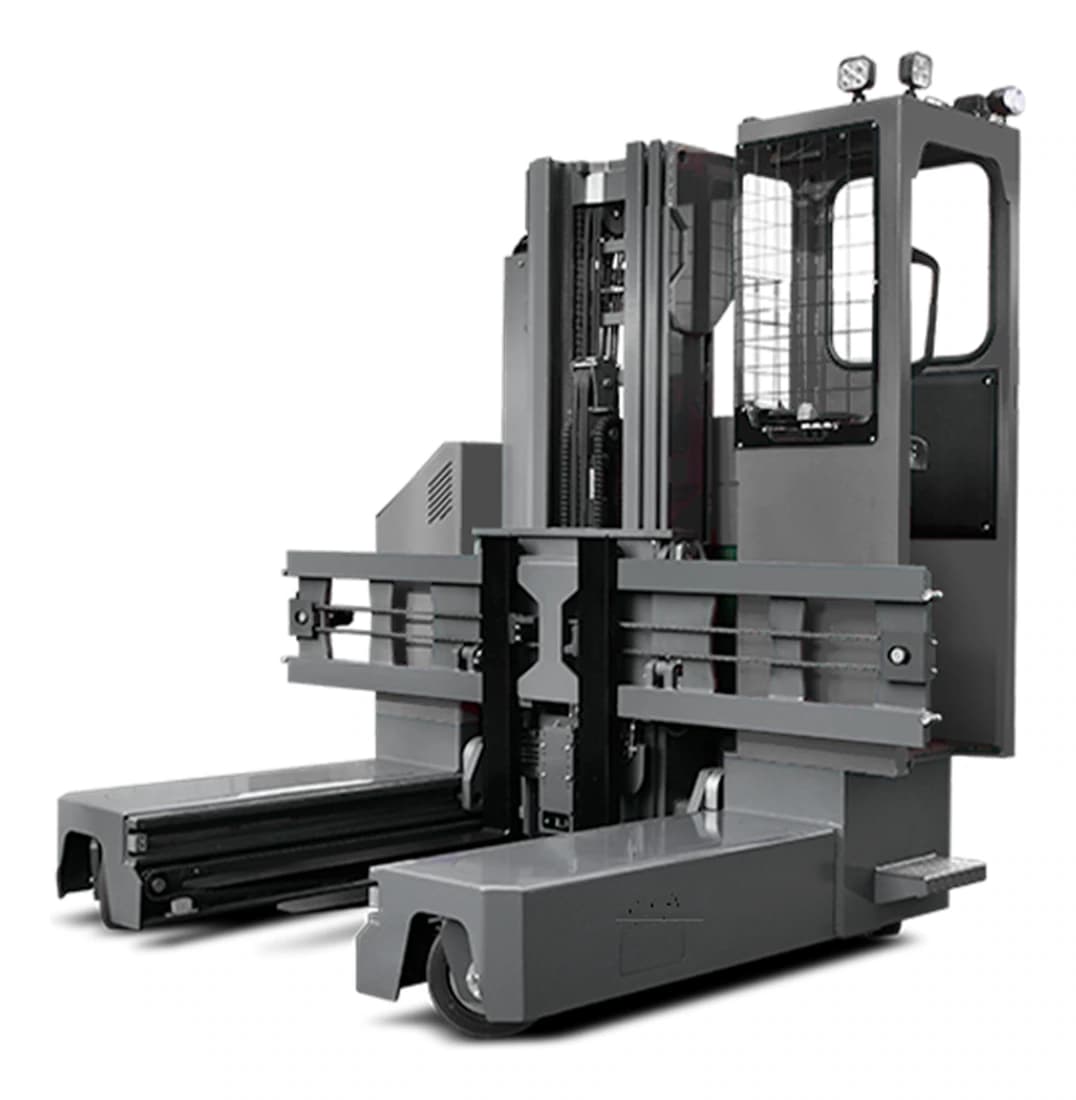
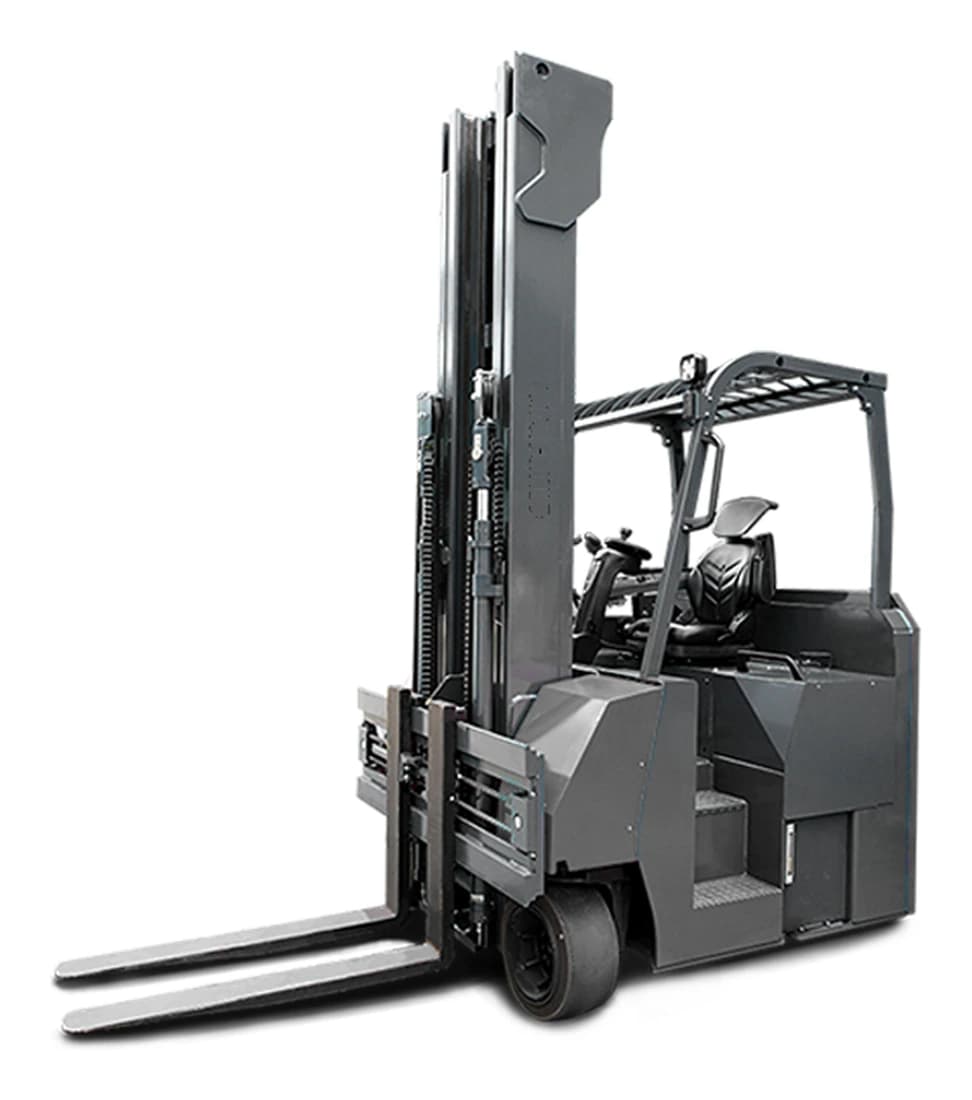
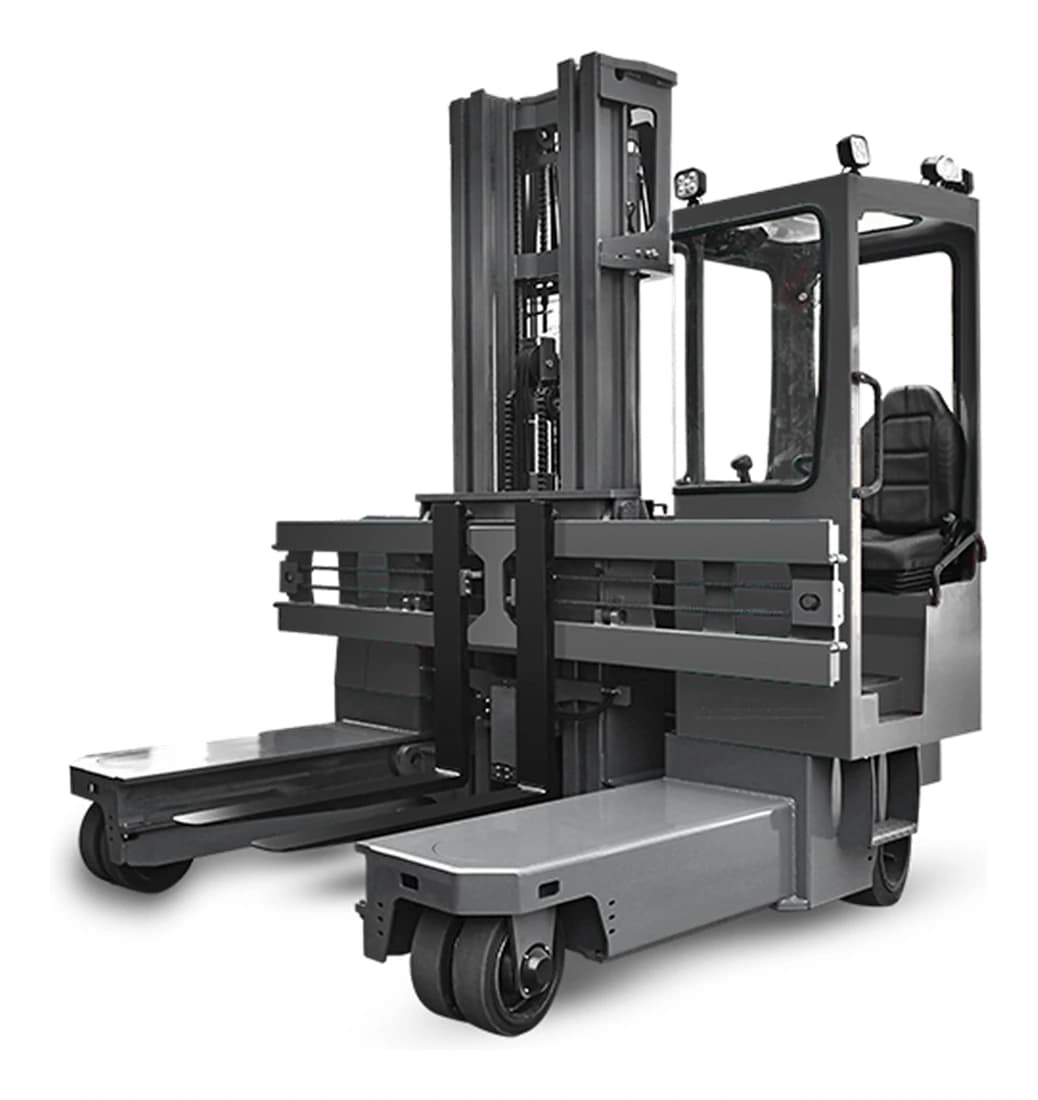
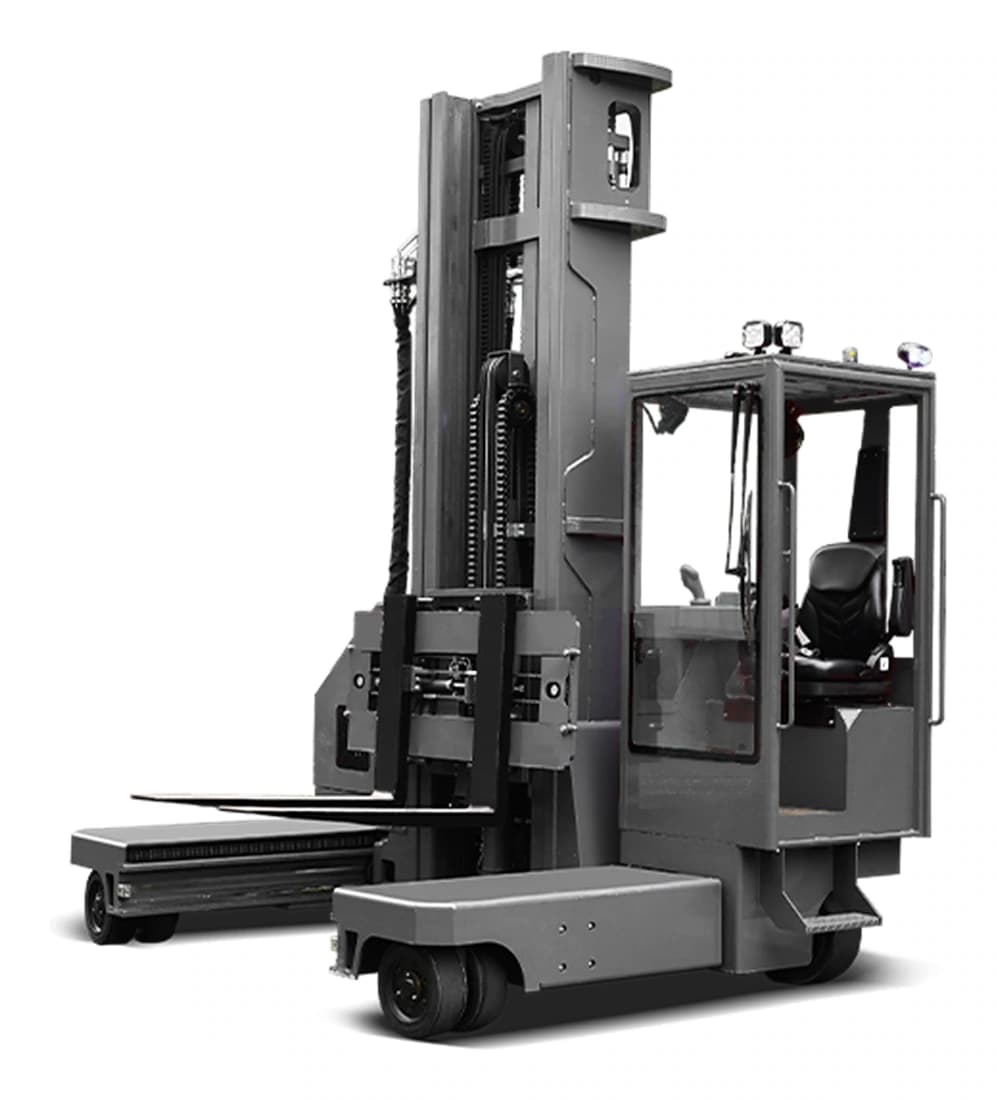
Multi-directional forklifts travel straight, crab, laterally and rotate in place, so a long load moves sideways down an aisle only slightly wider than itself instead of needing room to be swung round. iPack builds eight models from 1.5 t to 8 t with lift heights of 4.5 to 10.5 m, including a counterbalance version with no outrigger legs.
Omnidirectional reach and counterbalance trucks for long loads — straight, crab, lateral and in-place rotation handling of steel, timber, pipes and profiles.
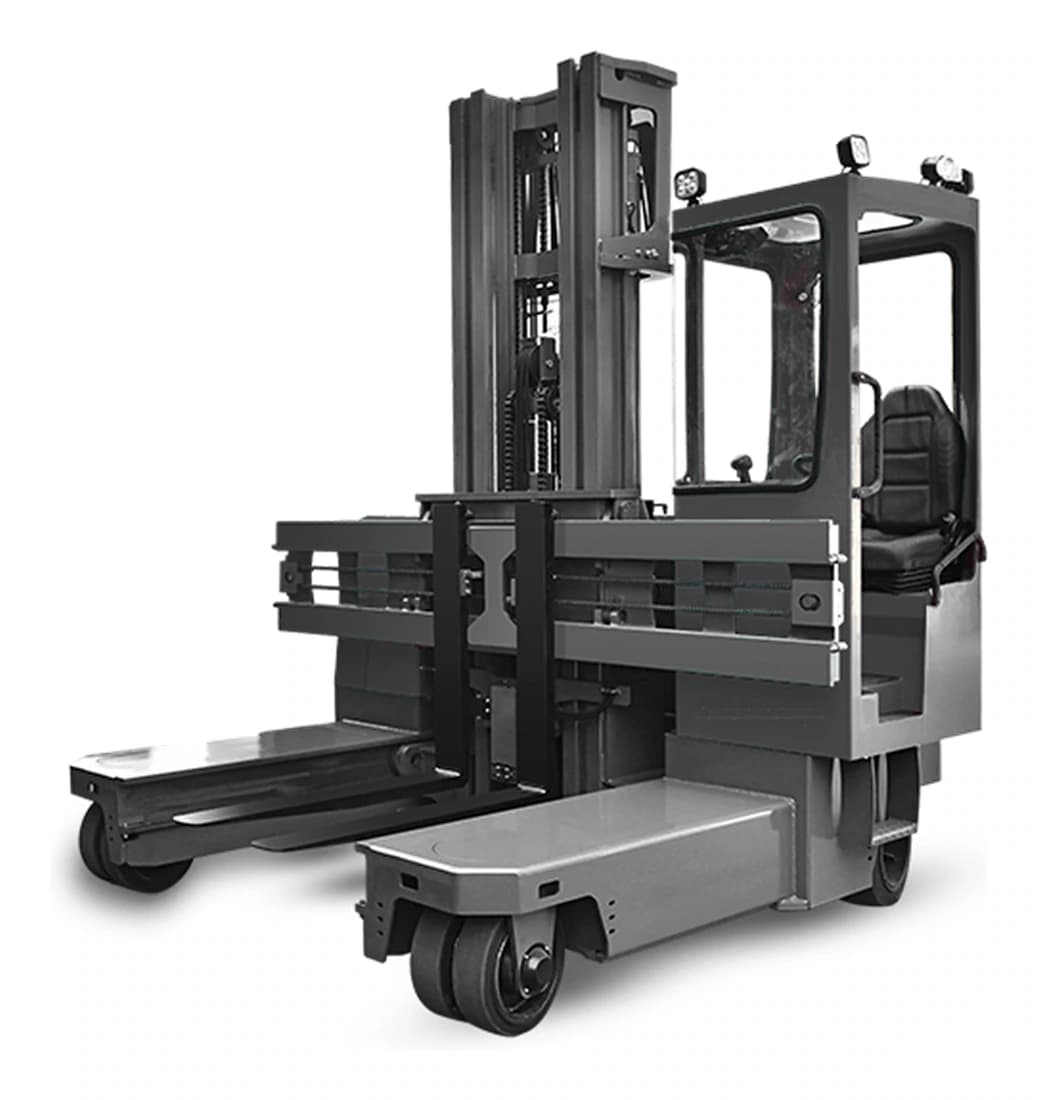
8 models
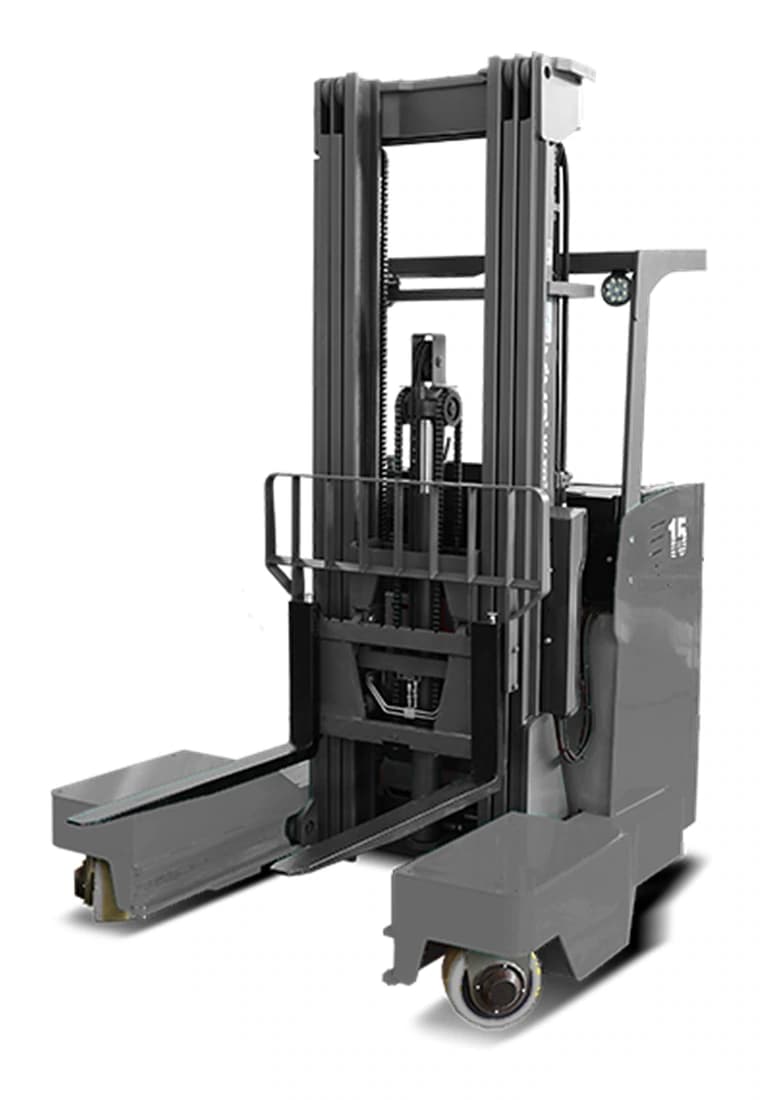
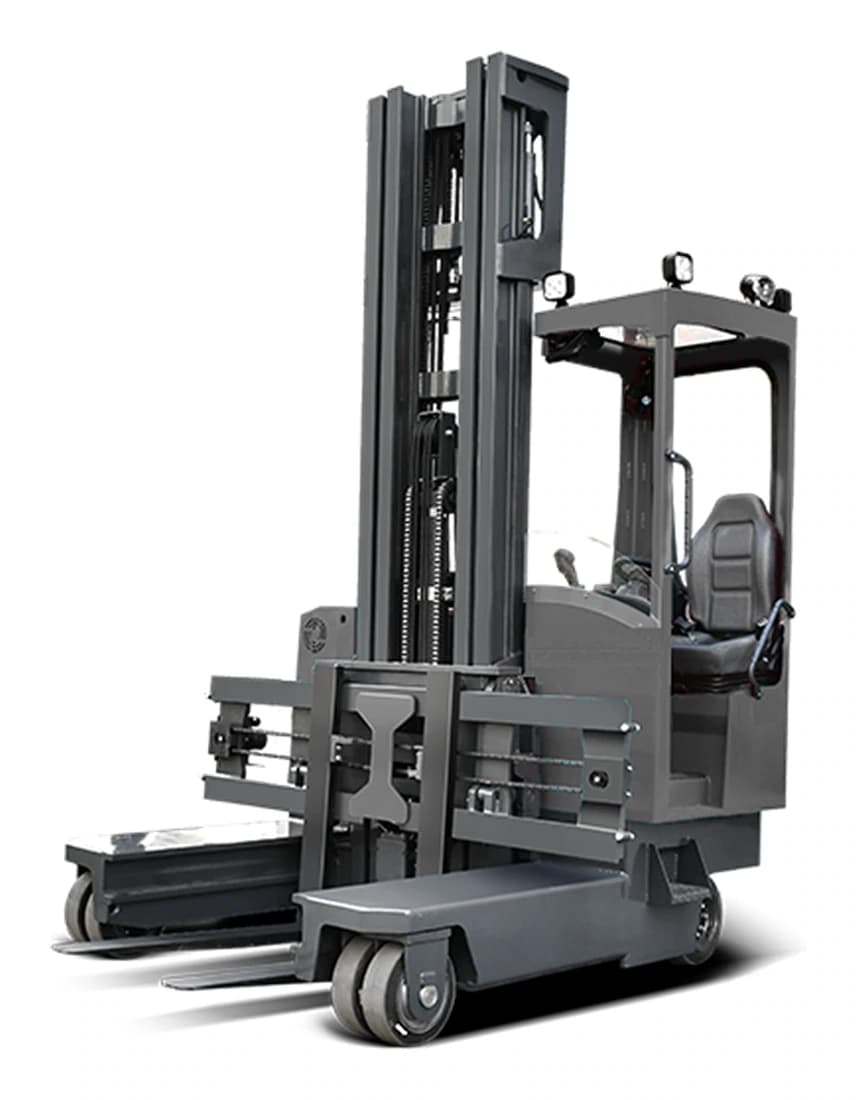
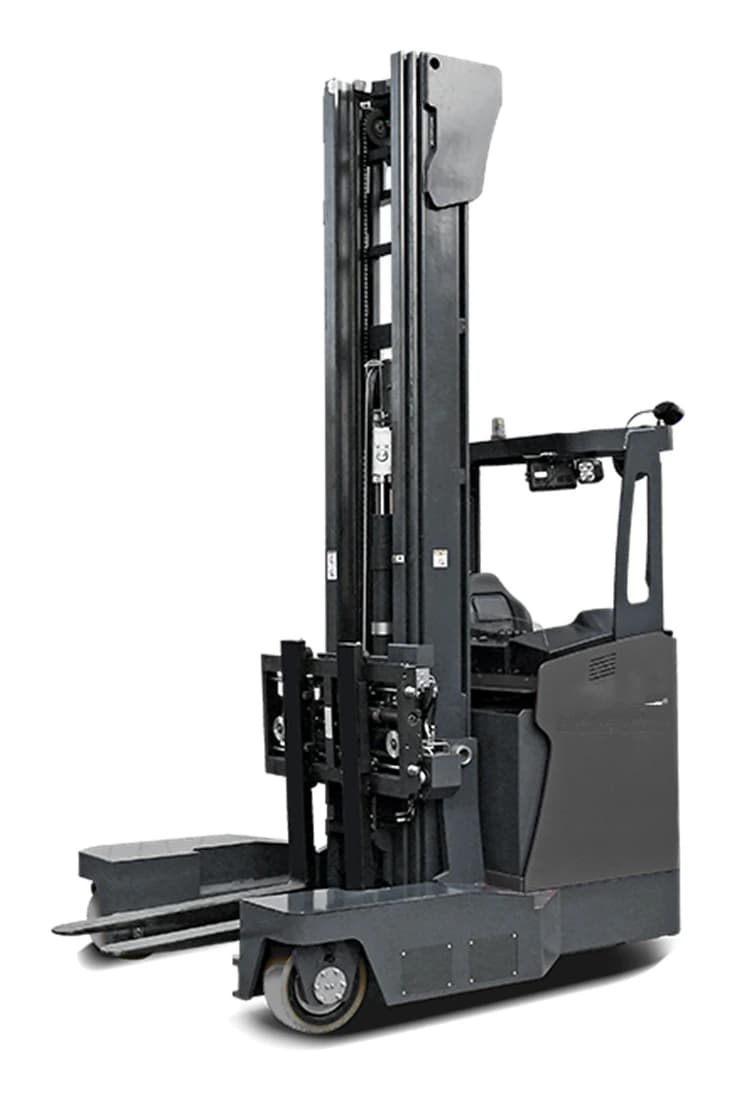
SF-1500M / SF-2500M (SQ) · SF-2500M (MQC25) · SF-2500M / SF-3000M (MQZ) · SF-3000M · …
Why this family exists
Built around the load, not the catalogue
Long product is the hardest thing to store well. A six-metre bundle needs a main aisle wide enough for a conventional truck to swing it round — which can be a third of the floor area of the building, permanently unusable for storage.
An omnidirectional truck breaks that link. Four-wheel independent steering gives straight, crab, lateral and in-place rotation travel, so the bundle travels sideways down an aisle only slightly wider than the load. The main aisle is then set by the product, not by the truck's turning circle.
The range covers 1.5 to 8 tonnes with lift heights from 4.5 to 10.5 m, in stand-on, seated, side-seated and counterbalance configurations. The counterbalance model has no outrigger legs, so it picks standard pallets straight off the floor as well as handling long stock — useful where one truck has to do both jobs.
What every unit includes
- Four travel modes: straight, crab/offset, lateral and in-place rotation
- Front/rear shifting mast with adjustable fork spread on seated models
- Independent four-wheel steering for tight, dense layouts
- Counterbalance version with no outrigger legs for direct pallet pick
- AC drive with lateral travel speeds up to 8 km/h
- 48 V and 80 V battery options matched to your shift pattern
- CE declaration, axle-load drawings and spare-parts list
Four steering modes
Straight, crab, sideways and spin in place — the aisle only has to fit the load, not the truck's turning circle.
Built for long loads
Steel sections, timber packs, pipes and profiles carried sideways through aisles a counterbalance truck cannot use.
1.5 t to 8 t
Eight models on one platform, so the truck scales with the product rather than the other way round.
Pallets and profiles
The counterbalance MQK picks standard pallets directly off the floor with no outrigger legs in the way.
8 models in this family
Every specification below is taken from the official datasheet. Open a model for the full table, options and application notes.
Typical applications
Steel service centres
Sections, plate and tube stored long and dense, moved sideways into the racking.
Timber and panel merchants
Packs and bundles handled laterally without a wide main aisle.
Aluminium and plastics extrusion
Long extruded profile moved from the press line into storage without damage.
Machinery and fabrication
Heavy fabricated assemblies moved on forks instead of waiting for the overhead crane.
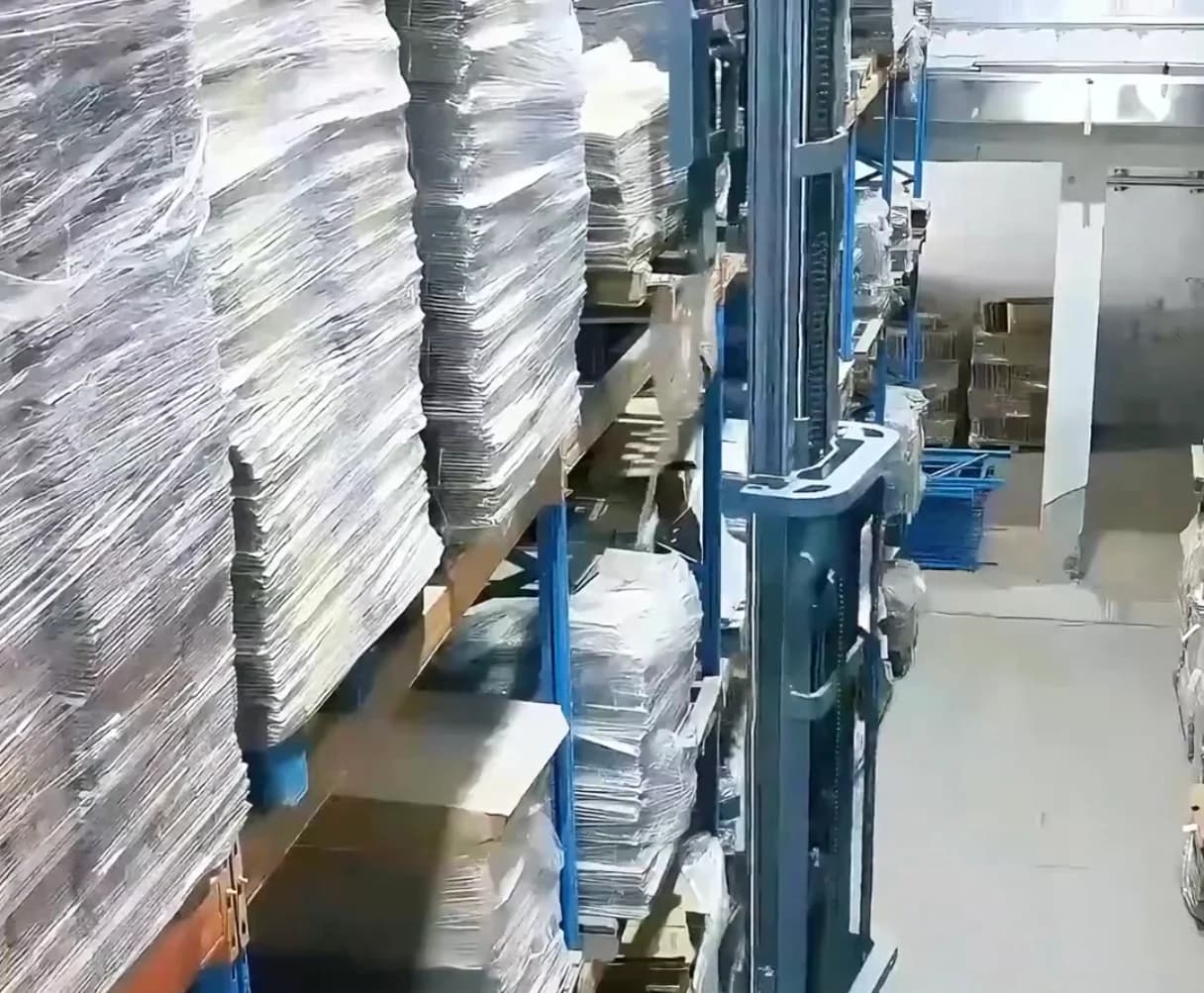
Dense high-bay storage from a 1.9 m aisle
Multi-directional trucks travel sideways down the aisle, so the main aisle only has to be as wide as the load — not as wide as the truck plus its turning circle.
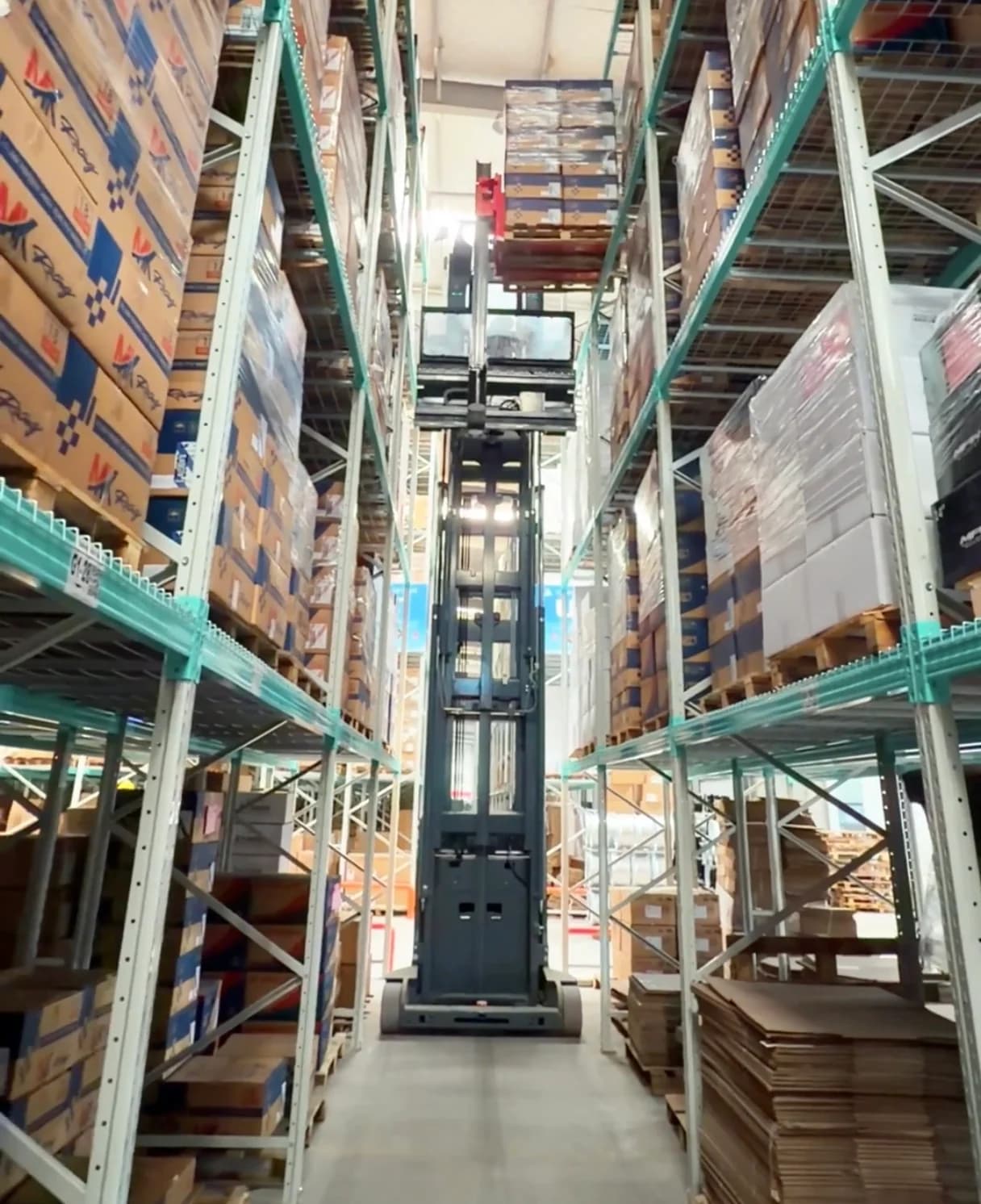
1.5 m guided aisle, both rack faces
A three-way stacker rotates its forks 180° instead of the truck, so a single 1.5 m guided aisle serves two rows of racking. Customers typically recover 30–40 % more pallet positions from the same building.
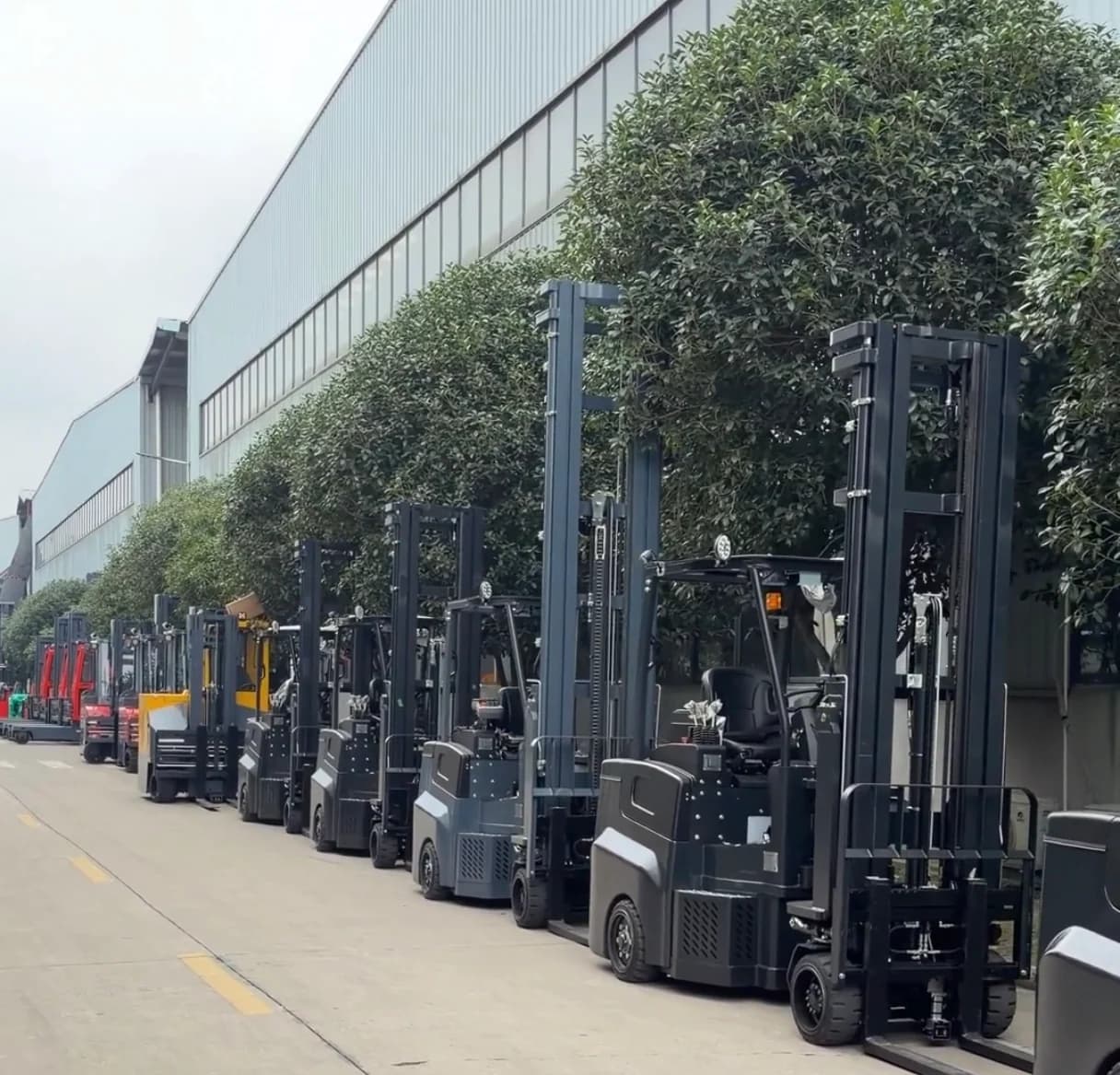
Fleet staged for container loading
Units are run in, filmed and staged together so a mixed fleet ships in one container with a single set of manuals and spares.
Multi-Directional — questions buyers ask
How much floor space does lateral travel actually save?
+
The main aisle in a multi-directional layout is set by the load length rather than the truck's turning circle. On a steel or timber site that typically removes 2–3 m of aisle width along the whole storage run, which is where the density gain comes from.
Can a multi-directional truck pick standard pallets?
+
The SF-3000M counterbalance version can, because it has no outrigger legs to foul the pallet. Reach versions with legs are designed for long product and cannot pick a pallet flat off the floor.
What is the heaviest load you build for?
+
The SF-8000M is rated 8 000 kg with 1 300 mm of fork extension and a 2 960 mm fork carriage, for extra-large steel, pipe and machinery components.
Do multi-directional trucks need guide rails?
+
No. Independent four-wheel steering does the work, so no guidance infrastructure is required and an existing building can be used as it stands.
Which steering mode is used most?
+
Lateral travel, for moving long loads down an aisle, followed by crab steering for fine alignment into the racking. In-place rotation is used mainly for turning at the aisle end.
More answers on lead time, voltage, documentation and support are on the FAQ page, and the guides section covers how to choose between models.
Need help choosing within this family?
Load, height and throughput usually make the decision for you. Send us those three numbers and we will narrow it to one model.