
How do you store more pallets without extending the building?
In short
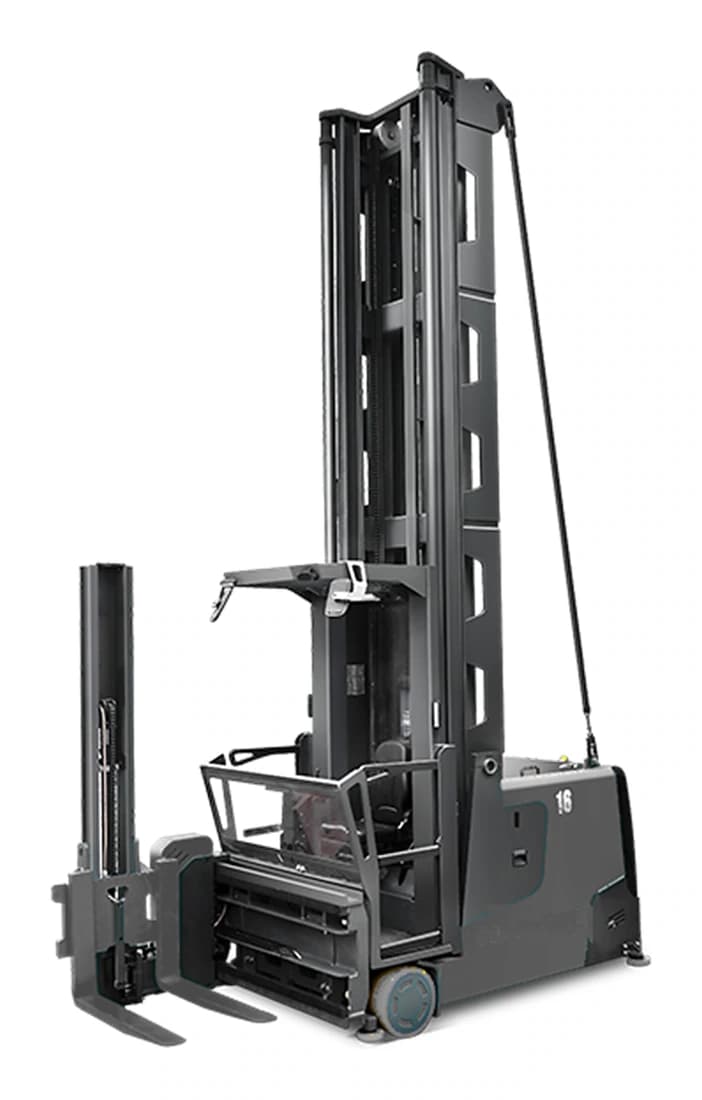
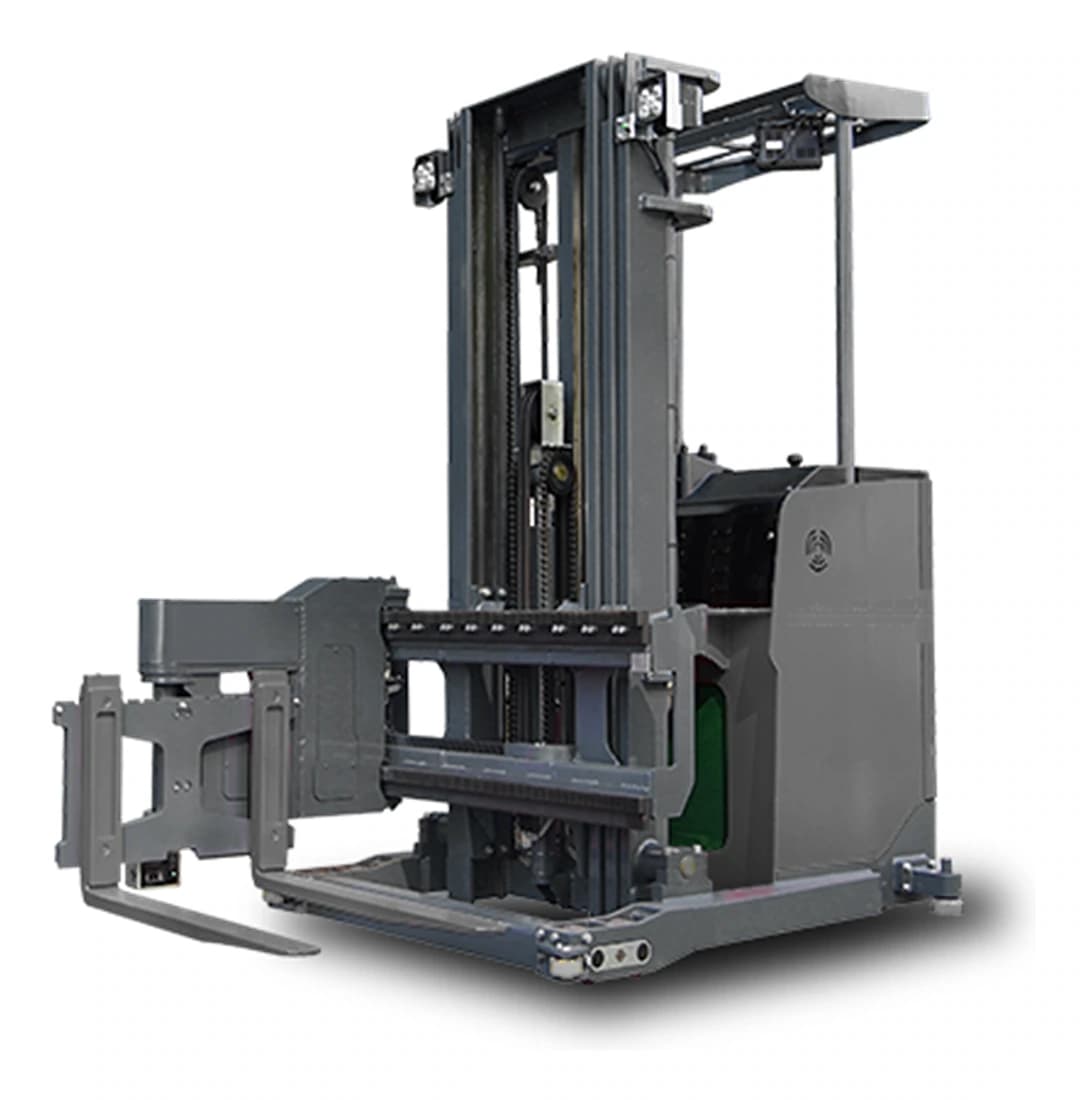
Use a very-narrow-aisle (VNA) three-way stacker: it rotates its forks 180° and side-shifts instead of turning, so a guided aisle of 1.5 m serves racking on both sides. iPack VNA trucks lift from 0.8 t to 1.6 t, reach 14 m, and typically recover 30–40 % more pallet positions from the same floor area.
A conventional counterbalance truck needs a main aisle wide enough to turn in — 3.5 to 4.5 m — and it spends that floor area on its own turning circle rather than on pallets. On a 12 000 m² site that is typically 1 500–2 000 m² of racking space permanently given up.
Racking density is set by the truck, not by the building. Extending the building costs capital and planning time; changing the truck costs neither.
Reviewed and updated by the iPack engineering team.
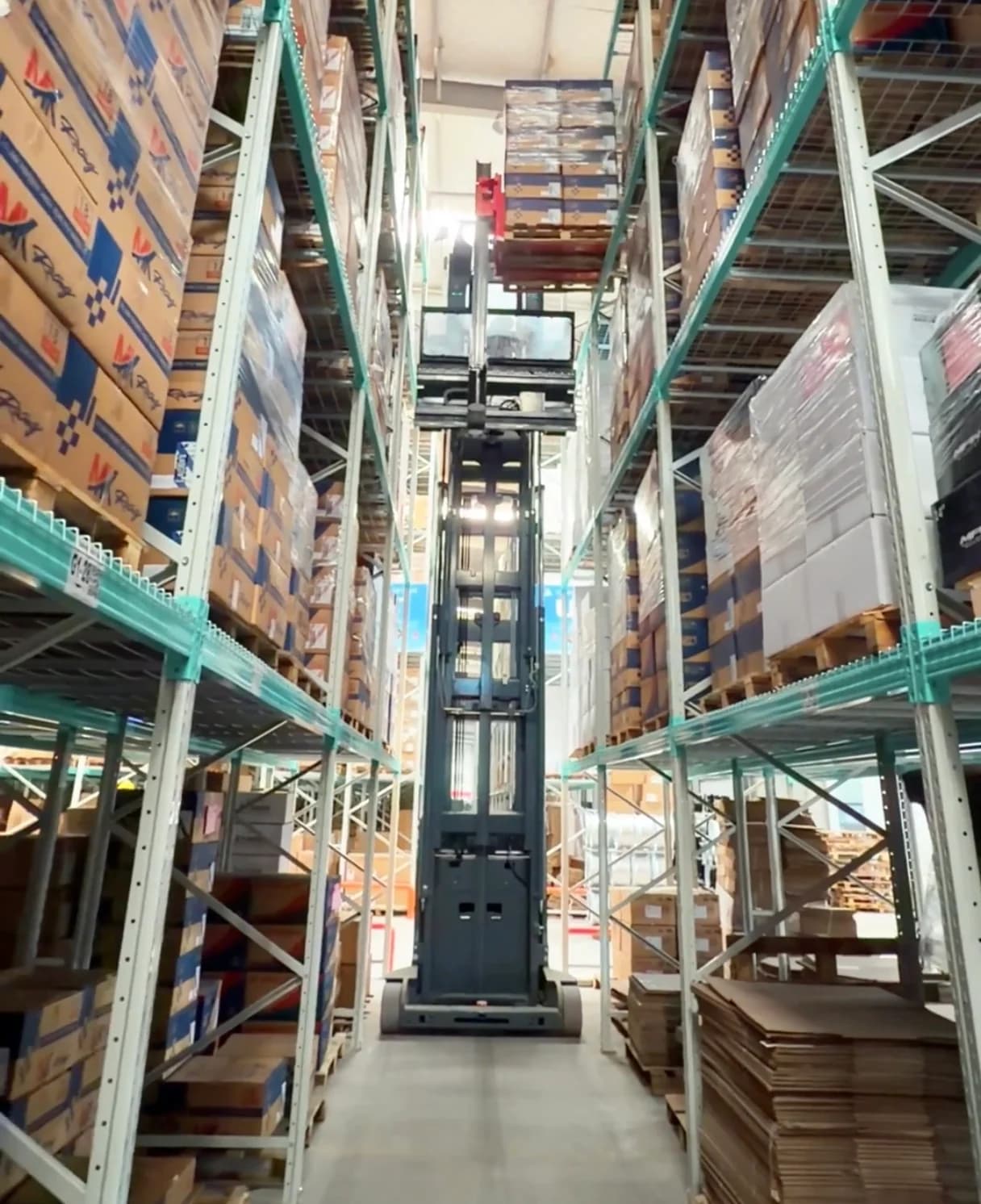
1.5 m guided aisle, both rack faces
A three-way stacker rotates its forks 180° instead of the truck, so a single 1.5 m guided aisle serves two rows of racking. Customers typically recover 30–40 % more pallet positions from the same building.
The numbers that matter in this application
- Guided aisle width
- 1.5 m
- Max lift height (SF-1200M-DD)
- 14 m
- Typical gain in pallet positions
- 30–40 %
- Rated capacity range
- 0.8–1.6 t
How iPack solves it
Rotate the forks, not the truck
180° fork rotation with lateral side shift means both rack faces are served from one guided aisle as narrow as 1.5 m. No turning circle is required inside the aisle at all.
Match guidance to your floor
Electromagnetic, permanent-magnet, wire or mechanical rail guidance — chosen from your floor slab and racking type rather than assumed. Existing aisles usually take wire guidance without civil works.
Pick at height, not from a cage
Man-up models raise the operator with the forks so the top two levels can be picked as well as stored. That removes the separate order-picking trip that stand-on trucks otherwise create.
Double-deep where the volume justifies it
Telescopic forks reach two pallets deep on each side from a 14 m mast, lifting capacity per aisle by roughly 30 % again — at the cost of a double-deep racking layout.
Machines specified for this application
Each model below is quoted with the configuration that suits this application — mast height, fork spread, film width or conveyor arrangement set at order.
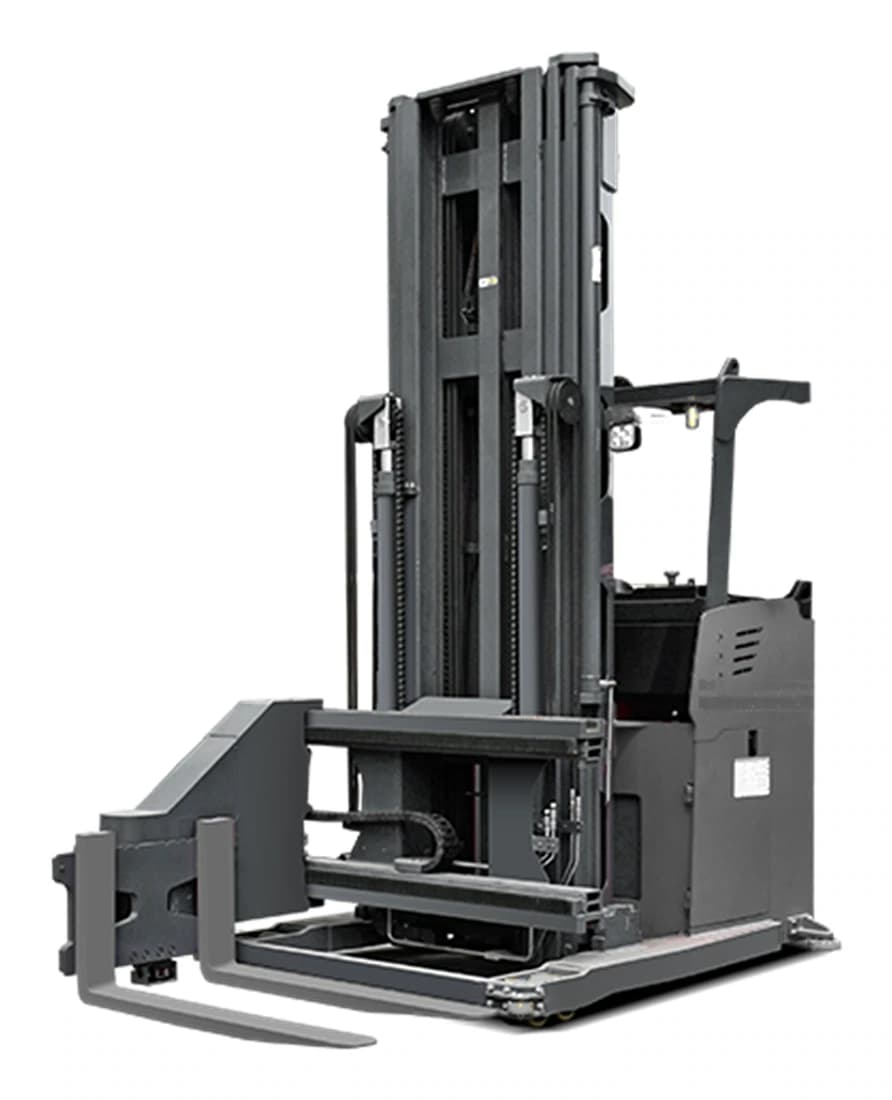
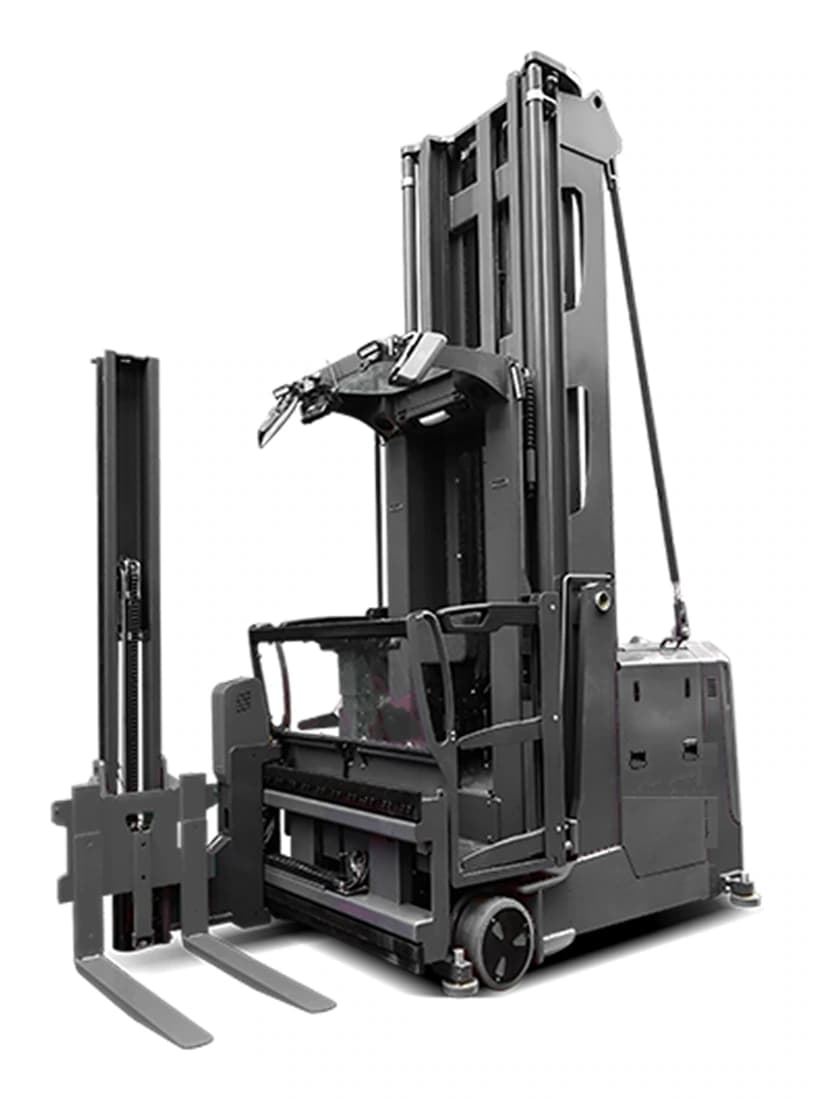
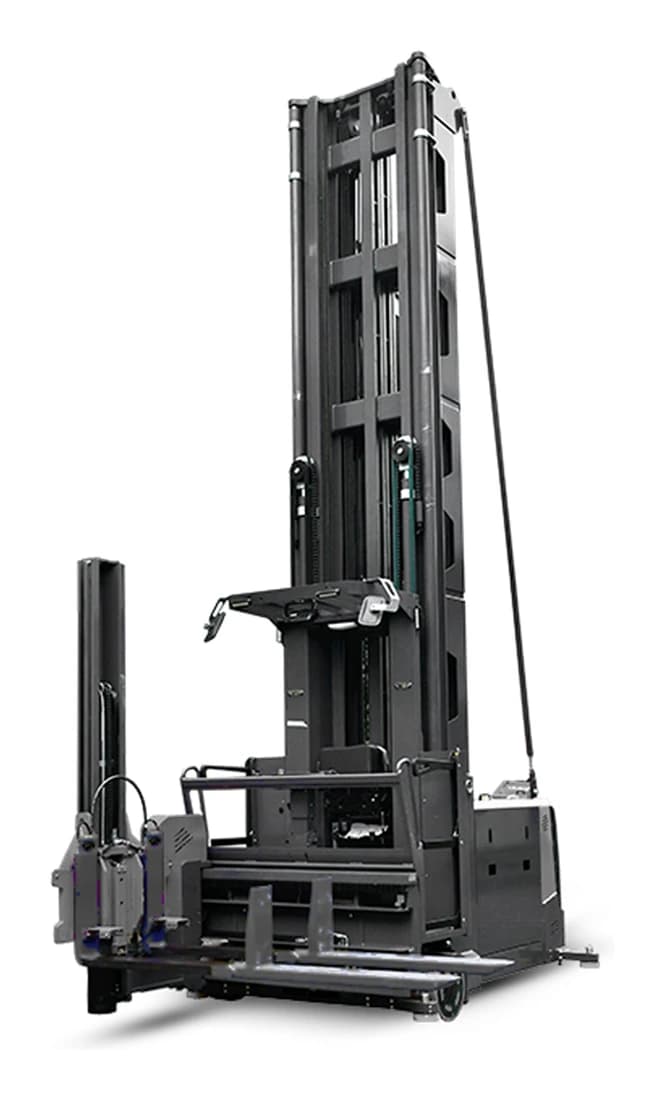
From installations in this application
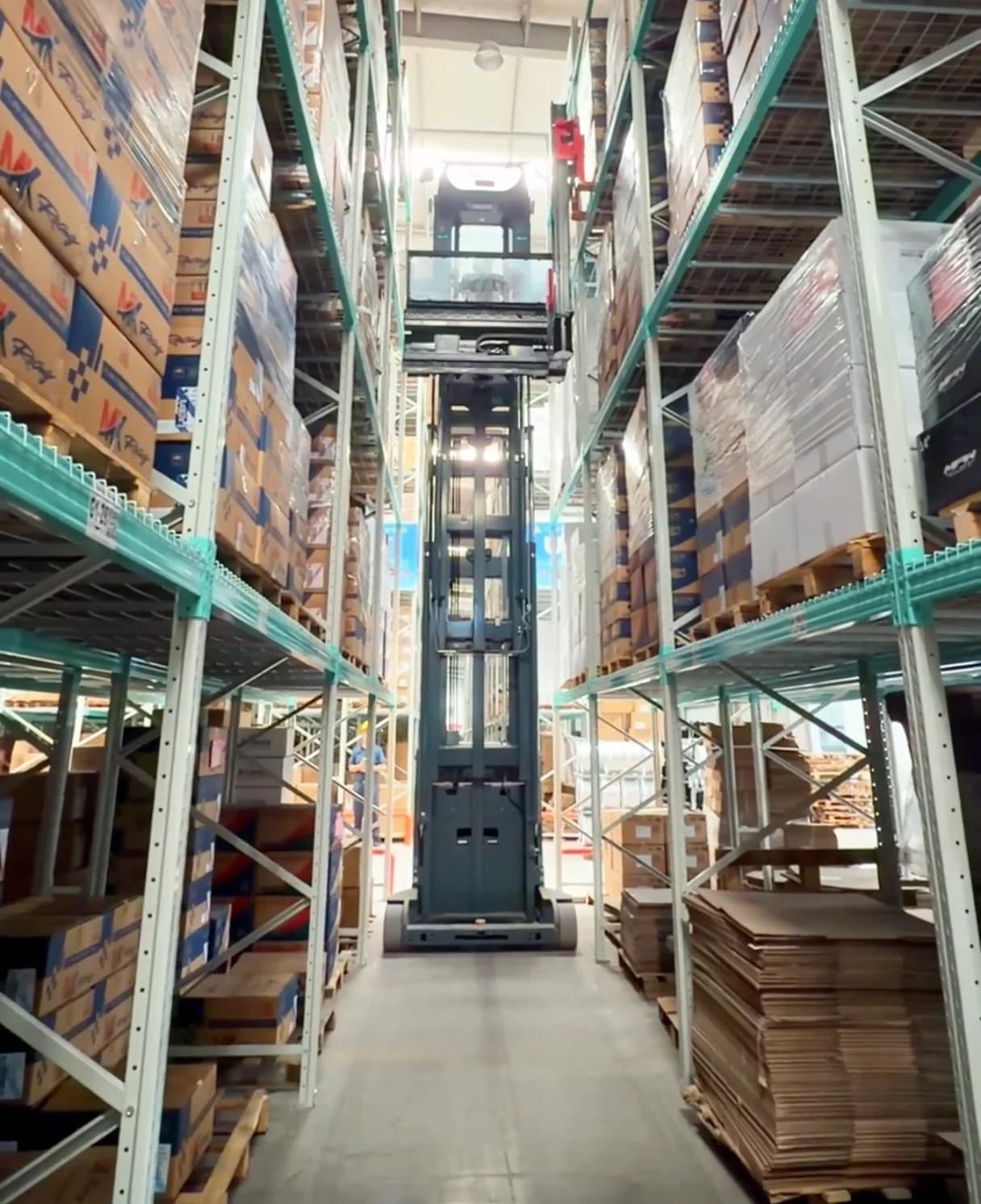
Top bay reached without a camera
The man-up platform rises with the forks, so the operator sees the pallet and the beam at every level — which is what keeps rack damage down.
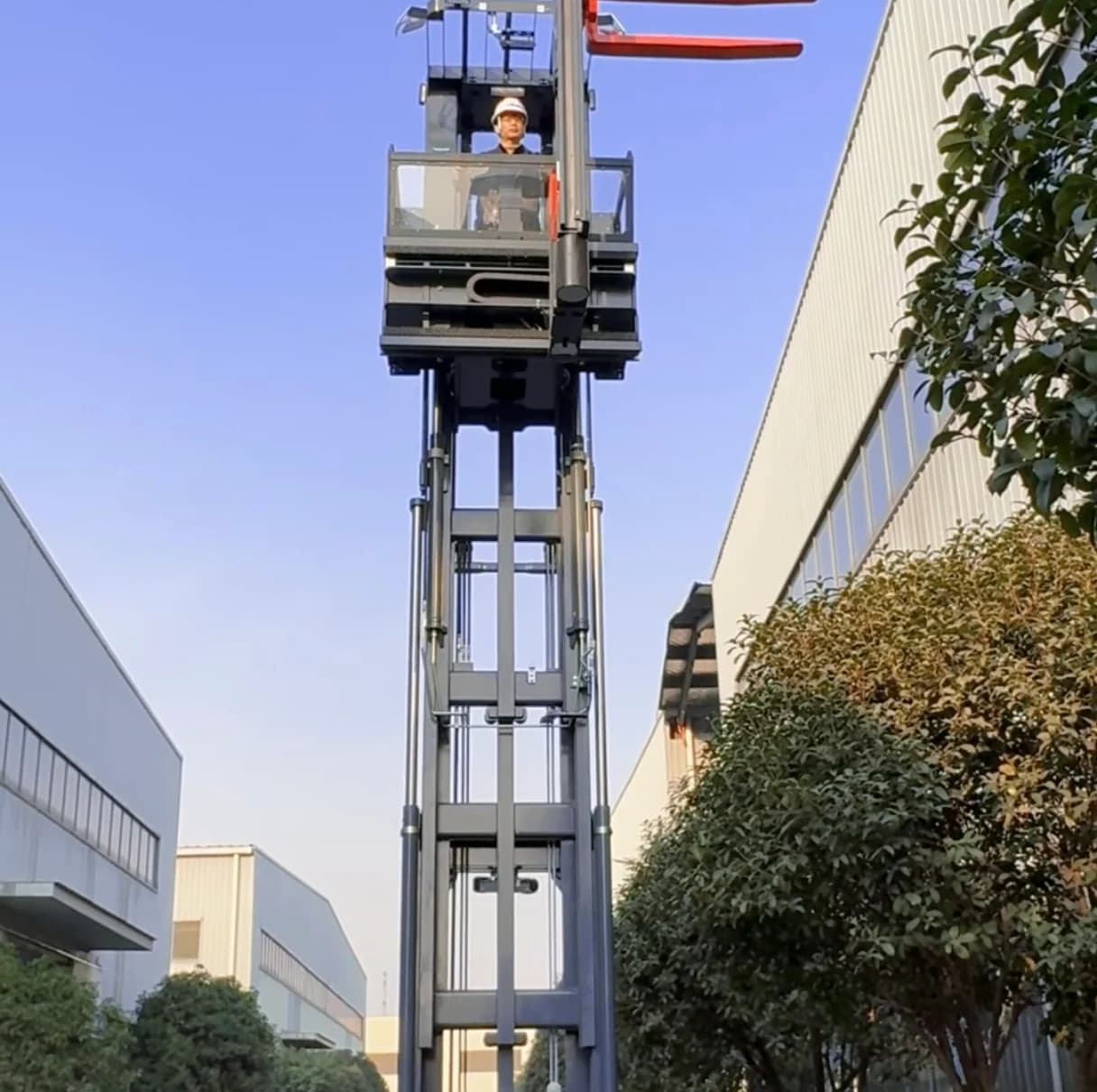
Man-up cabin at the top bay
The operator rises with the forks, keeping a clear view of the pallet and the beam at 10 m and above — the difference between a placed pallet and a damaged rack.
Narrow-aisle warehousing — common questions
How narrow can a VNA aisle actually be?
+
1.5 m guided is the working minimum for a standard 1200×1200 mm pallet with the SF-800M and the SF-1200M/SF-1600M stand-on trucks. The SF-1400M-CS cold-store model and the SF-1600M series run at 1.6–1.65 m. Below that the truck cannot articulate safely and the racking tolerance becomes the limiting factor.
Do we need a guide rail in the floor?
+
Not necessarily. Wire or electromagnetic guidance is laid into or onto the floor and can be installed in an existing aisle; a mechanical rail is bolted to the racking uprights. The choice depends on your floor slab condition, racking type and whether the aisle already exists.
What is the difference between stand-on and man-up?
+
A stand-on truck keeps the operator at floor level and is faster to mount for high-frequency put-away. A man-up truck raises the cabin with the forks, which is what you need when the top levels are picked by the case rather than moved as whole pallets.
How long does a VNA truck take to deliver?
+
30–45 days from order, depending on mast height and battery specification. Mast heights above 10 m and cold-store executions sit at the upper end because the mast is assembled and tested to the specific height.
Related applications
Send us the load, the aisle and the throughput
We reply with the model that fits, a budget price, the lead time and a layout drawing — usually within one working day.