
Choosing a forklift for a freezer: what fails below −25 °C
7 min read
Reviewed and updated by the iPack Robotic engineering team.
In short
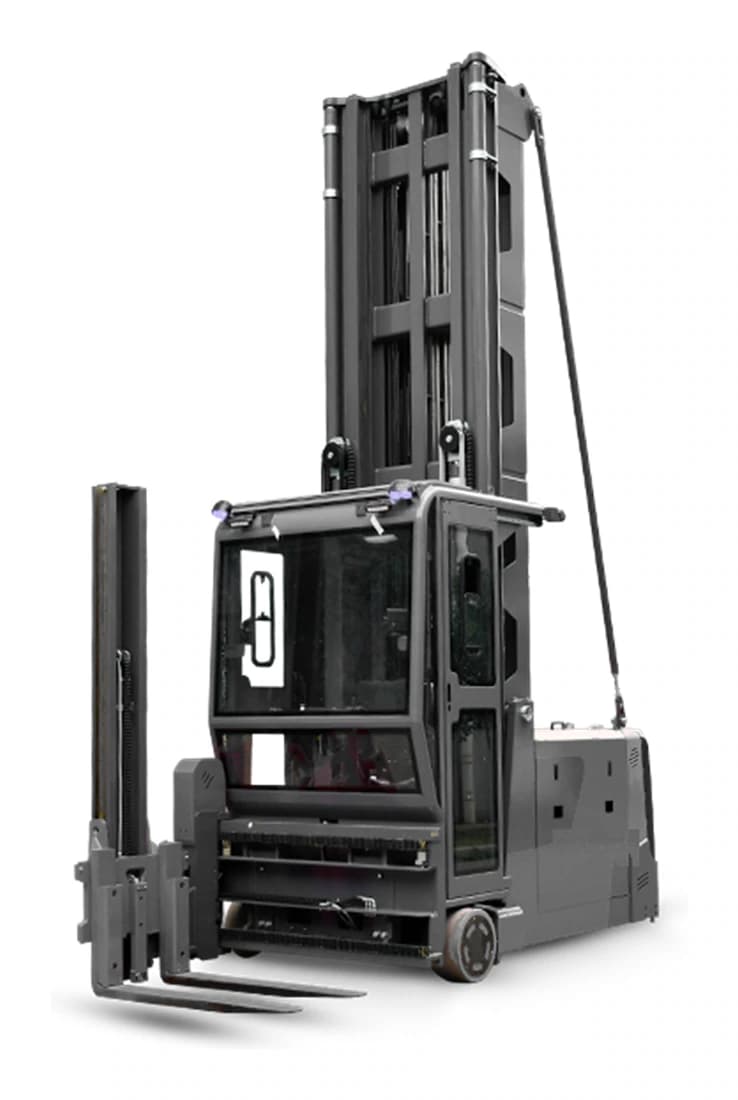
A standard truck fails in a freezer in four places: hydraulic oil thickens, battery capacity drops, displays fog and seals harden. A cold-store execution replaces all four — cold-rated electrics, low-temperature oil, a heated sealed cabin — and runs to −25 °C in aisles from 1.65 m with lift heights to 12.5 m.
01The short answer
A freezer is not a cold warehouse. Below roughly −20 °C you are outside the design envelope of a standard electric truck, and the failures are not dramatic — they are gradual, which is worse, because they show up as declining accuracy and unexplained downtime in the second half of a shift rather than as an obvious breakdown.
The four things that change, in the order they bite: hydraulic oil viscosity, battery usable capacity, condensation on glass and electronics, and seal elasticity.
| System | What goes wrong | Cold-store execution |
|---|---|---|
| Hydraulic oil | Viscosity rises, functions go sluggish and jerky | Low-temperature hydraulic oil |
| Battery | Usable capacity falls; voltage sags under load | Oversized pack (700 Ah at 80 V on the SF-1400M-CS) |
| Electrics | Condensation, brittle cable insulation, contactor arcing | Cold-chain rated components and sealed enclosures |
| Cabin | Glass fogs, mirrors ice, operator loses accuracy | Heated sealed cabin, anti-fog glazing, heated mirrors |
| Seals and tyres | Hardening, cracking, flat-spotting | Freezer-rated seals and cold-compound tyres |
02Why the battery number on the datasheet is not the number you get
A lead-acid pack is rated at 25 °C. At −25 °C the usable capacity of the same pack is materially lower — the electrolyte is more viscous and the reaction slows — and the voltage sag under load is deeper, which the controller reads as a flat battery earlier than it is.
This is why the SF-1400M-CS carries an 80 V / 700 Ah pack rather than the pack a comparable ambient truck would use. The margin is not for extra range; it is there so that a full freezer shift ends with a battery that still has something in it.
Two operating patterns make it easier. Either keep a spare pack and swap mid-shift, or charge in a warm room between shifts — a pack charged at ambient and then taken into the freezer performs measurably better than one charged cold.
03Keeping the cold store dense
Refrigerated floor area is the most expensive area a business owns, and it costs money every hour it is refrigerated. Giving 3.5 m to a turning circle means paying to refrigerate empty air.
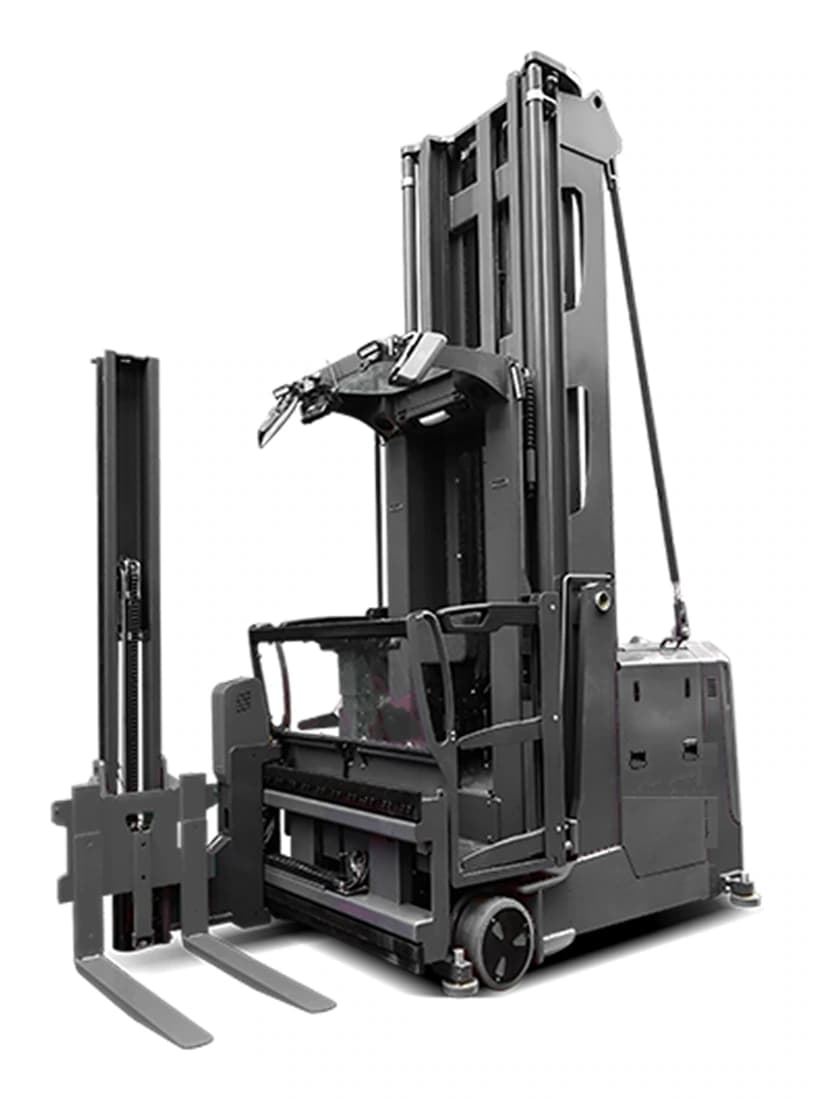
A cold-store VNA truck solves this the same way an ambient one does: the forks rotate and side-shift rather than the truck turning, so a 1.65 m guided aisle serves racking on both faces. Lift height runs to 12.5 m on the man-up model, which is what cold storage usually needs because volume is the whole point of the building.
The caveat is guidance. Wire or magnet guidance has to survive freeze–thaw cycles in the slab, so it is worth confirming the floor condition before committing to a particular guidance type rather than after.
04Should one truck work both the freezer and the dock?
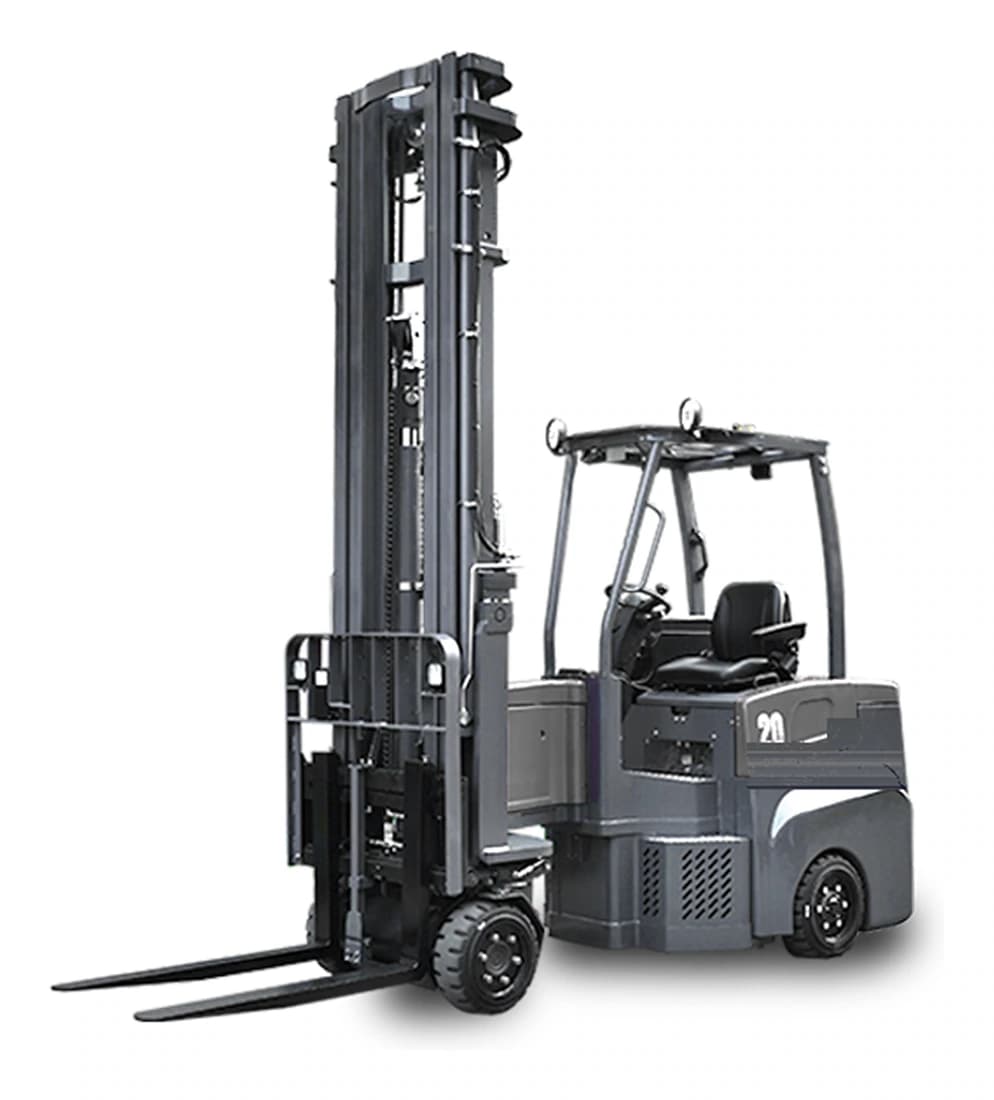
Usually not. Every trip out of the cold zone condenses moisture on the machine and the load, and the battery drains faster on the warm side. The pattern that works is a dedicated truck inside the cold store and a separate articulated truck for the dock — the SF-2000M crosses the yard and stacks indoors on one set of solid tyres, so the handover happens at the doorway rather than in the aisle.
05What to send us
- Operating temperature, and whether it is constant or cycles (a blast freezer and a chill store are different problems)
- Aisle width and racking height, and whether the aisle already exists
- Shift pattern — this decides the battery pack more than the load does
- Whether the same truck is expected to leave the cold zone
- Floor slab condition and whether it can be cut for guidance
Frequently asked questions
Can a standard forklift be used in a freezer at all?
+
Briefly, and in a chill store rather than a freezer. Occasional entry at −5 °C to −10 °C is survivable for a standard truck. Continuous operation below −20 °C is not — the oil, battery, electrics and seals all need to be specified for it.
How much battery capacity is lost at −25 °C?
+
The usable capacity of a lead-acid pack falls materially against its 25 °C rating, and voltage sag under load is deeper. That is why cold-store trucks are specified with a larger pack than the ambient equivalent — the SF-1400M-CS uses 80 V / 700 Ah — rather than relying on the ambient figure.
Does wrapping work inside a freezer?
+
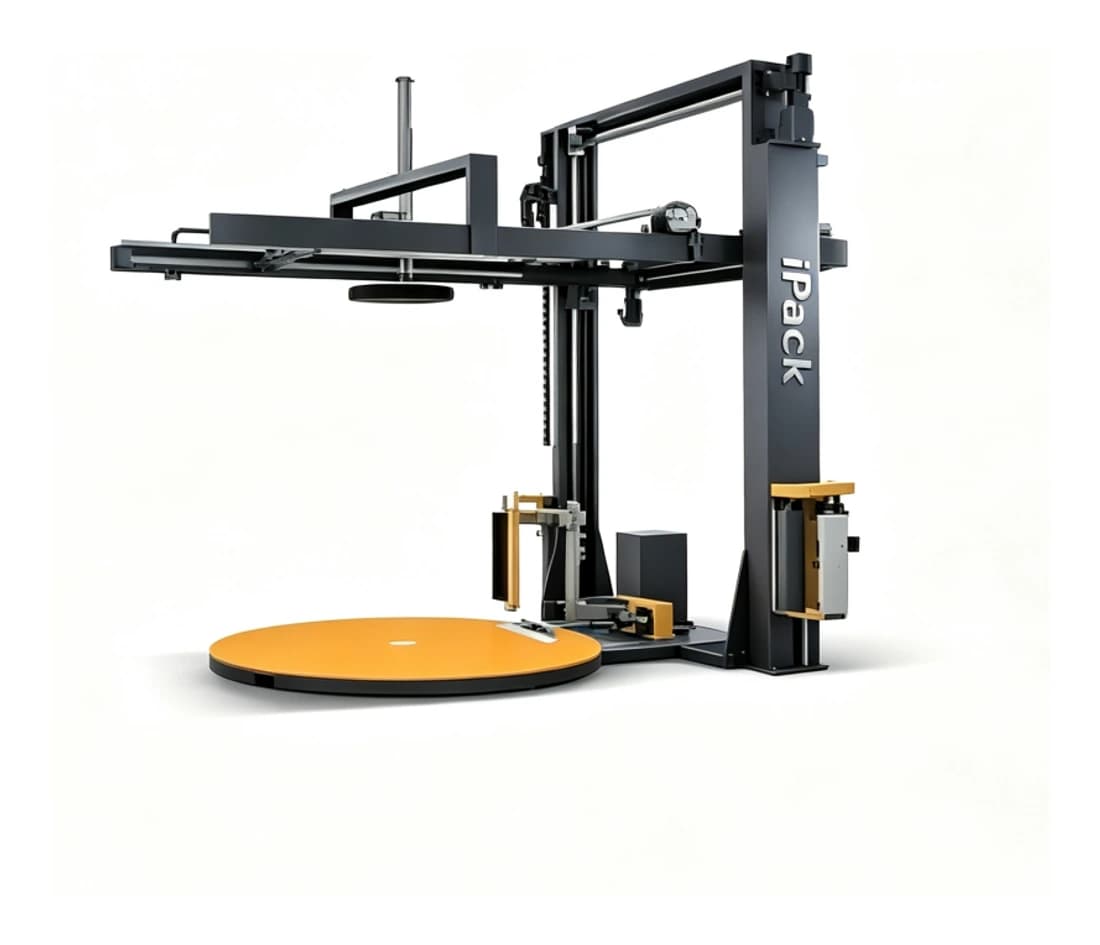
The wrapper normally sits in the chilled anteroom rather than the freezer itself, because film behaves better above 0 °C. Wrapping as the load leaves the cold zone also traps the cold air and reduces condensation on the product.
Can the truck go straight from the freezer to the loading dock?
+
It can, but condensation forms each time and the battery drains faster in the warm. Most operations keep a dedicated cold-store truck inside and use a separate articulated truck for the yard and dock.
What aisle width is achievable in a cold store?
+
1.65 m guided on the SF-1400M-CS. The extra 150 mm over an ambient 1.5 m layout covers the racking tolerance movement that freeze–thaw cycles can introduce.
Machines referenced in this guide
Get a specification, not a sales pitch
An engineer reads every enquiry. You will get the model that fits, the options you actually need, and a delivery date.