
Double-deep vs single-deep racking: the capacity maths and the catch
6 min read
Reviewed and updated by the iPack Robotic engineering team.
In short
Double-deep racking stores two pallets per position and adds roughly 30 % more pallet positions per aisle, because the aisle is shared across twice the pallets. The cost is selectivity — the front pallet must be removed to reach the back one — and longer forks, which reduce rated capacity at the same load centre.
01The short answer
If your SKU count is low and your pallet count is high, double-deep is close to free capacity. If every pallet is a different product and you need to reach any of them at any time, double-deep will cost you more in labour than it saves in racking.
The gain is real but it is often overstated. It is not "twice the pallets" — the aisle, the racking uprights and the truck all stay, so what doubles is only the pallet positions served by one aisle.
| Single-deep | Double-deep | |
|---|---|---|
| Pallets per aisle | Baseline | ≈ +30 % |
| Fork reach needed | Standard | Telescopic, roughly 2× pallet depth |
| Rated capacity at same load centre | Baseline | Lower — reach reduces it |
| Selectivity | Any pallet, any time | Front pallet blocks the back one |
| Racking cost | Baseline | Higher per position, fewer aisles |
| Works best with | High SKU count, mixed picking | Low SKU count, bulk reserve |
02Where the 30 % comes from
It is worth being precise, because "double-deep doubles your capacity" is a claim that leads to disappointment. The aisle itself does not shrink and cannot be double-stacked — it is floor you drive on.
Consider a bay 3.6 m wide (two 1.2 m pallets plus clearance) and a 1.5 m guided aisle. Single-deep, that bay plus its share of aisle serves 2 pallets. Double-deep, the same bay goes to 4 pallets while the aisle stays the same width. Over a run of bays the pallet count rises by around 30 %, not 100 %, because the racking depth grows into the building while the aisle count falls.
The exact figure depends on how many bays you have, which is why it should be calculated for your building rather than assumed from a rule of thumb.
03The catch: reach costs capacity
Telescopic forks that reach two pallets deep are longer and heavier than standard forks, and rated capacity is quoted at a load centre — the distance from the fork face to the load's centre of gravity. A truck rated at 1 200 kg on a 600 mm load centre is not the same machine as one rated 1 200 kg at 500 mm, and a double-deep reach effectively pushes the load centre out.
So the honest comparison is not "same truck, more pallets". It is: a double-deep truck of the same nominal capacity will lift less at the extended reach, or you specify a larger truck. Either way the capacity has to be checked against the real load centre, not the brochure number.
04Selectivity is the real cost
To retrieve the back pallet you must first take out the front one. If the same SKU occupies both positions, that is a non-issue — which is why double-deep suits reserve storage and bulk goods.
If SKUs are mixed within a bay, every retrieval of a back pallet costs an extra put-away of the front pallet, and the truck has to hold two pallets or find somewhere to set one down. That labour is the thing that erodes the racking saving, and it is why the SKU profile decides this, not the pallet count.
05When it pays
- Bulk reserve storage where a whole bay holds one product
- Seasonal stock built ahead of demand and drawn down in order
- Raw material or packaging held in whole-bay quantities
- Buildings where the floor area cannot be extended but the racking can go deeper
06When it does not
- Distribution operations where any pallet may be picked at any time
- High SKU counts with many pallets per SKU sitting in mixed bays
- Loads close to the truck's rated capacity, where the reach penalty bites
- Sites without the racking accuracy to place a pallet two deep reliably
Frequently asked questions
Does double-deep work with a very narrow aisle?
+
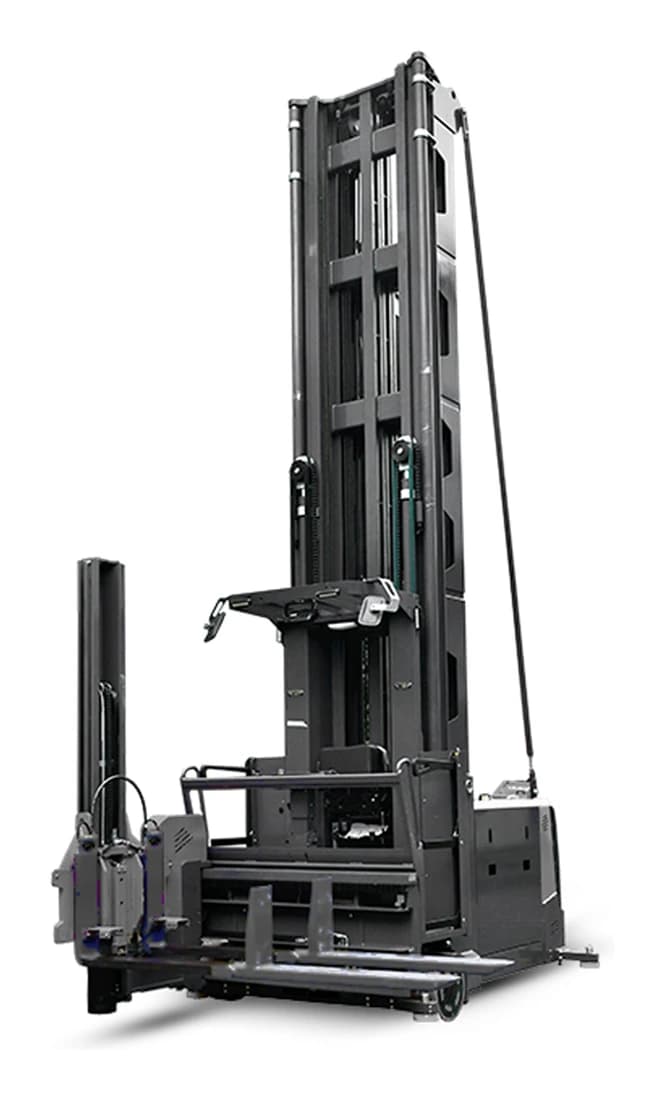
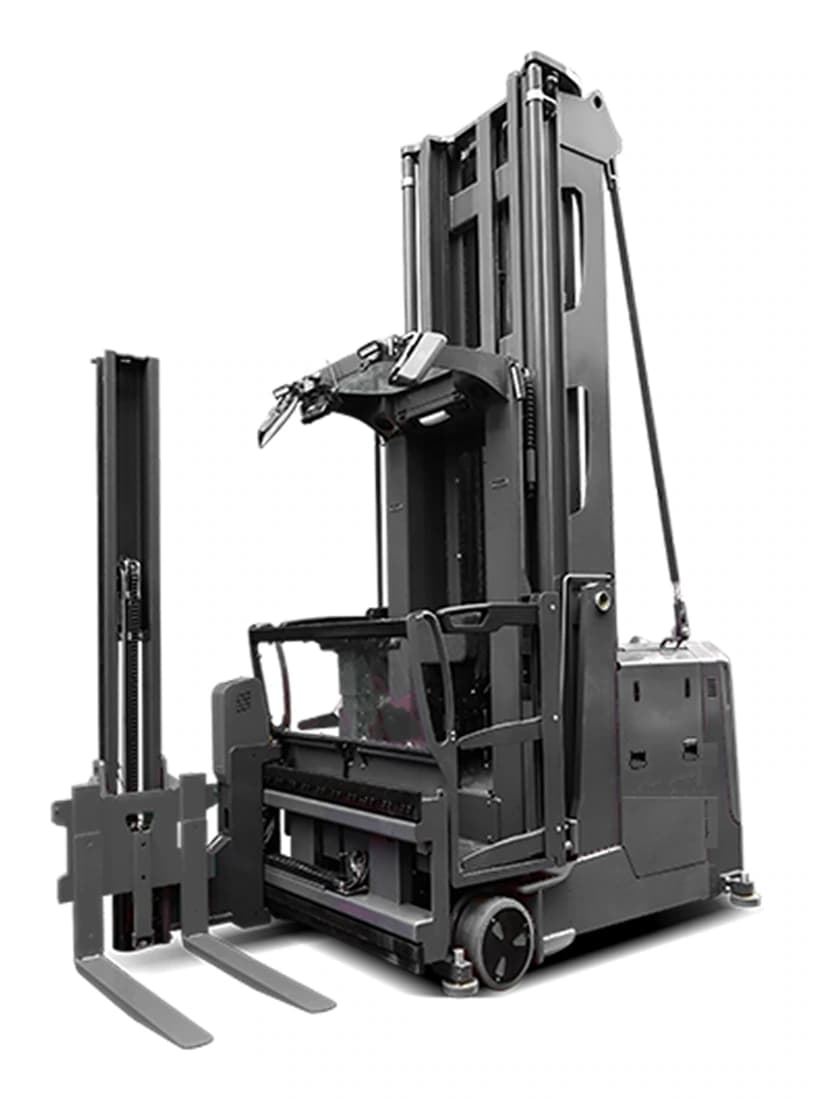
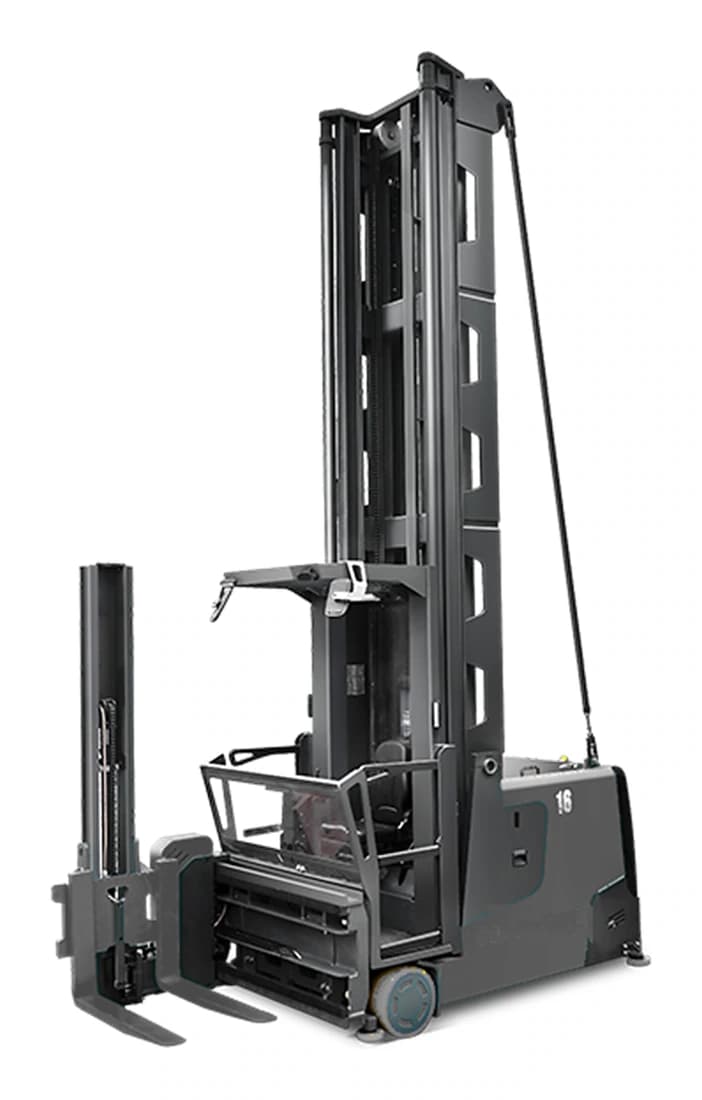
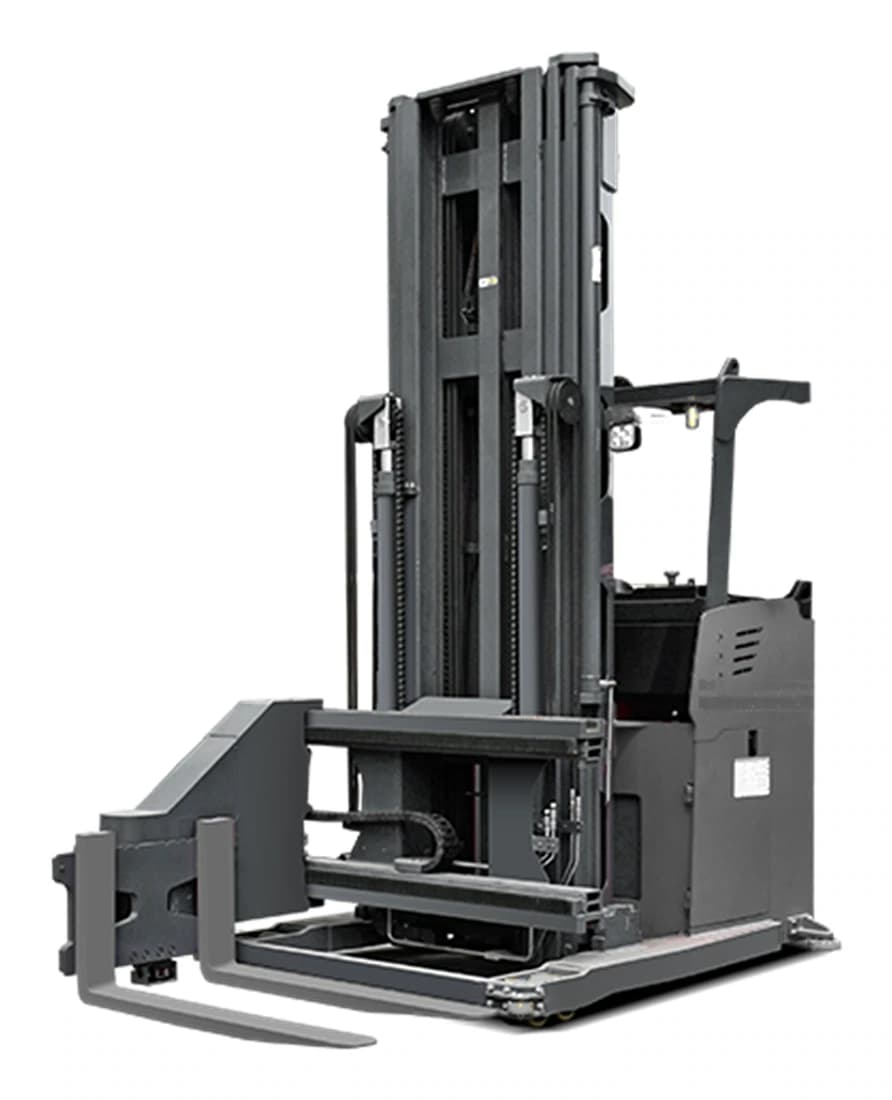
Yes, and the two combine well — the aisle is already the expensive part of the layout, so doubling the pallets it serves improves the ratio. The SF-1200M-DD is a man-up double-deep VNA stacker lifting 1 200 kg at a 600 mm load centre to 14 m.
What fork reach is needed for double-deep?
+
Roughly twice the pallet depth plus clearance — for a 1 200 mm pallet, of the order of 2 600 mm of reach. That is a telescopic fork carriage, not a standard one.
Is double-deep capacity affected by load centre?
+
Yes, and this is the most commonly missed point. Rated capacity is quoted at a load centre, and extending the reach moves the effective load centre outward, which reduces the capacity the truck can lift. Always specify your real load centre.
Can single-deep racking be converted to double-deep later?
+
The racking can, but the truck cannot — a standard fork carriage does not reach two pallets deep. If double-deep is plausible within the machine's life, specify the truck for it at the start; retrofitting the truck costs more than the racking change.
Machines referenced in this guide
Get a specification, not a sales pitch
An engineer reads every enquiry. You will get the model that fits, the options you actually need, and a delivery date.